A law office can look private and still sound exposed.
That is the problem many firms only discover after the space is already occupied. The meeting room has glass walls, but conversations carry. The partner office has a door, but voices travel through the ceiling. The open associate area feels efficient until sensitive calls begin happening beside shared desks.
In legal work, privacy is not only about what clients can see. It is also about what they might hear.
That makes acoustic planning one of the most important parts of law office design. It affects how comfortably clients speak, how confidently lawyers handle sensitive matters, and how easily associates can concentrate during detailed legal work.
The challenge is that acoustic privacy is rarely solved by one product or finish. Panels help. Carpets help. White noise can help. But none of them can fully fix a layout that places confidential conversations in the wrong parts of the office.
For modern law firms, the question is no longer whether private offices or hybrid layouts are better. The real question is how sound moves through the workplace, and whether the office interior design supports confidentiality from reception to meeting rooms to daily legal work.
Office Interior Design Often Fails Acoustically Before Firms Realize It
Many acoustic problems in law offices are invisible during design presentations.
A layout may look clean and modern on paper while still creating serious confidentiality issues after occupancy. Open ceilings may expose conversations through shared return air paths. Glass meeting rooms may appear sophisticated while leaking sound into adjacent work areas. Shared collaboration spaces may unintentionally amplify noise across the office design layout.
This is where office interior design in legal environments becomes highly operational.
A workplace can look visually private while performing acoustically very poorly. That distinction matters because clients and employees react to sound instinctively. If conversations feel exposed, people begin changing behaviour immediately. Lawyers search for quieter spaces. Staff hesitate during calls. Sensitive discussions move off site or into improvised areas never designed for confidentiality.
Commercial interior design for law firms should treat acoustics as part of the workplace infrastructure, not a decorative upgrade.
The strongest legal offices are often quieter not because they use expensive finishes, but because layout, circulation, and room placement were planned correctly from the beginning.
Private Offices Still Offer the Strongest Acoustic Control
There is a reason many partners continue preferring private offices despite broader workplace trends.
From an acoustic perspective, enclosed offices still solve several major problems naturally. They reduce sound transfer, support confidential discussions, and allow lawyers to work without constantly monitoring how far conversations carry.
For legal work involving litigation, employment law, negotiations, or sensitive client matters, this level of separation remains extremely valuable.
Private offices also create predictability. Lawyers know where confidential calls can happen comfortably without needing to compete for rooms or search for available quiet space throughout the day.
That said, private offices are not perfect.
Poorly constructed enclosed offices can still leak sound through ceilings, doors, glazing systems, or shared walls. Some layouts also isolate teams too heavily, reducing collaboration between lawyers, associates, and support staff.
This is where corporate interior design needs to balance acoustic performance with operational connectivity.
The strongest legal workplaces rarely rely on openness everywhere or enclosure everywhere. Instead, they layer privacy intentionally depending on the sensitivity of the work happening nearby.
Hybrid Layouts Create New Acoustic Pressures for Law Firms
Hybrid legal workplaces introduce flexibility, but they also introduce unpredictability.
Employees move through the office differently throughout the week. Shared workstations create changing occupancy patterns. Informal collaboration areas become more active because hybrid schedules reduce spontaneous in-office interaction opportunities.
All of this affects sound behaviour.
A hybrid workplace may feel relatively quiet on one day and significantly louder on another depending on occupancy and meeting patterns.
Office space planning for hybrid law offices therefore needs stronger acoustic zoning than traditional layouts. Collaboration areas should not sit directly beside focus work zones. Consultation rooms should remain separated from high circulation paths. Shared touchdown areas should not replace acoustically protected spaces needed for confidential discussions.
This is where many hybrid office strategies fail in legal environments.
Firms focus heavily on flexibility and space efficiency while underestimating how much acoustic pressure hybrid movement creates throughout the office.
Interior design services that specialize in legal workplaces often address this by creating multiple layers of privacy rather than relying on one solution alone.
That may include enclosed partner offices, acoustically protected consultation rooms, semi-private focus areas, and strategically separated collaborative zones working together throughout the workplace.
Meeting Rooms Usually Reveal Whether Acoustic Planning Was Successful
Law firms often judge acoustic success based on individual offices when meeting rooms usually reveal the real performance of the workplace.
If confidential conversations inside meeting spaces feel exposed, employees and clients notice immediately.
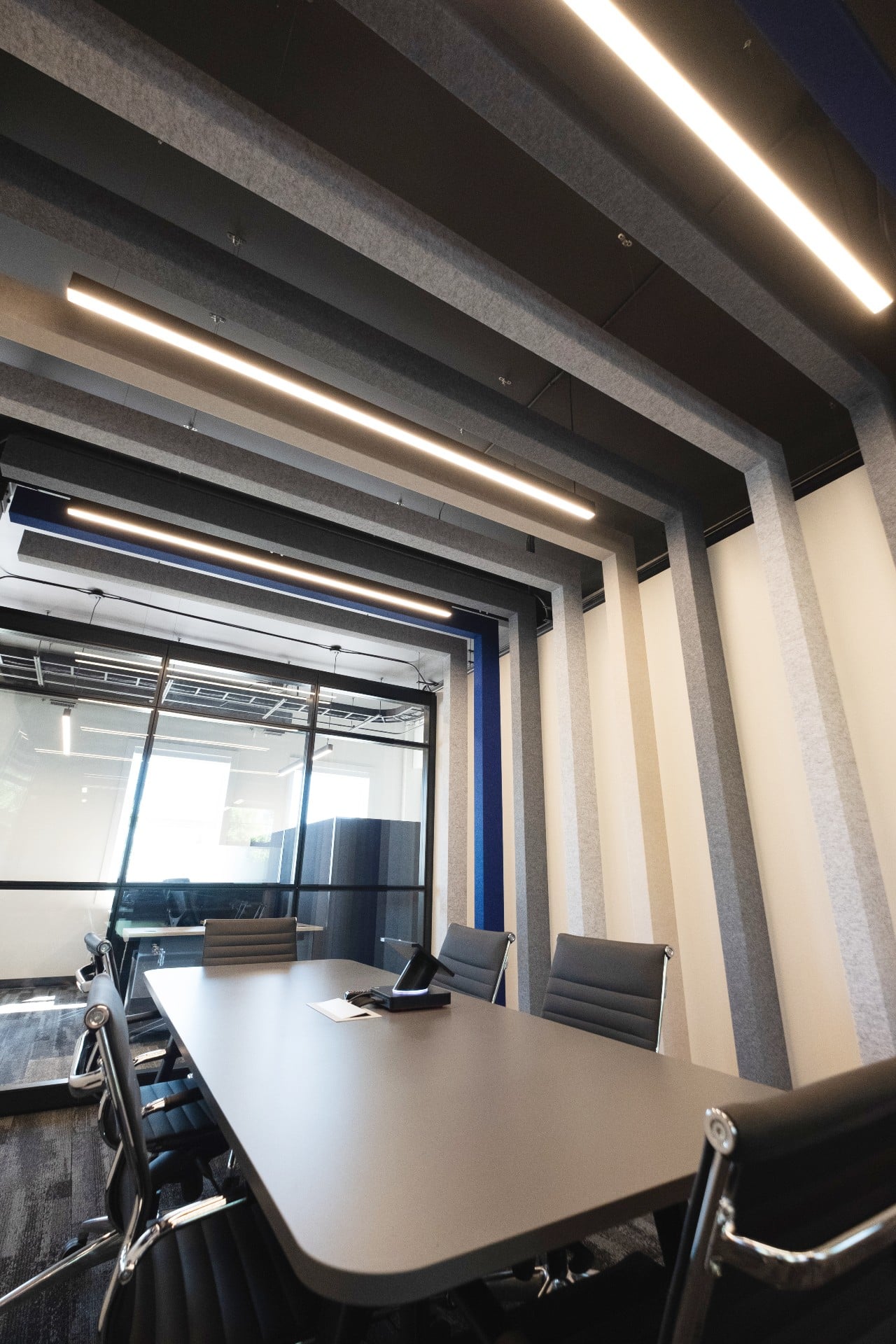
This is especially important today because consultation rooms are handling a wider range of interactions than before. Hybrid meetings, mediation discussions, intake calls, internal reviews, and video conferences all place different demands on acoustics simultaneously.
Commercial interior design for legal workplaces should evaluate meeting rooms based on:
- speech privacy
- door and wall construction
- ceiling coordination
- adjacency to circulation
- technology integration
- visual privacy
Office furniture design also influences acoustic performance more than many firms expect. Upholstered seating, soft surfaces, and properly proportioned tables help reduce sound reflection during conversations.
Canadian office furniture systems often support acoustic flexibility effectively because many products are designed with integrated privacy elements, workstation separation, and sound absorption in mind.
Meeting rooms should feel calm enough for difficult conversations without requiring people to constantly lower their voices.
Associates and Support Staff Need Acoustic Privacy Too
One of the biggest mistakes in legal workplace planning is assuming acoustic privacy only matters for partners.
Associates, assistants, and support staff often spend even more time handling sensitive information throughout the day. Intake coordination, scheduling, document review, internal legal discussions, and administrative communication all involve confidentiality.
If these employees work in highly exposed environments, operational friction increases quickly.
Associates may struggle to focus in noisy shared spaces. Assistants handling confidential calls may feel uncomfortable speaking openly. Teams begin relying heavily on headphones, empty rooms, or remote work simply to access concentration.
Office interior design should support acoustic privacy across the entire legal workflow, not only in executive offices.
That does not require every workstation to become fully enclosed. But it does require thoughtful zoning, circulation control, workstation positioning, and acoustic layering throughout the workplace.
The strongest law offices create quieter environments overall instead of concentrating all privacy in a few isolated spaces.
Acoustic Privacy Works Best When It Is Built Into the Layout Early
Many firms attempt to fix sound issues after occupancy because acoustic problems are difficult to visualize during planning.
Unfortunately, post-occupancy acoustic fixes are often expensive and only partially effective.
Adding panels, masking systems, or furniture adjustments may help reduce symptoms, but they rarely solve structural layout issues completely.
This is why acoustic planning should happen early in office design layout development rather than later through finish upgrades alone.
Interior design firms Toronto that specialize in legal and professional services workplaces typically evaluate:
- circulation flow
- occupancy density
- meeting room placement
- ceiling systems
- workstation orientation
- consultation room separation
- acoustic material layering
before finalizing the office structure itself.
That integrated approach creates workplaces where confidentiality feels natural rather than constantly managed.
Frequently Asked Questions (FAQ):
Why is acoustic privacy more difficult in modern law offices?
Modern legal workplaces are balancing more competing priorities than before. Firms want greater flexibility, stronger collaboration, hybrid work support, and more efficient use of space while still maintaining confidentiality.
The challenge is that many modern workplace strategies increase sound exposure if they are not carefully planned. Open collaboration areas, shared workstations, glass meeting rooms, and reduced office footprints all create additional acoustic pressure throughout the workplace.
Without proper zoning, room placement, and sound control strategies, employees begin changing behaviour around the limitations of the office instead of working naturally. Acoustic privacy becomes difficult not because modern design is impossible for law firms, but because confidentiality requirements are often underestimated during planning.
Are private offices still the best option for acoustic privacy?
In many legal environments, private offices still provide the strongest baseline level of confidentiality and concentration. They naturally reduce sound transfer and allow lawyers to handle sensitive calls or discussions without competing for quieter space throughout the day.
However, private offices are only effective when they are constructed properly. Weak wall systems, exposed ceilings, glass fronts without acoustic treatment, or poorly sealed doors can still allow conversations to travel surprisingly easily.
The most successful legal workplaces usually combine private offices with additional acoustic layers throughout the office rather than relying on enclosed rooms alone. Hybrid collaboration areas, consultation rooms, and support staff zones also require strong sound control to maintain overall workplace performance.
Why do hybrid layouts create acoustic problems in law firms?
Hybrid layouts introduce more movement variability throughout the office. Occupancy levels change daily, collaboration patterns become less predictable, and shared work areas often experience fluctuating noise levels depending on who is in the office at any given time.
This creates acoustic inconsistency. A workplace that feels manageable one day may feel highly distracting the next. Informal collaboration areas can become louder than expected, and employees may struggle to find predictable quiet space for focused legal work.
Hybrid layouts can absolutely work in legal environments, but they require much stronger zoning and circulation planning than many firms initially expect. Acoustic separation becomes even more important because the office needs to support multiple working styles simultaneously without weakening confidentiality.
Key Takeaways
- Acoustic privacy problems usually begin through layout and circulation, not finishes alone
- Office interior design should treat sound control as operational infrastructure
- Private offices still provide strong acoustic performance for confidential legal work
- Hybrid law office layouts create new sound pressures that require careful zoning
- Meeting rooms often reveal whether acoustic planning was truly successful
- Associates and support staff also require strong acoustic privacy throughout the workday
- Office furniture design influences sound reflection, concentration, and visual privacy
- Canadian office furniture systems often support acoustic flexibility effectively
- Acoustic planning works best when integrated early into office design layout decisions
Law firms do not need workplaces that feel silent. They need workplaces where confidential work feels protected naturally.
When office interior design, office space planning, commercial interior design, and acoustic strategy are aligned properly, employees stop adjusting their behaviour around sound concerns and clients feel more comfortable speaking openly from the beginning.
That operational confidence is what acoustic privacy in legal workplaces is really designed to support.