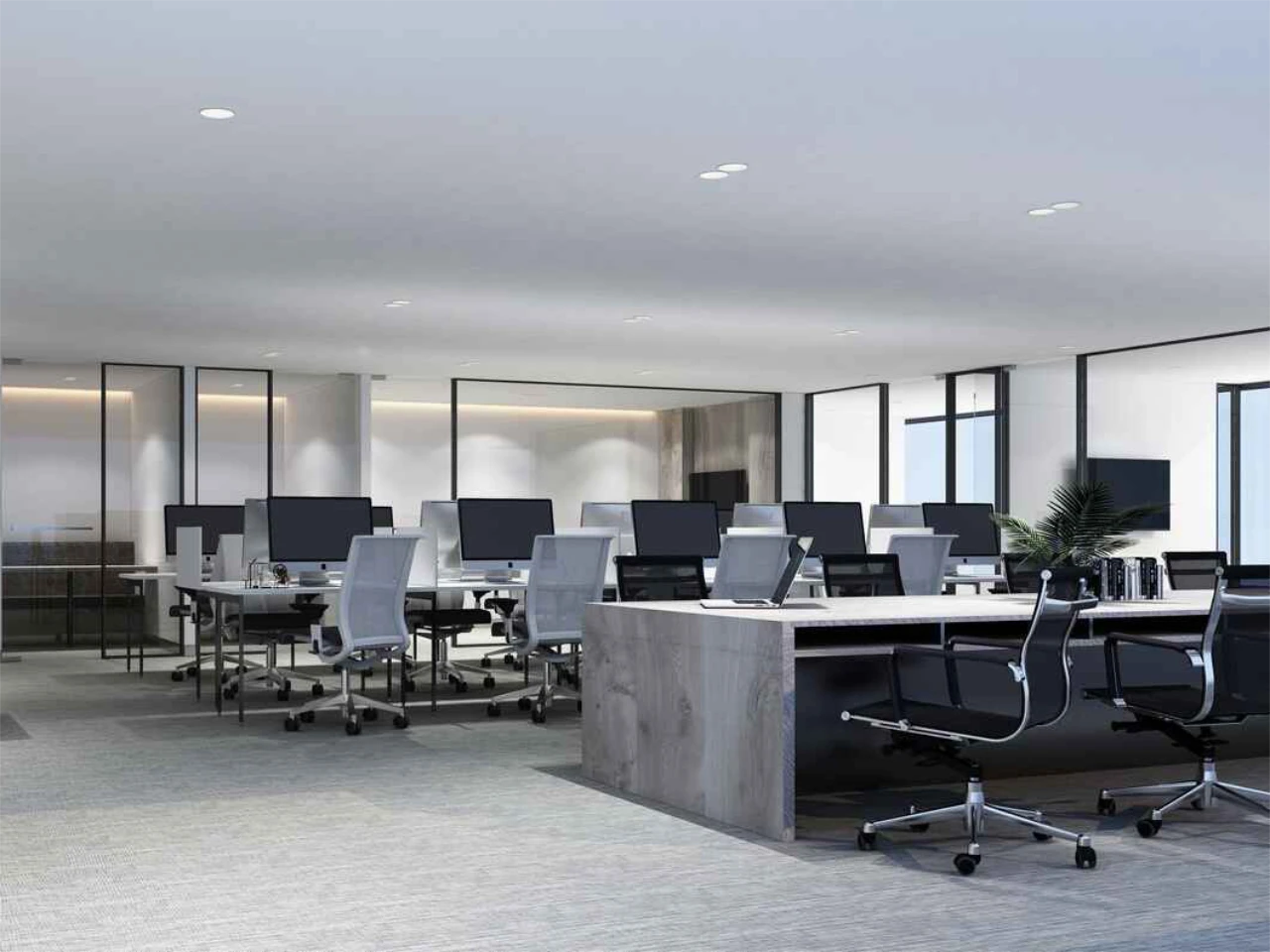
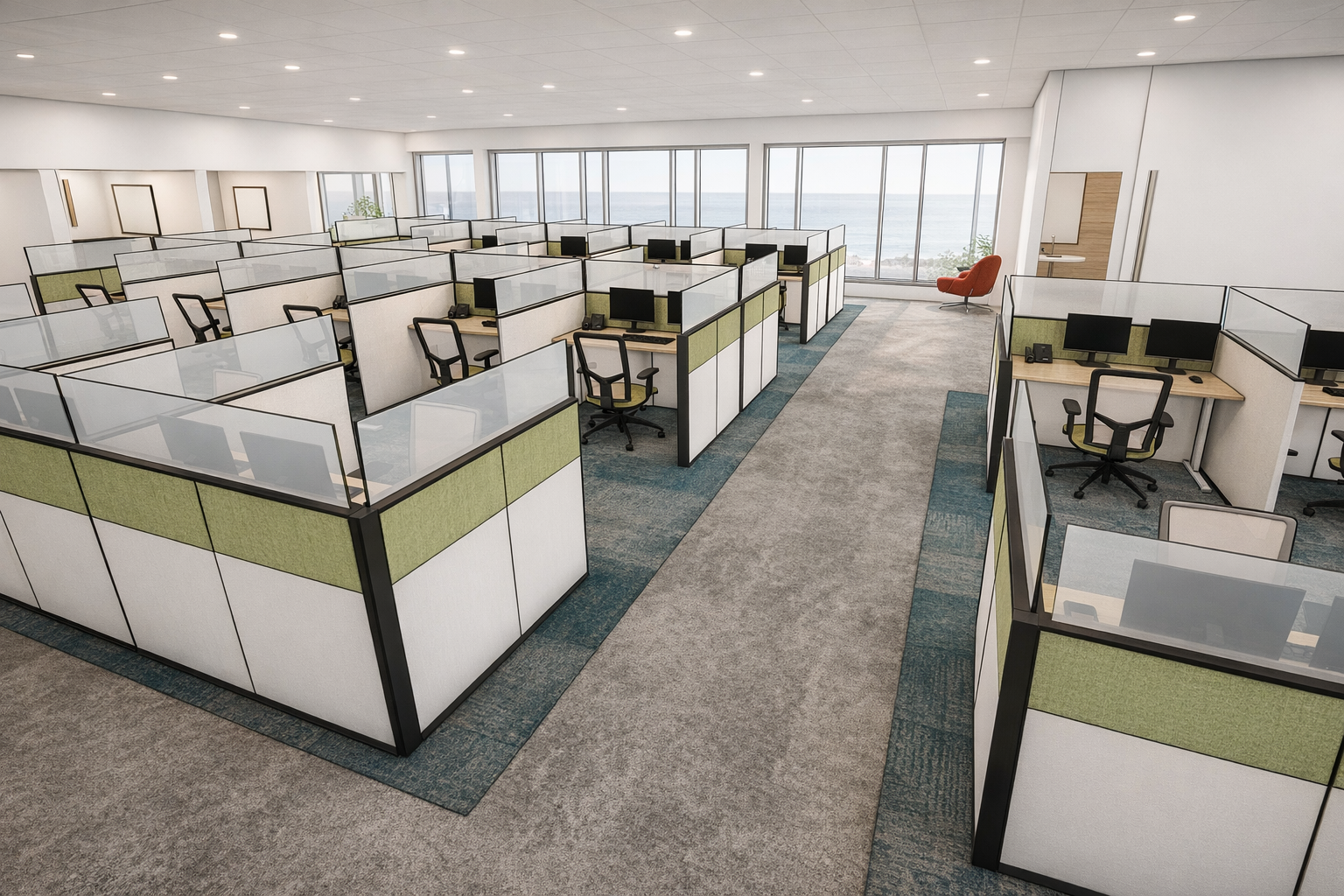
The legal industry office design is trying to modernize without weakening the very thing clients expect most from a law firm: discretion.
That tension is shaping almost every workplace conversation happening in legal environments right now.
Some law firms still rely heavily on traditional private office layouts because confidentiality, focus, and hierarchy remain deeply tied to how legal work operates. Others are experimenting with hybrid layouts that introduce more flexibility, shared work areas, and collaborative zones to support changing work patterns and younger teams.
Neither approach is automatically right.
The problem is that many firms are making layout decisions based on workplace trends instead of how legal work actually moves through the office. A layout that performs well in a consulting or tech environment may create operational friction in a law firm almost immediately.
Clients need privacy. Lawyers need concentration. Teams still need collaboration. At the same time, firms are under pressure to use space more efficiently while creating workplaces that feel modern enough to support recruiting and retention.
This is where office interior design becomes much more strategic than visual.
The strongest modern law offices are not fully traditional or fully open. They are carefully zoned environments that protect confidentiality while allowing more flexibility where it actually makes sense.
Office Interior Design Should Begin With Confidentiality Flow
Most law office layouts are judged too quickly by appearance alone.
The real question is not whether the office looks open or closed. It is whether confidential work can move through the space without exposure.
Confidentiality flow is one of the most important concepts in legal office planning. It refers to how clients, lawyers, staff, conversations, and sensitive information move through the workplace throughout the day.
A strong office interior design strategy maps these flows before layout decisions are finalized.
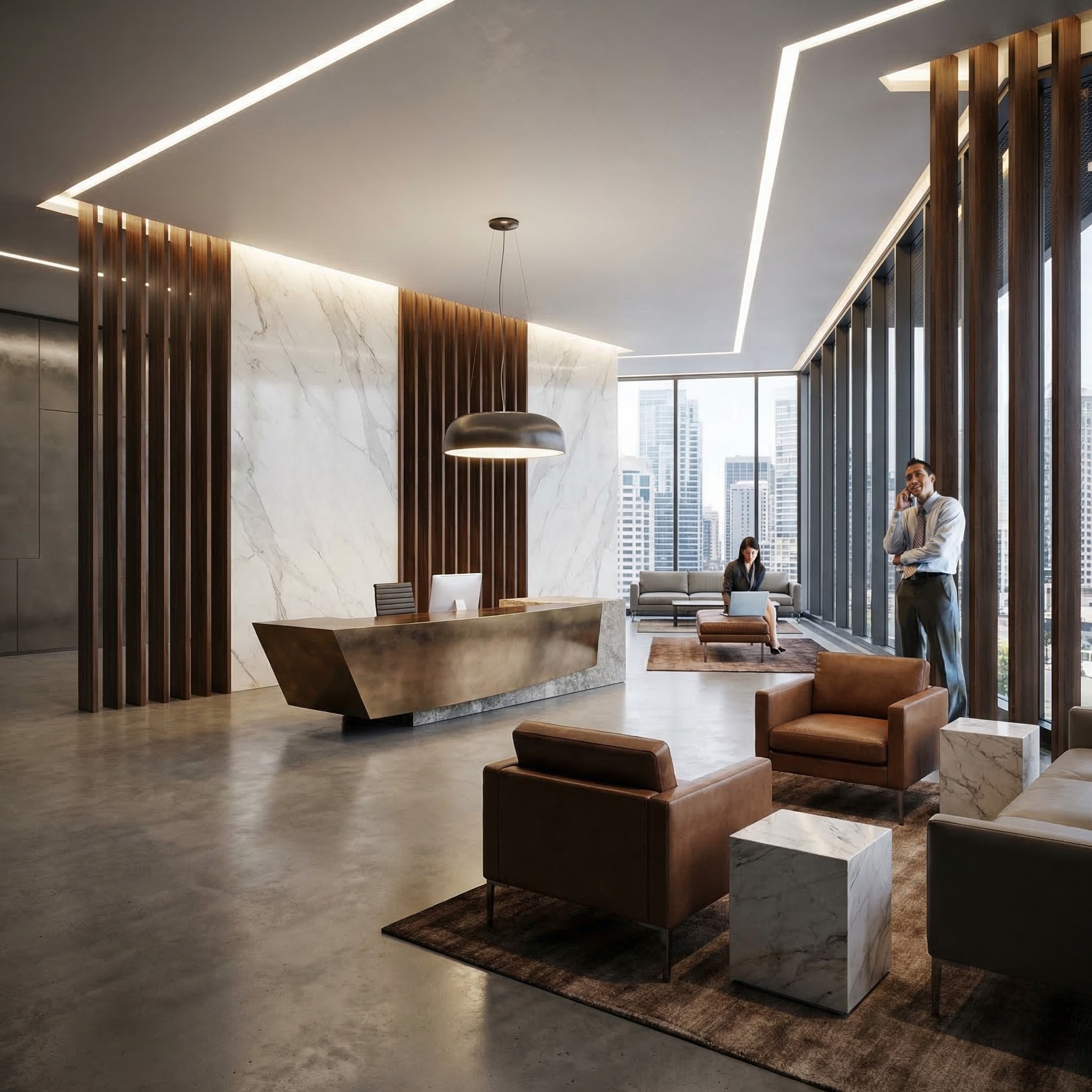
For example, client circulation should not overlap heavily with operational work zones. Consultation rooms should not sit directly beside high traffic collaboration areas. Partner offices that handle confidential discussions should not rely on weak acoustic separation or exposed circulation paths.
Commercial interior design for law firms works best when privacy is embedded into movement patterns rather than added later through temporary fixes.
That is where many hybrid office layouts fail. They create flexibility visually but overlook how legal work actually functions operationally.
Private Offices Still Solve Important Problems in Law Firms
There is a reason private offices continue to exist in legal environments even as other industries move toward more open workplaces.
Legal work often requires:
- confidential calls
- focused document review
- sensitive client discussions
- uninterrupted concentration
- secure handling of physical materials
Private offices support these needs naturally.
They also create stronger acoustic separation, which remains one of the biggest operational challenges in modern legal workplaces. Lawyers handling negotiations, litigation strategy, or employment matters cannot constantly worry about who may overhear a discussion nearby.
Office design layout in many law firms still relies on private offices because they reduce friction around confidentiality without requiring employees to constantly search for quieter spaces.
That does not mean every lawyer needs a permanently enclosed office regardless of work style. But removing private offices too aggressively often creates problems firms only notice after occupancy.
Employees start booking meeting rooms simply to take calls. Sensitive conversations move off site. Focus work becomes harder to maintain during busy office hours.
Private offices continue to perform well because they align closely with how legal work actually happens day to day.
Hybrid Layouts Work Best When They Support Specific Legal Tasks
Hybrid layouts are not inherently wrong for law firms.
The issue is that many firms implement them too broadly without defining which types of work should happen in which environments.
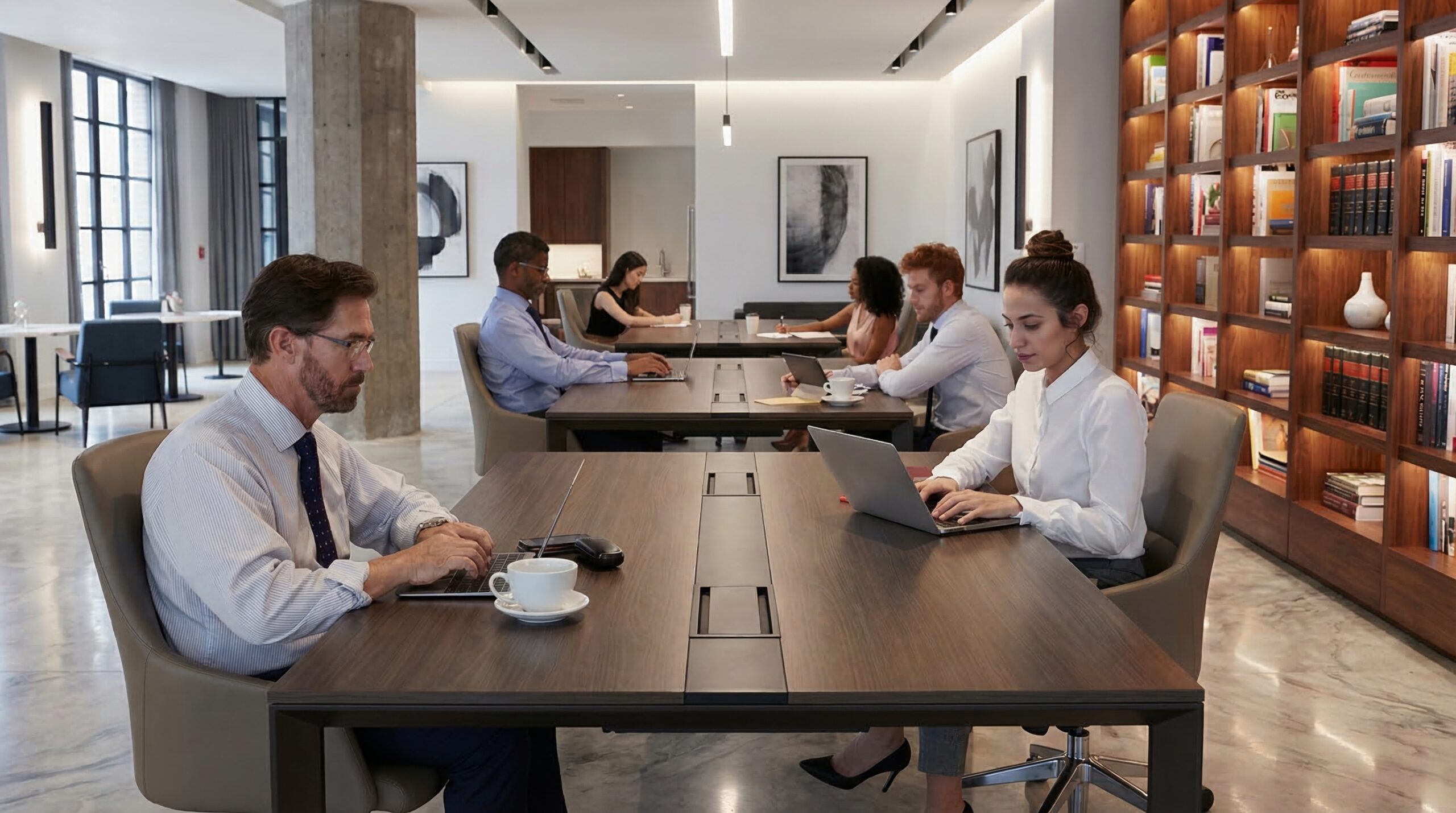
A successful hybrid legal workplace usually separates the office into different operational zones. Quiet focus areas support concentrated work. Shared collaboration spaces allow quick coordination between legal teams. Consultation rooms handle client interaction privately. Flexible touchdown areas support hybrid schedules without weakening confidentiality.
This approach allows the office to feel more adaptable without becoming operationally chaotic.
Office space planning becomes especially important here because circulation and adjacency determine whether the workplace feels controlled or distracting.
For example, collaborative areas may function well when placed near internal project teams, but they become disruptive if positioned directly beside confidential client rooms. Similarly, touchdown workstations may support flexibility effectively, but they should not replace enclosed spaces needed for sensitive legal discussions.
The strongest hybrid law offices feel intentional rather than simply open.
Consultation Rooms Are Becoming More Important Than Large Boardrooms
Many law firms historically prioritized formal boardrooms as the centrepiece of the office.
Today, consultation rooms often provide more day to day value.
Clients increasingly expect conversations to feel private, comfortable, and focused rather than overly formal. Hybrid legal work also means more meetings happen through video platforms, requiring rooms with better acoustics, lighting, and technology integration.
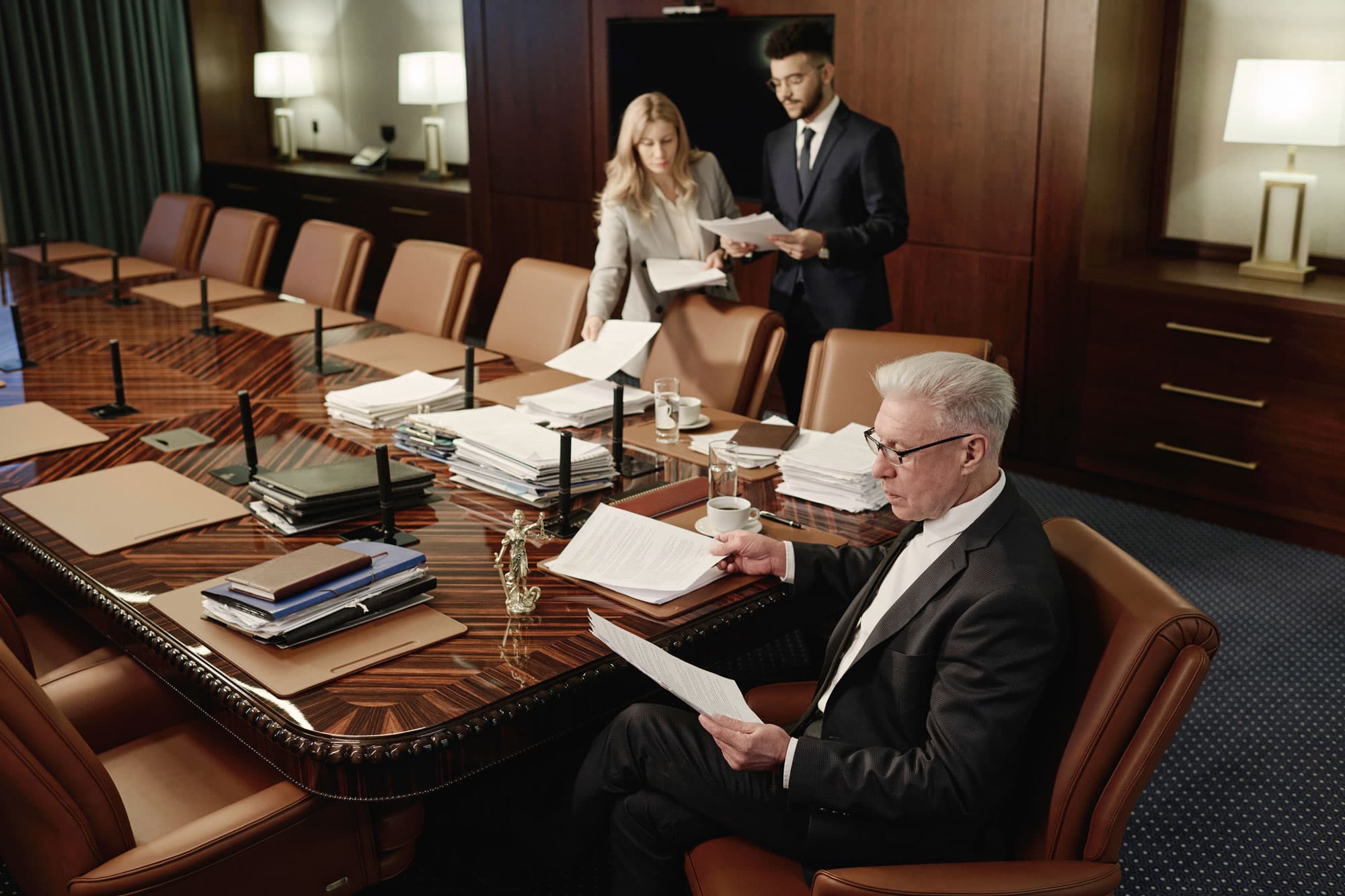
Commercial interior design for modern law firms should include a wider range of consultation spaces rather than relying too heavily on one oversized boardroom that sits underused most of the week.
Smaller rooms often support:
- intake meetings
- hybrid consultations
- settlement discussions
- internal legal reviews
- quick partner coordination
Office furniture design plays an important role here as well. Table proportions, seating comfort, technology integration, and lighting all influence how conversations feel during longer meetings.
The room should help lower tension, not add to it.
Corporate Interior Design Should Reduce Noise Without Feeling Closed Off
One of the biggest misconceptions in legal office planning is that privacy automatically requires isolation.
In reality, many firms operate more effectively when collaboration becomes easier between legal teams, assistants, and support staff.
The challenge is creating openness selectively instead of universally.
Corporate interior design can support this balance through zoning, acoustic layering, and circulation planning. Teams that collaborate frequently may benefit from semi-open work areas, while litigation, employment, or executive functions may require stronger separation.
This is where office interior design becomes more nuanced than simply choosing between private or open offices.
The strongest legal workplaces create different levels of openness depending on the sensitivity of the work being performed nearby.
That layered approach allows firms to modernize without sacrificing confidentiality or professionalism.
Office Furniture Design Quietly Shapes Privacy and Workflow
Furniture decisions influence legal workplaces more than many firms expect.
Office furniture design affects sightlines, acoustics, posture, storage, and even how conversations feel inside meeting spaces.
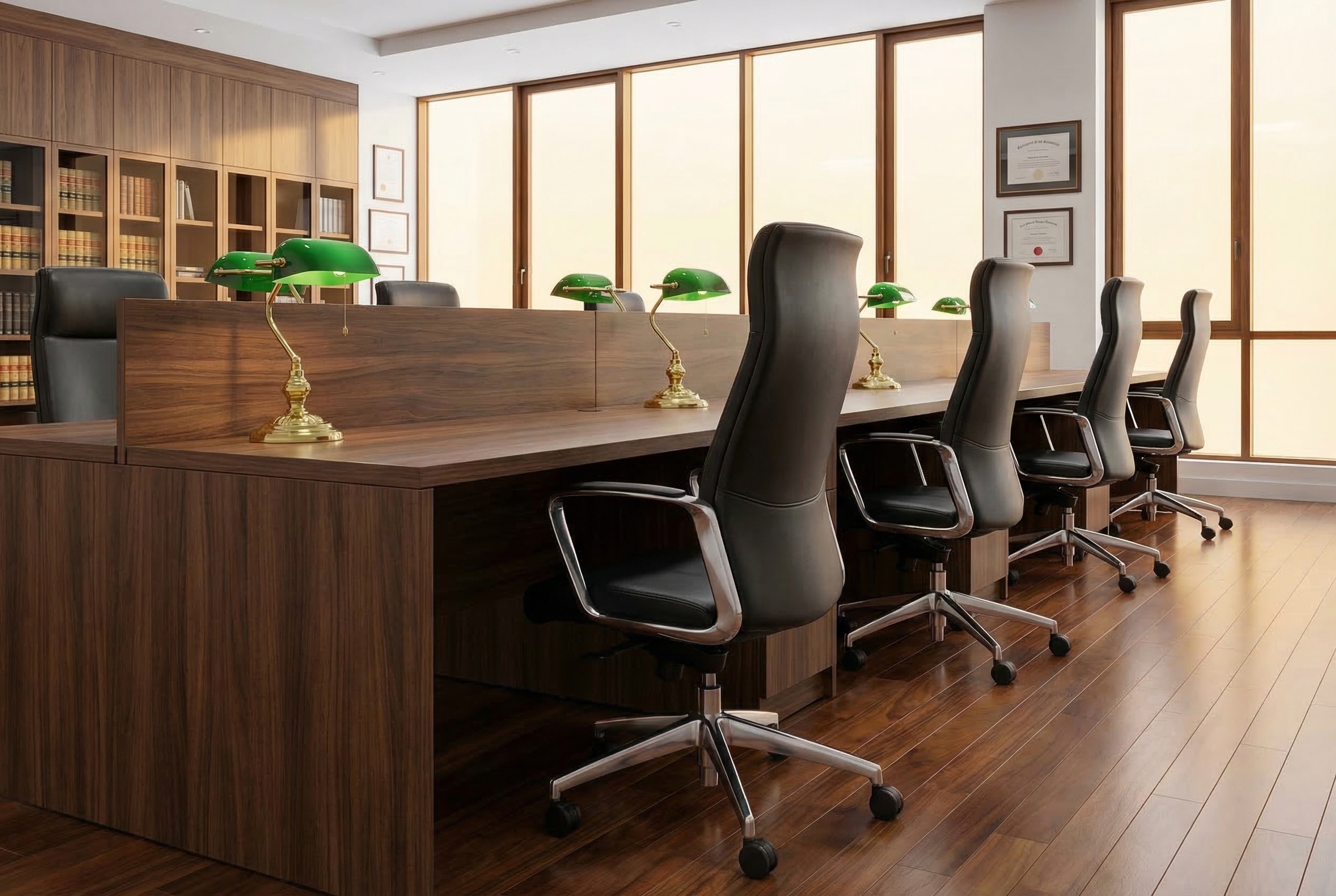
A workstation with poor visual privacy can expose sensitive documents or screens unintentionally. A consultation room with uncomfortable seating can make difficult conversations feel longer and more stressful. In hybrid layouts, poorly planned furniture systems often create cluttered circulation and inconsistent workflow.
Canadian office furniture systems are often effective in legal environments because they prioritize flexibility, acoustic support, ergonomic performance, and long term durability.
Furniture should support the operational logic of the office instead of competing visually for attention.
That restraint tends to create workplaces that feel more composed and professional overall.
Modern Law Offices Need Flexibility Without Losing Structure
Many firms assume modernization means removing hierarchy and opening the office completely.
In legal environments, that approach rarely performs well long term.
Law firms still require structure. Clients still expect professionalism. Confidential work still needs protection.
What is changing is how firms use space more strategically around those realities.
Interior design services that specialize in legal and professional services environments often focus on flexibility within structure rather than flexibility without boundaries.
That means:
- creating adaptable consultation rooms
- integrating hybrid work zones carefully
- improving circulation clarity
- balancing private offices with collaborative support areas
- modernizing finishes and lighting without weakening professionalism
Interior design firms Toronto that work closely with law firms typically approach modernization operationally first.
The visual outcome matters, but it should come from a workplace strategy that already supports confidentiality, focus, client trust, and efficient workflow.
That is what makes a legal office feel modern without feeling generic.
Frequently Asked Questions (FAQ):
Are private offices still necessary in modern law firms?
In many cases, yes. Private offices continue to play an important role because legal work often involves confidential conversations, focused review work, and sensitive client communication that are difficult to manage in fully open environments.
That does not mean every employee requires a permanently enclosed office, but firms that remove private offices too aggressively often create operational problems later. Lawyers begin searching for quiet rooms throughout the day, confidential calls move into circulation areas, and focus work becomes harder to maintain consistently.
Do hybrid office layouts work well for law firms?
Hybrid layouts can work very well when they are planned around legal workflow instead of general workplace trends. Problems usually happen when firms adopt openness too broadly without considering how confidential work moves through the office.
A successful hybrid legal workplace separates functions carefully. Focus work, collaboration, client consultations, and hybrid workstations each require different levels of privacy and acoustic control. When these zones are organized intentionally, the office can feel more flexible and modern without weakening confidentiality or professionalism.
The goal is not to create an open office. It is to create a workplace where employees can move between different types of legal work efficiently and comfortably.
What is the biggest layout mistake law firms make during modernization?
One of the biggest mistakes is prioritizing visual openness over operational performance. Many firms assume modernization automatically means removing offices, increasing glass, and reducing separation throughout the workplace.
In legal environments, this often weakens acoustics, reduces concentration, and creates circulation conflicts between clients and staff. Confidentiality problems usually appear after occupancy, when employees begin adjusting their behaviour around the limitations of the layout.
Modernization should improve how the office functions rather than simply changing how it looks. Firms that focus on workflow, acoustics, consultation spaces, and circulation planning tend to create much stronger long term results.
Key Takeaways
- Confidentiality flow should guide law office layouts before aesthetic decisions are made
- Private offices still support concentration, acoustics, and sensitive legal work effectively
- Hybrid layouts work best when different legal tasks are carefully zoned
- Consultation rooms now play a larger operational role than oversized boardrooms
- Office design layout should separate public circulation from confidential work zones
- Corporate interior design can support collaboration without sacrificing privacy
- Office furniture design affects acoustics, workflow, and professional perception
- Canadian office furniture systems often support flexibility and durability in legal environments
- Modern law offices perform best when flexibility is balanced with operational structure
The best legal workplaces are not trying to imitate tech offices or preserve outdated traditions blindly.
When office interior design, office space planning, commercial interior design, and office furniture design align with confidentiality flow, focus work, and client trust, the workplace becomes more than a professional setting. It becomes part of the firm’s credibility itself.
Talk with us about your workplace goals. We’ll help you create environments that support how legal work actually happens today.