There comes a time in a company’s growth where the office design stops being invisible.
Not because something is broken in an obvious way, but because people start adjusting around it.
A candidate visit feels slightly underwhelming. A client meeting gets moved elsewhere without much discussion. Internally, teams begin working differently, not by choice, but by necessity.
None of these moments trigger immediate action. But they tend to show up at the same stage when the business has moved forward, and the space hasn’t kept pace.
Workplace research consistently shows that the environment affects both productivity and perception. It shapes how quickly people settle into work, how teams collaborate, and how clients interpret what they see.
That makes the office more than a backdrop. It becomes part of how the business performs.
The difficulty is that problems rarely arrive as one clear signal. They build quietly through patterns.
These are the ones worth paying attention to.
Office Interior Design Starts to Feel Like a Patchwork
Growth rarely comes with a clean reset. It arrives in waves, and the space adapts along the way.
A few desks get added. A room gets repurposed. Storage shifts to make room for people. Each move makes sense at the time.
Over a year or two, though, the office design layout can start to lose its internal logic. Teams that should sit together end up split. Circulation paths tighten. Areas designed for one purpose take on another.
You might notice that collaboration takes a little more effort than it used to. Conversations that once happened naturally now require coordination.
This is where office interior design moves from being supportive to reactive. The structure is still there, but it no longer reflects how the business actually operates.
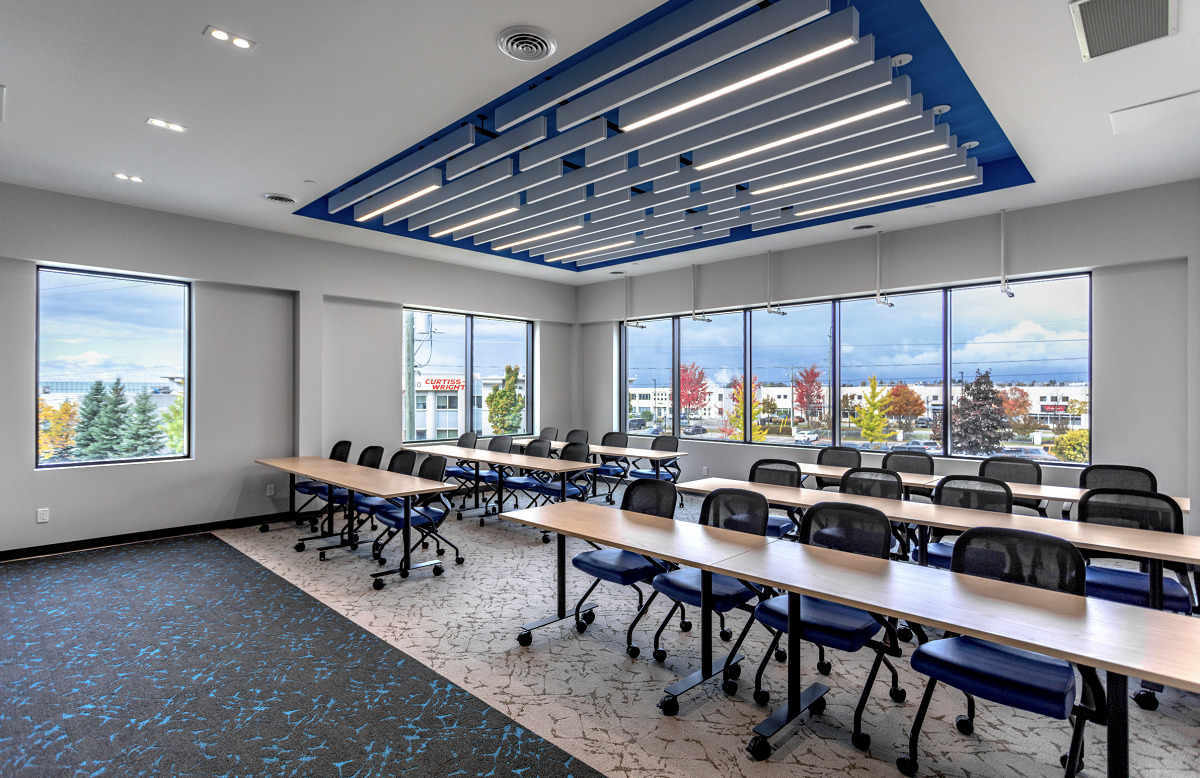
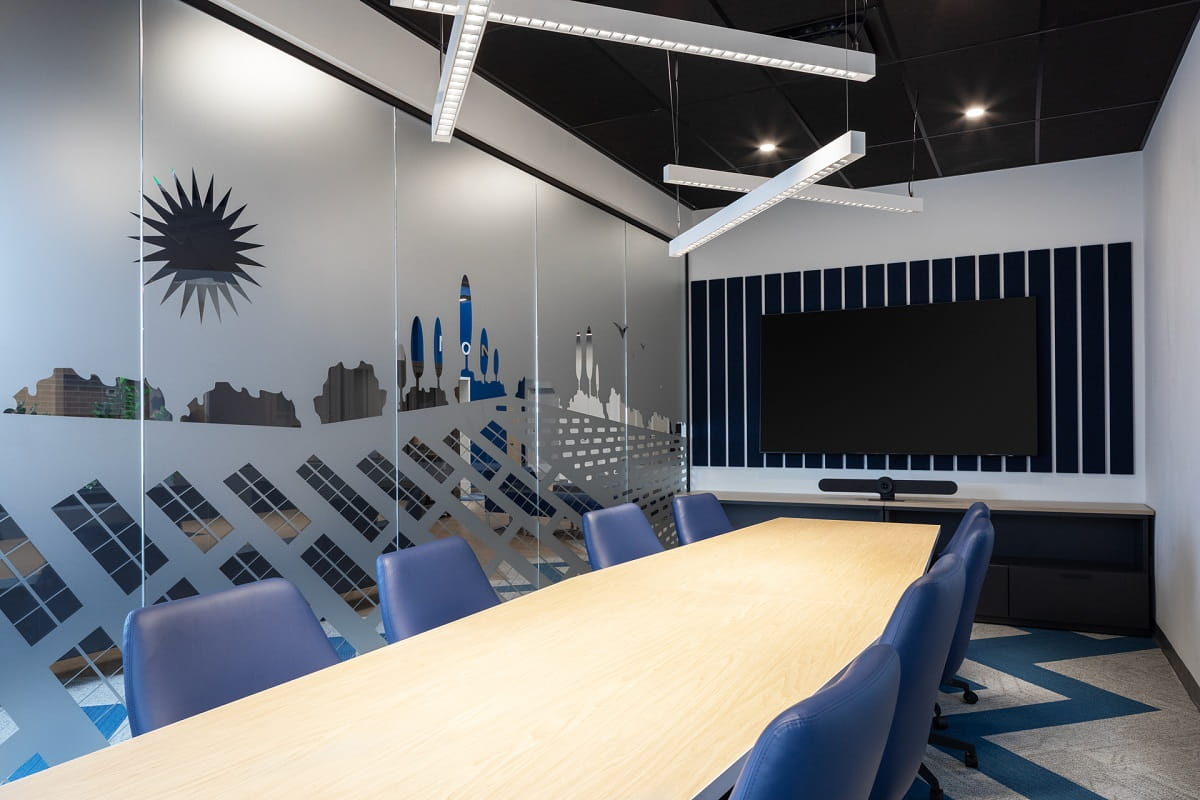
Commercial Interior Design No Longer Matches How Work Happens
Work has changed, but not always in a predictable way.
Hybrid schedules shift. Some teams return more often. Others remain flexible. Client-facing roles behave differently from internal functions.
When the commercial interior design still reflects a previous way of working, the mismatch shows up in daily use.
Meeting rooms may be fully booked on certain days and empty on others. Open areas may feel either too quiet or too crowded depending on timing. Teams spend more time looking for the right space than using it.
This isn’t a capacity issue. It’s a planning issue.
Office space planning needs to account for variability, not just averages. When it doesn’t, productivity begins to erode in ways that feel operational but are rooted in the environment.
Office Design Layout Slows Down Movement and Focus
Flow is one of the least visible, but most impactful, parts of a workplace.
You don’t notice it when it works. You notice it when it doesn’t.
People pause where paths cross. Noise carries further than expected. High-traffic areas interrupt focused work. Over time, certain zones get avoided because they are simply harder to use.
It might be a shared resource placed in the wrong location, or a corridor that now handles more traffic than it was designed for.
These are small friction points, but they accumulate.
A well-considered office design layout allows movement to feel natural and uninterrupted. When that breaks down, even simple tasks begin to take more effort than they should.
Office Space Planning Can’t Keep Up With Hiring
Growth exposes the limits of a layout quickly.
At first, it’s manageable. A few new hires fit into existing space. Teams adjust.
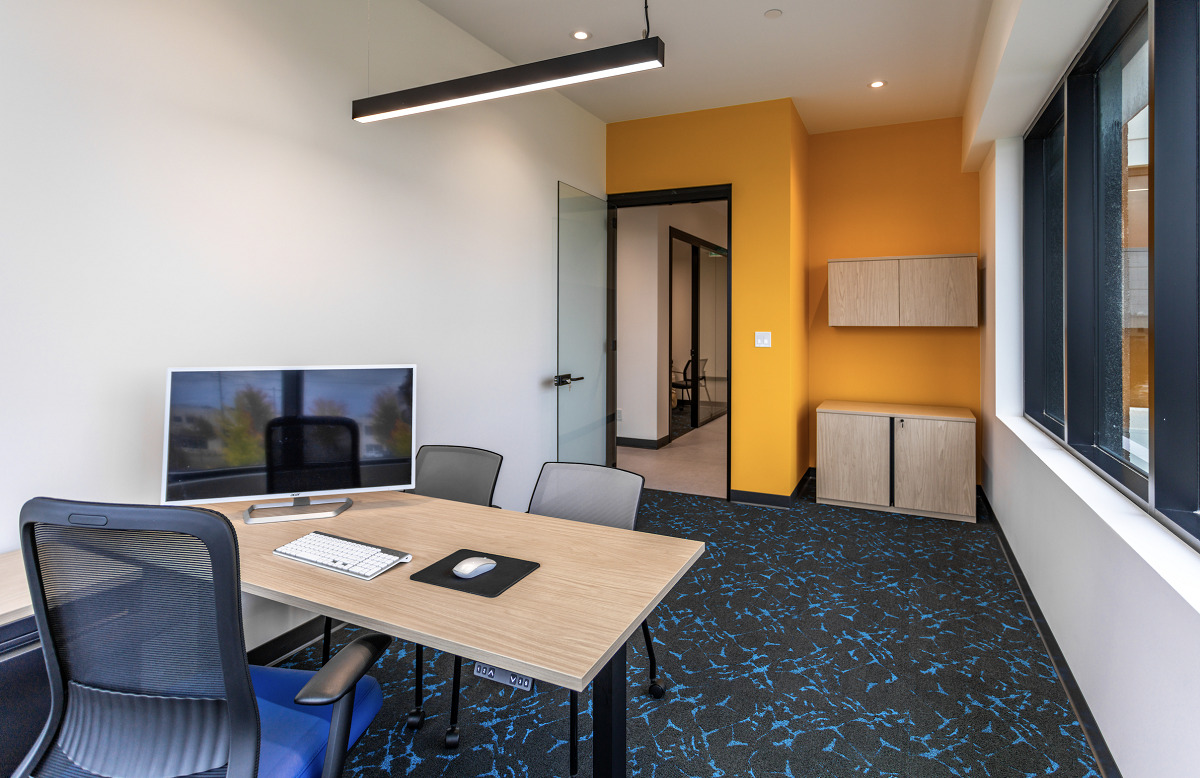
Then the trade-offs begin. A collaboration area becomes additional seating. A meeting room is converted into a temporary workspace. Storage disappears to make room for desks.
Individually, these decisions are practical. Collectively, they start to affect how teams function.
Office space planning should allow the business to grow without forcing these kinds of compromises. Not by leaving large areas unused, but by building flexibility into how space is allocated and reallocated over time.
When every new hire creates pressure somewhere else, the layout is no longer supporting growth.
Office Furniture Design Starts Changing Behaviour
Furniture rarely draws attention when it works well.
When it doesn’t, people adapt.
They shift seats during the day. Avoid certain rooms. Bring in their own fixes to stay comfortable. Over time, these adjustments become part of how work gets done.
Office furniture design has a direct influence on posture, focus, and collaboration. A meeting table that once worked may no longer suit hybrid conversations. Workstations that felt adequate may now feel restrictive.
Canadian office furniture systems that are designed for flexibility tend to perform better in these situations, because they can adjust as needs change.
When behaviour starts to work around the furniture, rather than with it, that’s a clear signal something needs to shift.
Corporate Interior Design No Longer Reflects the Business
As companies grow, expectations change.
Clients notice it first, often without saying anything directly. The space may feel tighter, less defined, or less aligned with the level of work being delivered.
Meetings get moved offsite more frequently. Teams become selective about where they host conversations.
Corporate interior design shapes perception through clarity. Defined zones, consistent materials, and a sense of order all reinforce credibility.
When those elements begin to slip, the office can feel like it belongs to an earlier stage of the business.
The work may have evolved. The space hasn’t caught up yet.
Interior Design Services Are Brought In Too Late
By the time most companies seek help, the problem is already visible.
At that stage, the conversation shifts from improvement to correction.
What could have been a series of targeted adjustments becomes a larger redesign. More time, more coordination, more cost.
Interior design services are most effective before that tipping point. When there is still room to align the space with how the business is changing.
Interior design firms Toronto often see both ends of this. Early involvement leads to strategic evolution. Late involvement leads to more disruptive resets.
The difference is not just in budget. It’s in how smoothly the transition happens.
Frequently Asked Questions (FAQ):
How can you tell if your office is affecting hiring outcomes?
It often shows up in subtle ways. Candidates may seem less engaged during visits, or conversations shift away from the workplace itself. In competitive hiring markets, the physical environment can influence how a company is perceived within minutes.
What are the first signs that layout is affecting productivity?
Look for small behavioural changes. Teams taking longer to find space, avoiding certain areas, or adjusting how they collaborate. These are early indicators that the layout is no longer aligned with how work happens.
When does growth become a design problem?
When each new hire requires reshuffling the existing setup. If expansion consistently creates pressure elsewhere in the office, the issue is no longer capacity. It’s structure.
Key Takeaways
- Small, repeated adjustments can erode the effectiveness of a layout over time
- Work environments must evolve alongside changing work patterns
- Flow issues quietly reduce productivity and increase friction
- Growth should be absorbed without sacrificing key functions
- Furniture influences behaviour more than most teams expect
- Client perception is shaped by spatial clarity and consistency
- Early planning reduces the need for large-scale redesign later
An office doesn’t usually fail all at once. It becomes less aligned, less efficient, and less reflective of the business it supports.
When office interior design, commercial interior design, and office space planning evolve alongside the company, the space continues to function as a tool rather than a constraint.
For leadership teams, the opportunity is to recognize these patterns early and respond before they begin to affect hiring, performance, and client confidence.
If the space is starting to feel like something teams work around instead of relying on, it’s usually the right time to take a closer look.