At some point in every office interior design project, the same question comes up.
Do we move forward and stretch the budget, or do we break this into phases and risk losing momentum?
When it comes to office design for finance and operations teams, this is not just a design decision. It is a resource decision. Cash flow, productivity, and disruption all sit on the line.
The challenge is that phasing is often treated as a fallback. Something you do when the full plan is no longer feasible. That is where problems begin.
Phasing only works when it is structured around priorities, sequencing, and cost control from the start. Otherwise, it becomes a series of short-term fixes that cost more over time.
Office Interior Design Starts by Separating Must-Haves From Nice-to-Haves
Every phased project needs a clear line between what is essential and what can wait.
Without that distinction, decisions get made based on urgency or visibility instead of impact. A reception upgrade may move ahead while core work areas remain inefficient. Finishes may be prioritized over functionality.
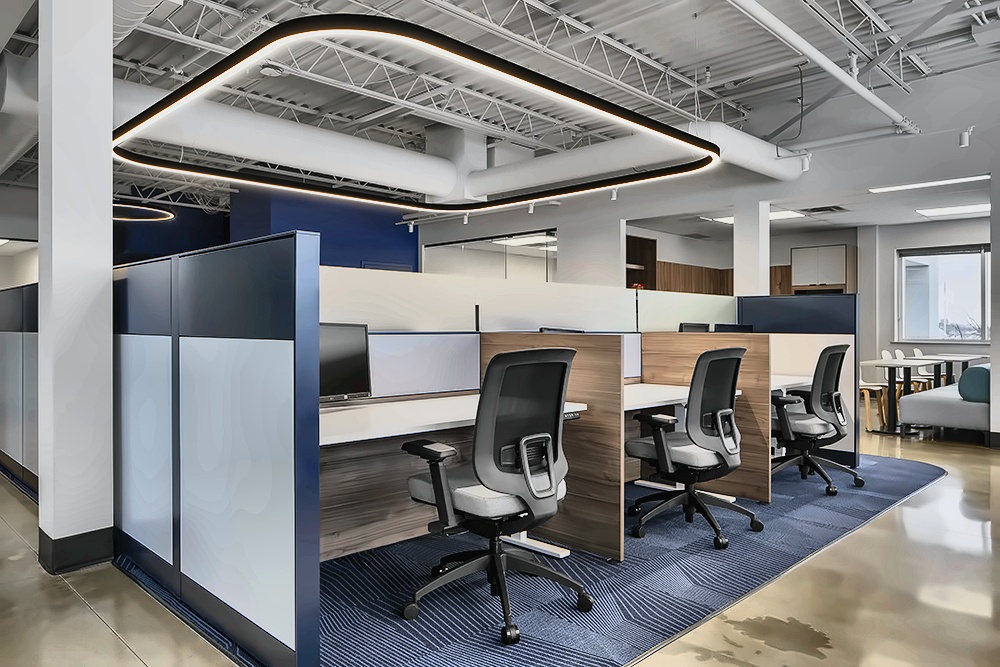
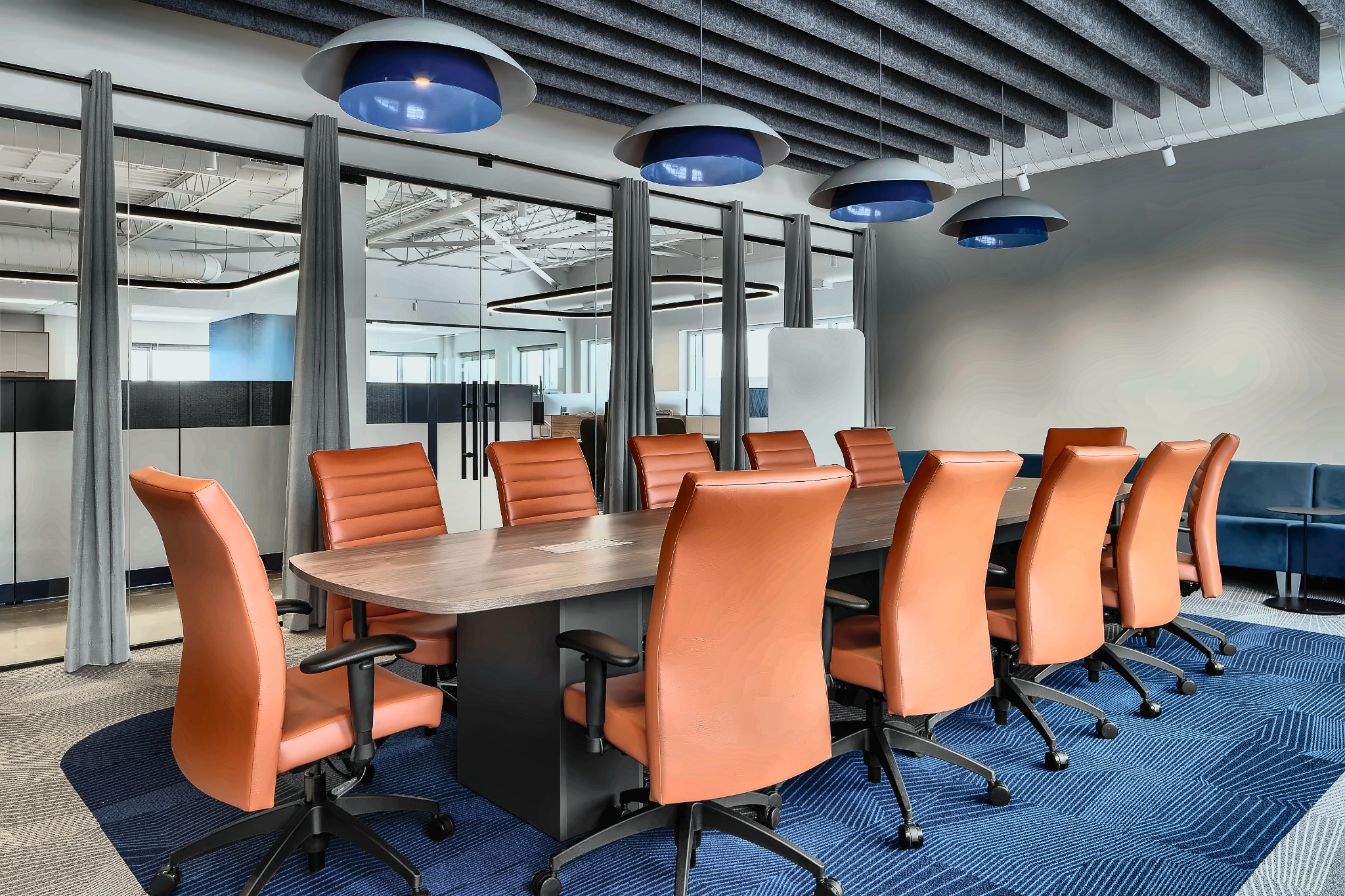
Office interior design becomes more effective when must-haves are defined early. These typically include workstations, critical meeting areas, and any infrastructure required to support daily operations. If these are not addressed first, the space may look complete but still underperform.
Nice-to-have upgrades, such as feature walls, branding elements, or secondary breakout areas, can follow without affecting how the office runs.
Interior design services help teams draw that line clearly so early phases deliver measurable value, not just visual progress.
Commercial Interior Design Requires Sequencing, Not Just Staging
Phasing is not simply dividing a project into smaller parts. It is deciding the order in which those parts happen.
Commercial interior design projects often run into trouble when phases are planned independently. One stage may solve an immediate need but create limitations for the next. Walls are placed without considering future expansion. Power is installed only where needed now.
Good sequencing avoids this.
Core infrastructure and layout decisions should come first, even if they are not fully utilized right away. Structural changes, power distribution, and primary circulation paths are far more expensive to revisit later.
Once those are in place, later phases can focus on upgrades that are easier to implement without disruption.
The goal is not just to complete phases. It is to ensure each phase supports the next without rework.
Office Space Planning Balances Occupancy and Disruption
One of the biggest pressures in phased projects is keeping the business running while changes happen.
Office space planning plays a direct role in how disruptive each phase becomes. Poor planning leads to bottlenecks, temporary overcrowding, and productivity loss.
For example, reducing available workstations during a phase may force teams into shared or temporary setups. That may seem manageable for a short period, but over time it affects performance.
A more structured approach considers occupancy at every stage. Which teams move first, where temporary spaces are located, and how circulation will work during construction all need to be mapped in advance.
Corporate interior design becomes more effective when phasing plans account for both the final layout and the interim conditions.
Disruption cannot always be avoided, but it can be controlled.
Office Furniture Design Supports Cash Flow Control
Furniture is one of the most flexible tools in a phased redesign, especially when budgets need to be managed over time.
Office furniture design can be structured to align with cash flow rather than forcing a large upfront investment. Modular systems allow businesses to purchase only what is needed for each phase, while still supporting future expansion.
This approach avoids overcommitting early while maintaining consistency across the workspace.
Canadian office furniture solutions are often designed with this flexibility in mind. Workstations can be expanded, reconfigured, or relocated without replacing entire systems.
From a financial perspective, this shifts furniture from a one-time expense into a scalable investment.
For operations teams, it also reduces the need to revisit previous decisions as the office evolves.
Interior Design Services Align Phasing With Financial Strategy
Phasing is ultimately a financial strategy as much as it is a design one.
Interior design services help align project timing with budget cycles, ensuring that spending is distributed in a way that supports business operations. This includes identifying which costs should be incurred early and which can be deferred without increasing long-term expense.
For example, completing core infrastructure upfront may require a larger initial investment, but it prevents higher costs later. On the other hand, finishes and branding elements can often be introduced in later phases without affecting performance.
Interior design firms Toronto often approach phasing by looking at both immediate return and long-term efficiency. The goal is not just to reduce upfront cost, but to control total cost over time.
When phasing is tied to financial planning, it becomes a tool for managing growth rather than reacting to constraints.
Frequently Asked Questions (FAQ):
How do you decide what should be included in the first phase?
Start with what directly affects daily operations. Workstations, essential meeting areas, and core infrastructure should come first. These elements support productivity and reduce the need for temporary fixes later.
Can phasing help manage limited budgets effectively?
Yes, when planned correctly. Phasing allows businesses to spread costs across multiple periods, but it only works if early decisions do not create higher costs in later phases.
How do you minimize disruption during phased construction?
By planning occupancy in advance. Identify which teams will be affected, where temporary spaces will be located, and how movement through the office will change during each phase.
Key Takeaways
- Separate must-have upgrades from nice-to-have improvements early
- Sequence infrastructure and layout decisions before aesthetic upgrades
- Plan occupancy carefully to reduce disruption during each phase
- Use modular furniture to align spending with cash flow
- Avoid rework by planning future phases from the start
- Treat phasing as a financial strategy, not a fallback
- Each phase should support long-term efficiency, not just short-term needs
Phasing an office redesign is not about doing less. It is about doing the right things at the right time.
When office interior design, commercial interior design, and office space planning are aligned with financial priorities, each phase moves the business forward without creating unnecessary cost or disruption.
For teams managing both operations and budget, that clarity is what turns phased redesign from a compromise into a controlled advantage.
If everything cannot be done at once, the real question is not what to delay. It is what to prioritize and how to sequence it properly. A seasoned professional interior design services can help you move forward without losing control of cost, operations, or long-term value.