
You’ve hired six people in the last year. The team is bigger, the work is different, and the pipeline is stronger than it’s ever been. But walk into your office on a Monday morning and something feels off. The boardroom got turned into a storage room somewhere around Q3. People take calls in the kitchen because it’s the only quiet corner. New hires spend their first week figuring out where to sit.
The space hasn’t grown with you. And the longer it stays that way, the more it costs, not just in square footage, but in the signals it sends to the people you’re trying to impress and the people you’re trying to keep.
The Space is Physically Full But That is the Obvious One
The easiest sign to spot is also the last one most business owners act on: you’ve simply run out of room. Desks are pushed together. Meeting rooms are double-booked by 9am. Storage has colonised the space where a second workstation should be.
By the time these things become acute, the problem has usually been building for a year or more. Most growing businesses patch it: another desk here, a folding table there, until the patches stop working.
But physical overflow is actually the most forgiving kind of outgrowth, because it’s visible. The signs that matter more are the ones that don’t announce themselves.
The Less Obvious Signs (And Why They Cost More in the Long Run)
Your layout still reflects how you worked three years ago.
When you first moved in, maybe you needed one shared workspace and a meeting room for client calls. Now you have a project team that needs to collaborate in the morning and focus independently in the afternoon. You have people on video calls half the day. You have junior staff who need to be near senior staff to learn.
If your space hasn’t changed to reflect how your work actually happens, your team is adapting to a room that wasn’t designed for them and that friction adds up every single day.
New hires comment on the space in their first week.
This one is uncomfortable to hear, but worth paying attention to. When someone joins a company and one of their first observations is about the office: the noise, the lack of privacy, the fact that there’s nowhere to have a private conversation — it tells you something important. They came from an interview process that sold them on the company. The space is the first reality check.
According to Gallup research, 51% of employees are actively seeking new opportunities at any given time. First impressions, including the physical environment, play a measurable role in whether someone decides to stay past year one.
Clients or visitors seem surprised when they arrive.
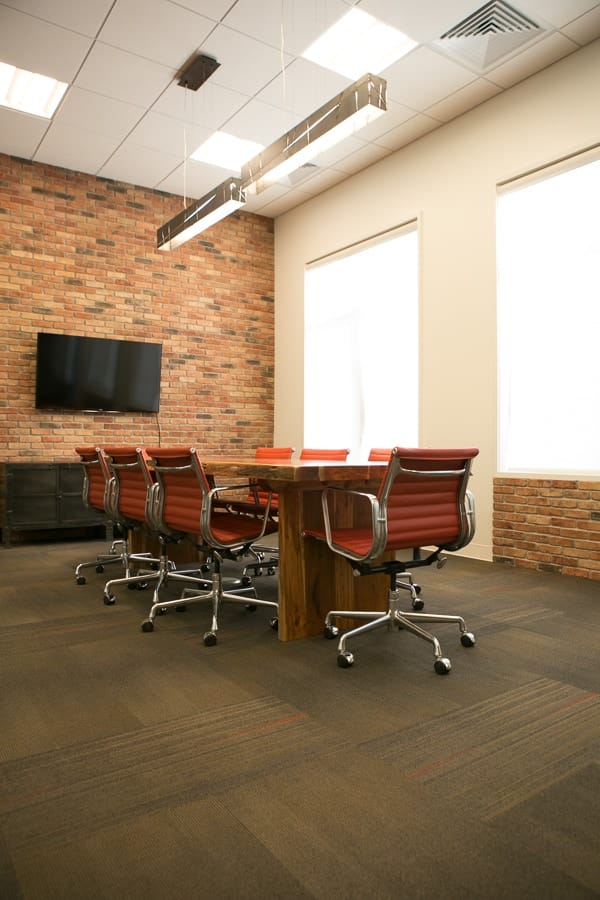
Not every client visit ends in signed paperwork, and not every reason is about price or fit. Sometimes the space does quiet work against you. A reception area that feels temporary, a meeting room with mismatched chairs and a whiteboard from 2018, a general sense that the company is still figuring things out. These cues register with visitors before anyone has said a word.
This matters especially for professional services firms. If your clients are trusting you with something significant, a contract, a project, their reputation, they want to feel that you are established, capable, and invested. Your office either reinforces that or quietly undermines it.
Your team avoids certain areas of the office.
Pay attention to where people actually work versus where the floor plan says they should. If the open-plan area empties out after 10am because it’s too loud, if the meeting rooms get used for solo focus work because there’s nowhere else quiet, if the kitchen doubles as an informal workspace. Those are signals. The space isn’t supporting how your team actually functions.
Steelcase research shows that companies with optimised work environments see an average 17% increase in productivity. That number doesn’t come from redesigning for aesthetics. It comes from designing for how work actually happens.
Some rooms have stopped being used for their intended purpose.
Walk through your office and ask, honestly: is every space doing what it was meant to do? If your “collaboration area” has become a dumping ground, if your “quiet room” has turned into the place people go to take loud calls, if your reception area looks more like overflow storage than a first impression. The layout has drifted away from the organisation’s actual needs.
This kind of drift is normal. It happens gradually, and it usually means the business has changed faster than the space has.
When Is It Time to Renovate or Just Reorganise?
Not every space problem needs a full redesign. Sometimes a thoughtful furniture reconfiguration, better acoustic panels, or a reorganisation of how zones are assigned is enough to meaningfully improve how a space works. We’ve seen relatively modest interventions, a reorganised reception, a new collaborative zone carved from underused square footage, make a significant difference without a major build-out.
But reorganisation has limits. If the bones of the space no longer match how the company works: if the flow between teams is wrong, if there’s a structural lack of quiet space, if the aesthetic is sending the wrong signals to the people who matter most, a reconfiguration will only get you so far.
The questions worth asking are:
- Has the way we work fundamentally changed since we last updated this space?
- Is the space actively making it harder to hire or retain good people?
- Would a client feel more or less confident in us after seeing this office?
If the honest answers point in one direction, the case for a proper redesign is usually stronger than people expect, especially when weighed against the cost of turnover, lost deals, or slow onboarding.
What a Redesign Actually Changes (Beyond the Look)
When we worked with one of our GTA-based clients. Neoen, a professional services firm that had grown from 12 to 38 people without touching their original layout, the visible problem was density. But the real problems were subtler. Their leadership team had no private space for sensitive conversations, their client meeting room communicated with a company a third of the size they actually were, and the open floor plan was creating noise levels that made focus work nearly impossible.
The redesign addressed all of it. A reconfigured floor plan created distinct zones for collaboration, focus, and client-facing work. The reception was redesigned to immediately signal the company’s scale and credibility. Private rooms were built into the plan from the start, not bolted on as afterthoughts.
The feedback from that team, six months later, was consistent: people came in more. New hires settled faster. Client meetings felt different: more confident, more deliberate.
That’s the thing about a well-executed redesign. The visible changes are what people talk about. The invisible changes, the shift in how people experience the company, how clients read the room, how staff decide whether this is a place they want to be, are what actually move the needle.
According to research from the Human Spaces / Interface study of 7,600 office workers across 16 countries, employees in environments designed with intention report 15% higher wellbeing and are 6% more productive. Those aren’t abstract numbers. Applied across a team of 30 or 40 people, they represent real output and real retention.
Frequently Asked Questions (FAQ):
How do I know if my office has actually outgrown itself?
Your office has probably outgrown itself if your team is regularly working around the space instead of being supported by it. Common signs include meeting rooms being used for storage, people taking calls in the kitchen, new hires not having a clear place to sit, or teams using areas of the office for purposes they were never designed for.
Physical crowding is usually the most obvious sign, but it is not always the most important one. The bigger issue is often whether the layout still reflects how your business works today.
Does an outgrown office always mean we need more square footage?
Not always. Many companies assume they need a bigger office when what they actually need is a smarter layout. A better furniture plan, improved storage, acoustic solutions, or clearer zoning can sometimes create a major improvement without adding square footage.
The question is not just, “Do we have enough space?” It is, “Is the space we already have working hard enough?”
When should we renovate instead of simply reorganising?
Downtime is reduced through sequencing, testing, and early coordination.
Before staff arrive, the firm should test internet, phones, printers, scanners, access systems, boardroom technology, video conferencing, and workstation setups. Furniture should be installed in the right sequence so active teams can work immediately. Secure file storage should be ready before documents are relocated.
A weekend relocation can help, but it does not solve downtime by itself. The office must be operational when the legal team returns. Otherwise, disruption simply moves into the workweek.
A Quick Self-Check: How Many of These Apply to Your Office Right Now?
Go through this list honestly. If several of these are true, it’s worth a conversation.
- Your headcount has grown by 20% or more in the last two years, but your layout hasn’t changed
- You’ve repurposed a meeting room, storage room, or kitchen for something it wasn’t designed for
- New team members have commented on the space, and not in a positive way
- Your team consistently works from areas of the office that weren’t designed for that purpose
- You’ve hesitated to bring a client or senior visitor into the office
- Your layout reflects how you worked in an earlier stage of the business, not how you work now
- You’ve had a strong candidate turn down an offer, and you suspect the office visit played a role
- You find yourself saying “we’ll sort the space out when things settle down” and you’ve been saying it for a year
If three or more of these are true, your office has probably already started working against you. The question is how much longer you’re willing to let it.
Your business has changed. It’s grown, it’s matured, it’s developed a way of working that’s specific to the people in it and the clients it serves. The office should reflect that. If it still looks and feels like the company you were two or three years ago, that gap is costing you: in talent, in client perception, and in the quiet daily friction that accumulates when people work in a space that wasn’t built for them.
The good news is that fixing it rarely means starting from scratch. More often, it means working with what you have, designing it deliberately, for where the company is now and where it’s going.
Not sure if your space needs a refresh or a full redesign?
We offer a free consultation, no obligation, just an honest second opinion on your space from a team that has helped over 40 Ontario businesses redesign theirs.