Law firms are under pressure to make their offices work harder than they did a decade ago.
Real estate costs continue rising. Hybrid schedules are changing how often offices are occupied. At the same time, legal employees still rank privacy, focused work, and professional meeting environments among the most important parts of workplace experience. According to multiple workplace studies, employees lose measurable productivity when they cannot access quiet space consistently, while clients continue associating workplace quality with credibility and professionalism during in-person meetings.
This tension is showing up clearly in furniture planning.
The oversized executive office that once symbolized status may now sit partially unused several days a week. Large boardrooms designed for formal presentations often remain empty while smaller consultation rooms stay fully booked. Associate workstations designed for density may struggle to support concentration during hybrid collaboration days.
None of this means traditional legal workplaces no longer work. It means law firms now need to evaluate furniture planning more strategically than before.
Office furniture design is no longer simply about selecting desks, chairs, and meeting tables. It affects confidentiality, acoustics, posture, circulation, workflow, collaboration, and how clients experience the firm from reception to boardroom.
A poorly planned furniture layout creates friction quickly. Employees search constantly for quieter spaces. Meeting rooms become uncomfortable during long legal discussions. Circulation feels crowded. Hybrid technology feels added rather than integrated.
The strongest law offices avoid these problems because furniture planning is treated as part of the operational strategy, not the decorative stage at the end of the project.
That is where office interior design becomes especially important for modern legal workplaces.
Office Interior Design Should Treat Furniture as Workflow Infrastructure
In many legal workplaces, furniture is still treated as a finishing layer added after layout decisions are complete.
That approach creates problems quickly because office furniture design directly affects how people move, collaborate, focus, and communicate throughout the day.
A workstation that is too exposed weakens concentration. A meeting table that is oversized can make client conversations feel formal and distant. Executive offices with heavy furniture placement may reduce collaboration while also limiting flexibility for future reconfiguration.
Office interior design works best when furniture planning happens early enough to shape the overall office design layout itself.
This is especially important in law firms because different roles require different working conditions. Partners handling confidential discussions often need stronger acoustic separation and more controlled environments. Associates may need quieter focus areas combined with easier access to collaboration. Support staff require workstations that allow efficient coordination without exposing confidential materials constantly.
Commercial interior design in legal environments should use furniture to reinforce workflow instead of forcing employees to adapt around poorly planned spaces later.
That operational approach usually creates offices that feel calmer and more efficient overall.
Executive Offices Still Matter, But Expectations Are Changing
Executive offices remain one of the most debated elements in modern law office design.
Some firms view them as essential for confidentiality, focus, and client trust. Others see large enclosed offices as inefficient uses of space in hybrid workplaces.
The reality is more nuanced.
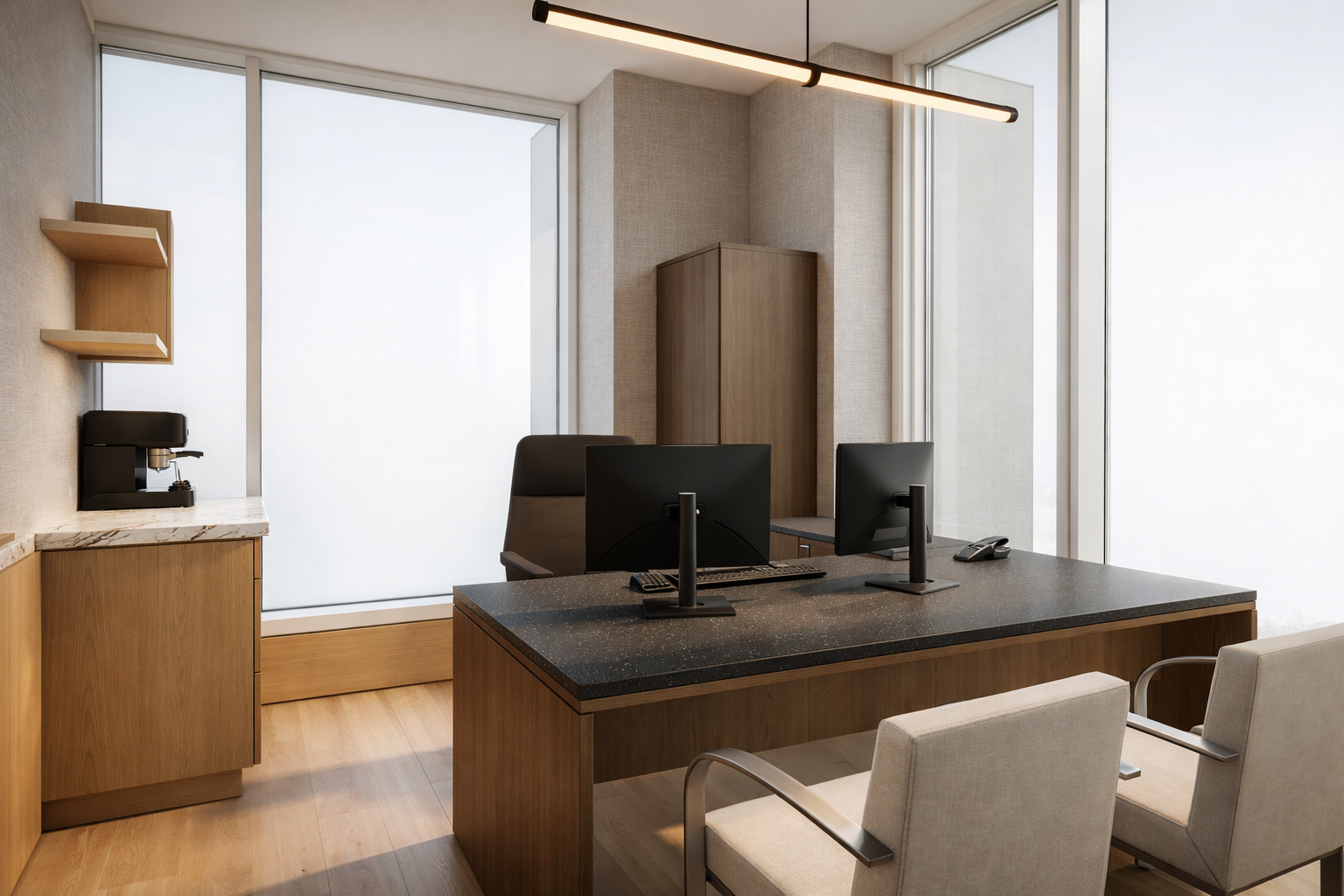
Private offices continue solving several operational needs very effectively. They support confidential discussions naturally, reduce sound transfer, and allow partners to handle focused legal work without constantly searching for quieter space. Clients also often associate private offices with professionalism and stability in legal environments.
At the same time, expectations around executive offices are changing.
Large isolated offices with oversized desks and excessive separation often create barriers between partners and associates. Younger legal teams increasingly expect more accessibility, collaboration, and flexibility within the workplace. Hybrid work has also reduced daily occupancy for many firms, leading some offices to feel underused during large portions of the week.
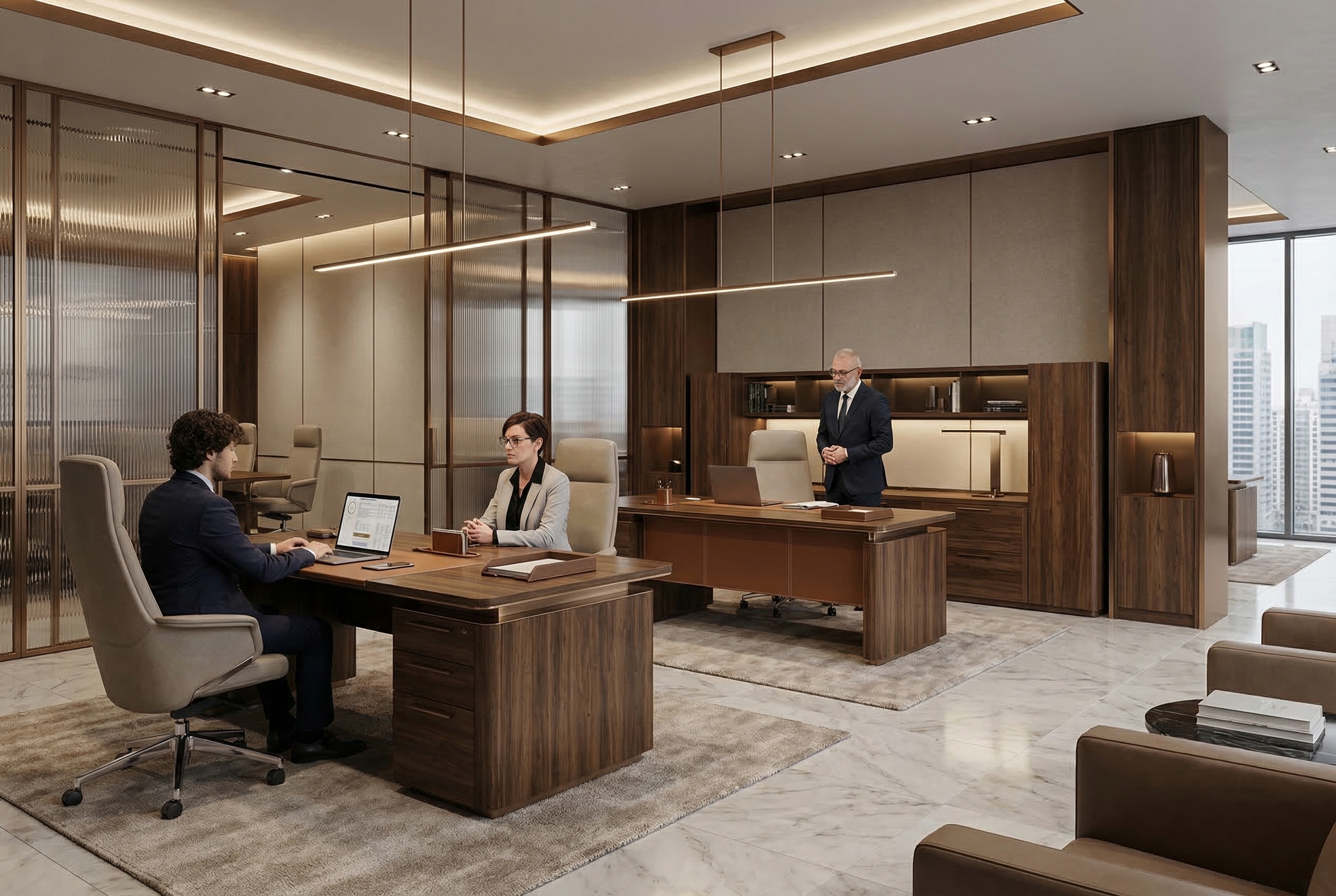
Corporate interior design for law firms now needs to balance authority with accessibility.
Executive offices still perform well when they support confidentiality and workflow without creating unnecessary distance between leadership and the broader legal team. That often means:
- more efficient office footprints
- better acoustic integration
- flexible meeting space within offices
- stronger connection to adjacent legal support areas
The strongest executive offices today feel operationally useful rather than symbolic.
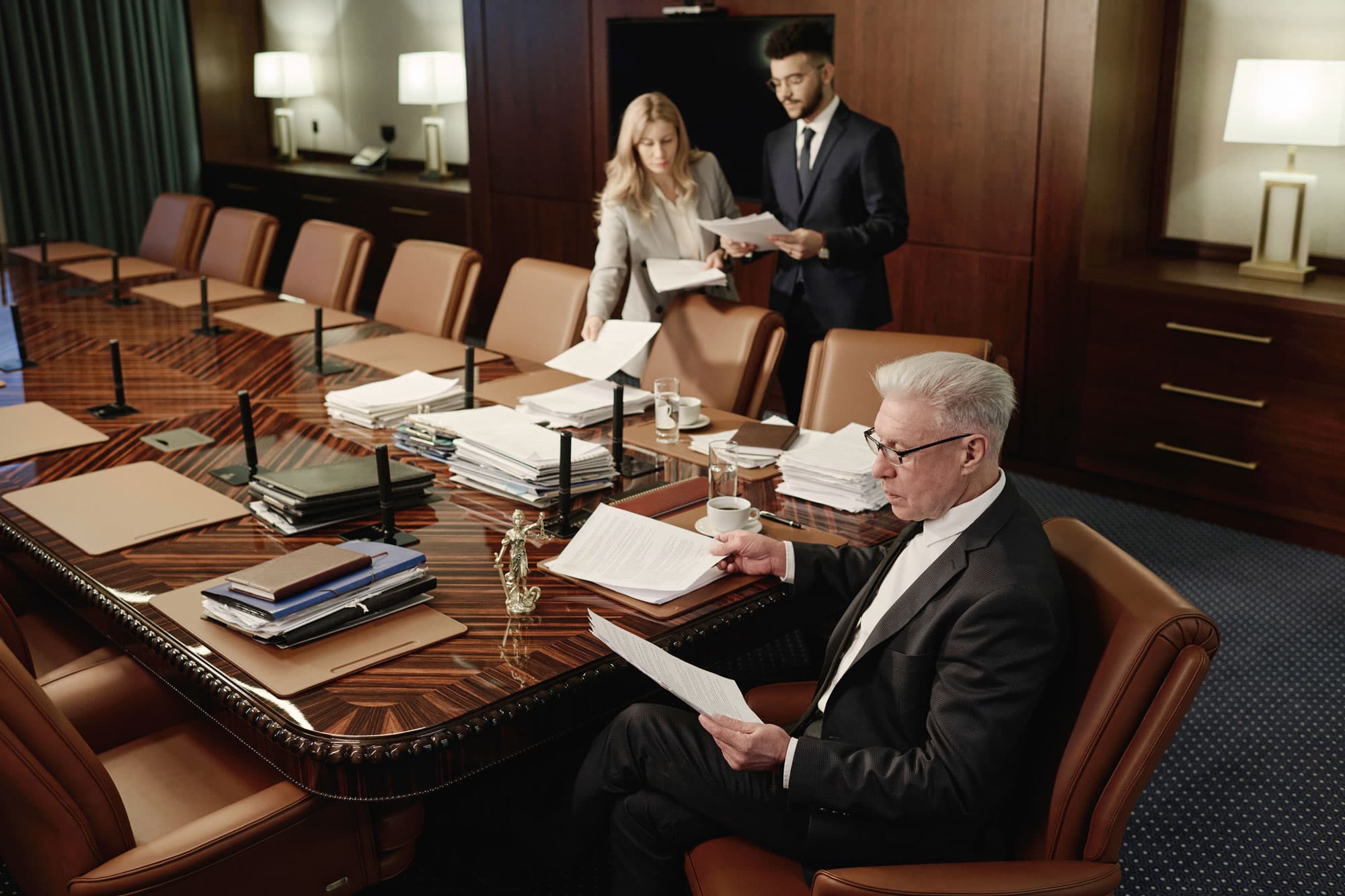
Boardrooms Need to Support Conversation, Not Just Appearance
Many law firms continue investing heavily in formal boardrooms that are used far less frequently than expected.
Large meeting rooms may still matter for certain client presentations, mediations, or executive discussions, but day to day legal work often depends more heavily on smaller consultation spaces and hybrid meeting rooms.
This is where office furniture design becomes especially important.
A boardroom table that is too large creates unnecessary distance during client conversations. Poor seating ergonomics become obvious quickly during long meetings. Inadequate technology integration disrupts hybrid discussions and video conferencing.
Commercial interior design for legal workplaces should evaluate how meetings actually happen rather than assuming all conference rooms need the same format.
Smaller consultation rooms often provide more operational value because they support:
- intake meetings
- internal legal reviews
- hybrid consultations
- settlement discussions
- collaborative document review sessions
Boardrooms still play an important role, but they should be planned proportionally within the broader office space planning strategy instead of dominating the workplace unnecessarily.
The strongest legal meeting environments feel controlled, comfortable, and technologically seamless rather than oversized or overly formal.
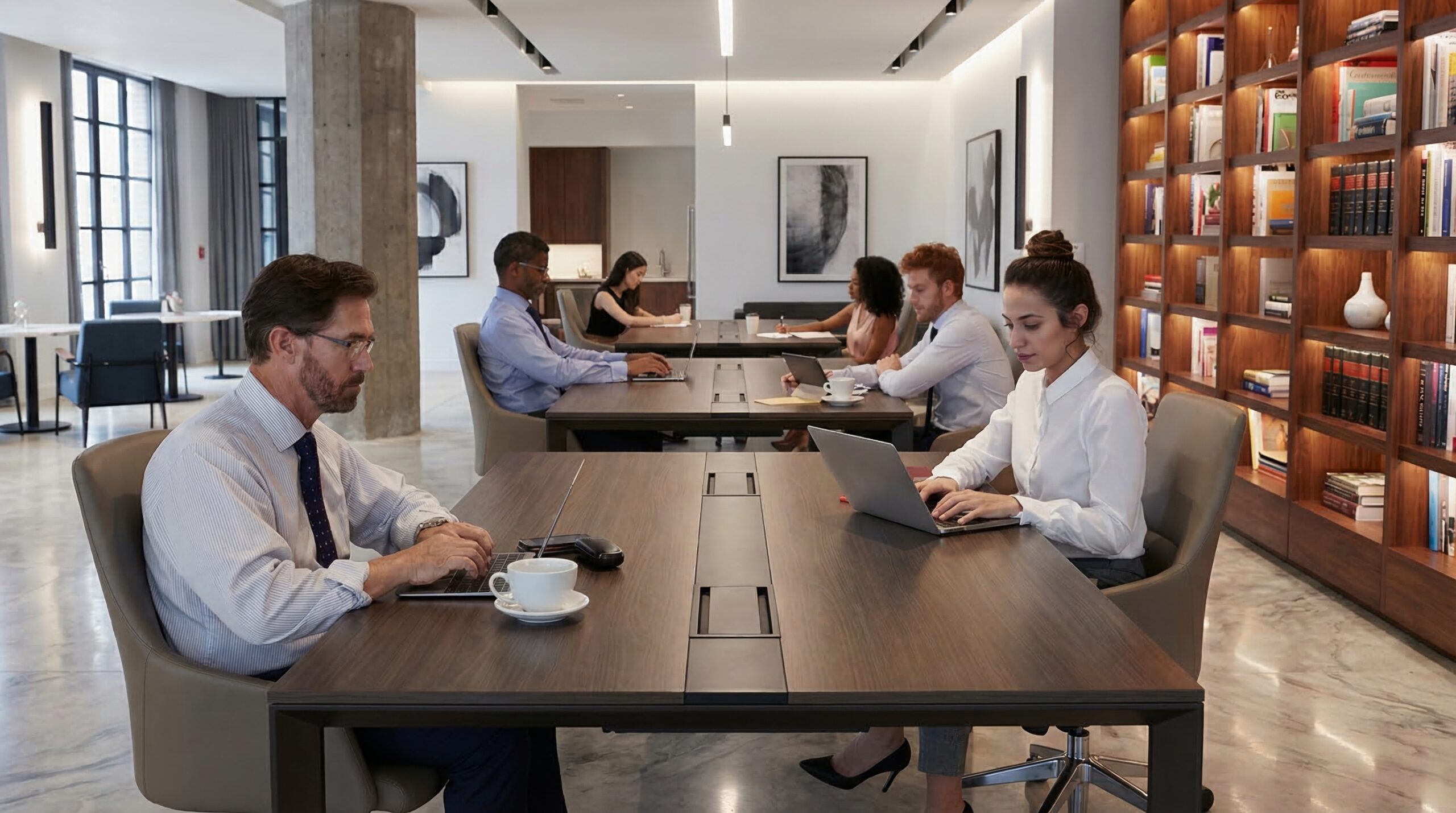
Workstations Are Under More Pressure in Hybrid Law Offices
Associate workstations are changing faster than almost any other part of the legal workplace.
Hybrid schedules, shared occupancy patterns, and rising expectations around employee experience are forcing firms to rethink how workstation areas function operationally.
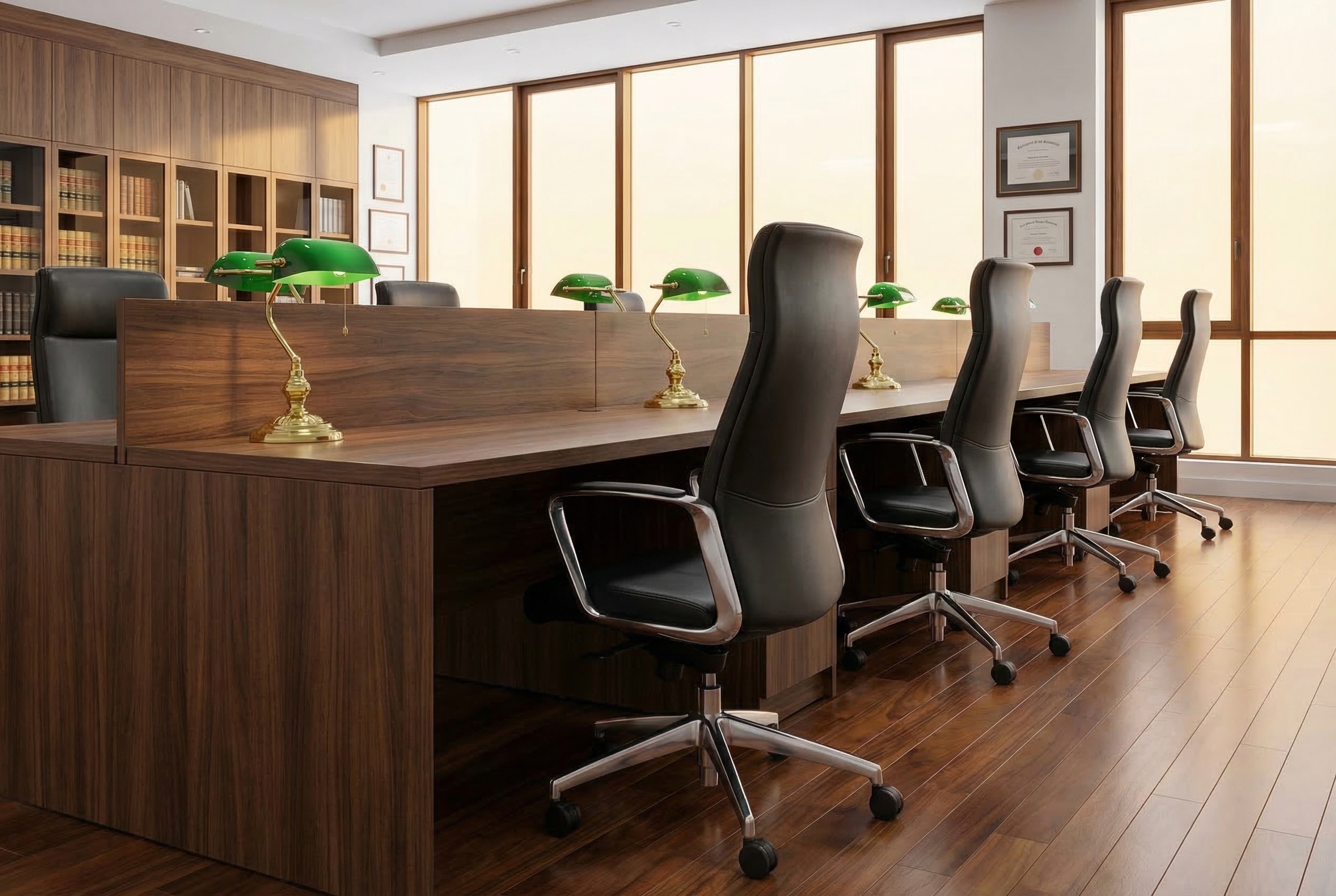
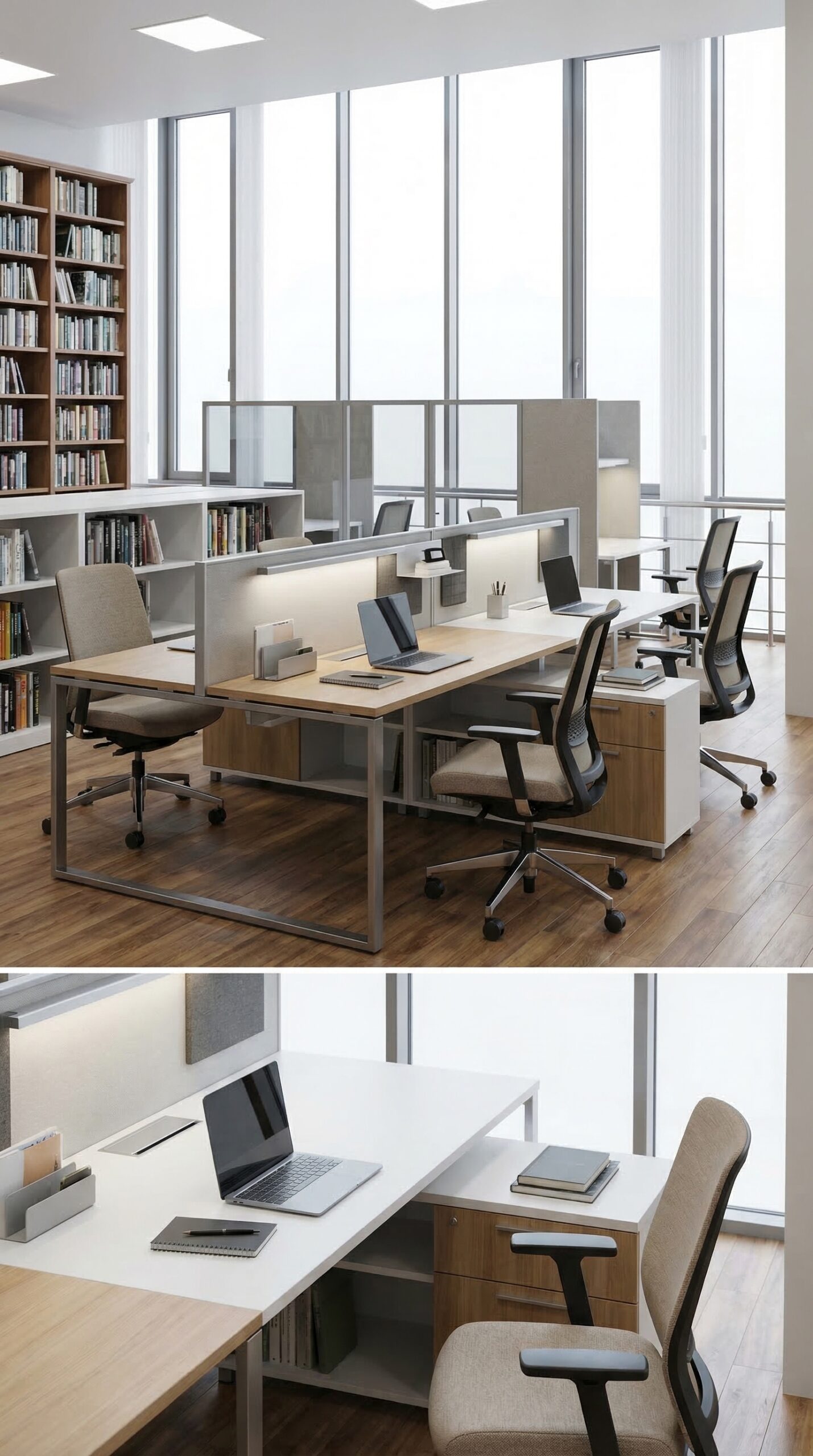
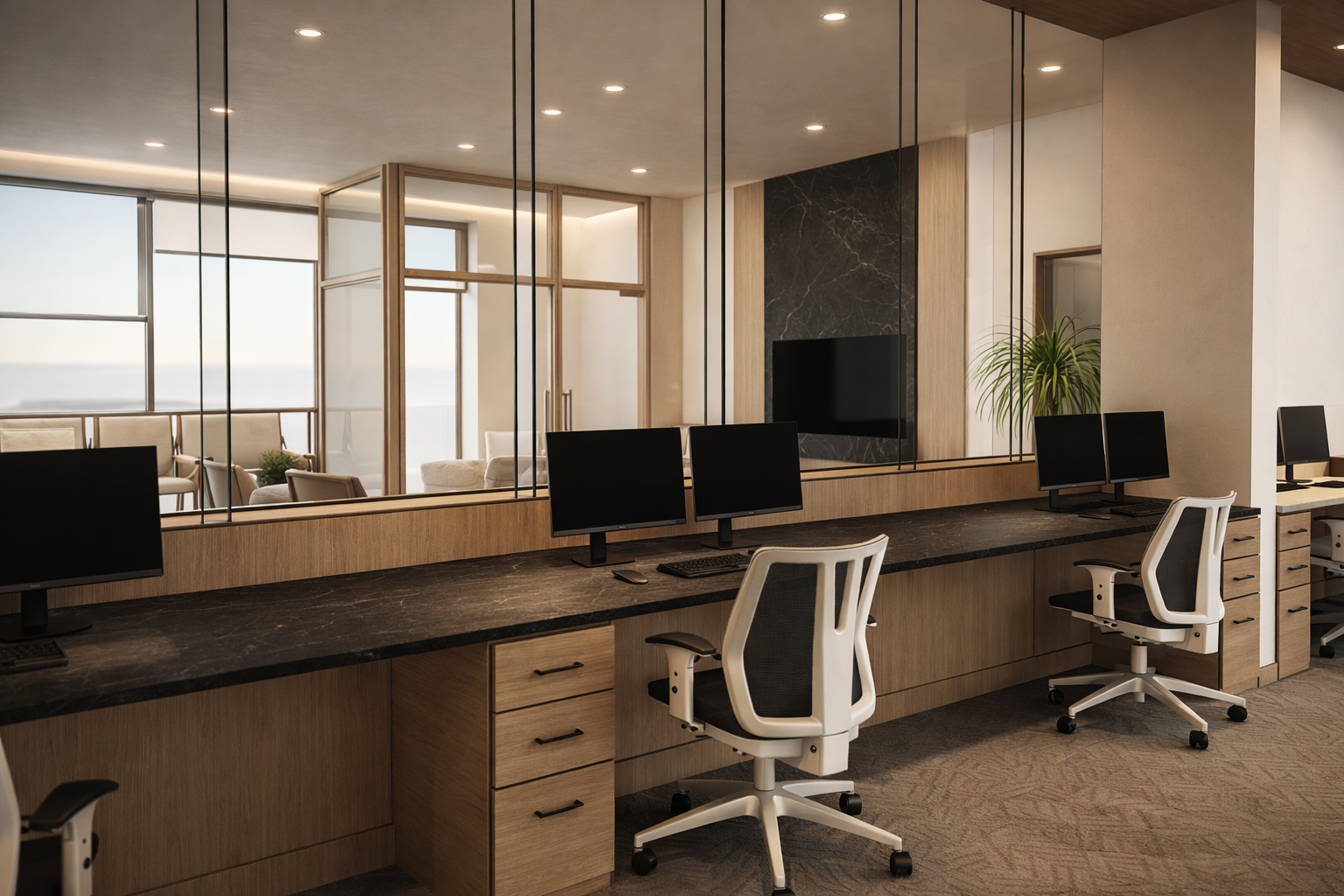
Traditional workstation layouts often prioritized density and hierarchy over flexibility. Modern legal teams now expect more acoustic support, ergonomic comfort, and access to collaborative spaces nearby without losing the ability to focus.
This creates tension in many law firms.
Associates still require concentration for detailed legal work, but firms also want workplaces that feel more connected and collaborative than traditional legal office models.
Office design layout becomes critical here because workstation placement directly affects both focus and communication.
Highly exposed workstation rows may increase visibility, but they often weaken concentration and acoustic privacy significantly. Overly enclosed layouts may reduce collaboration and mentorship between legal teams.
Interior design services for legal workplaces usually perform best when workstation planning supports multiple modes of work rather than forcing all associates into identical environments.
That may include quieter focus zones, semi-private workstation clusters, touchdown areas for hybrid schedules, and nearby consultation rooms that reduce pressure on open work areas.
Canadian Office Furniture Systems Often Support Legal Work Better Than Trend Driven Alternatives
Many trend-focused furniture systems prioritize visual impact over long-term usability.
In legal workplaces, that trade-off becomes noticeable very quickly.
Law firms typically require furniture that can support:
- long periods of focused work
- acoustic control
- secure storage
- hybrid technology integration
- durability under constant daily use
Canadian office furniture systems often perform well in these environments because they are designed around operational flexibility and long-term performance rather than short-term workplace trends.
This becomes especially important in legal environments where office furniture design needs to support both professionalism and adaptability simultaneously.
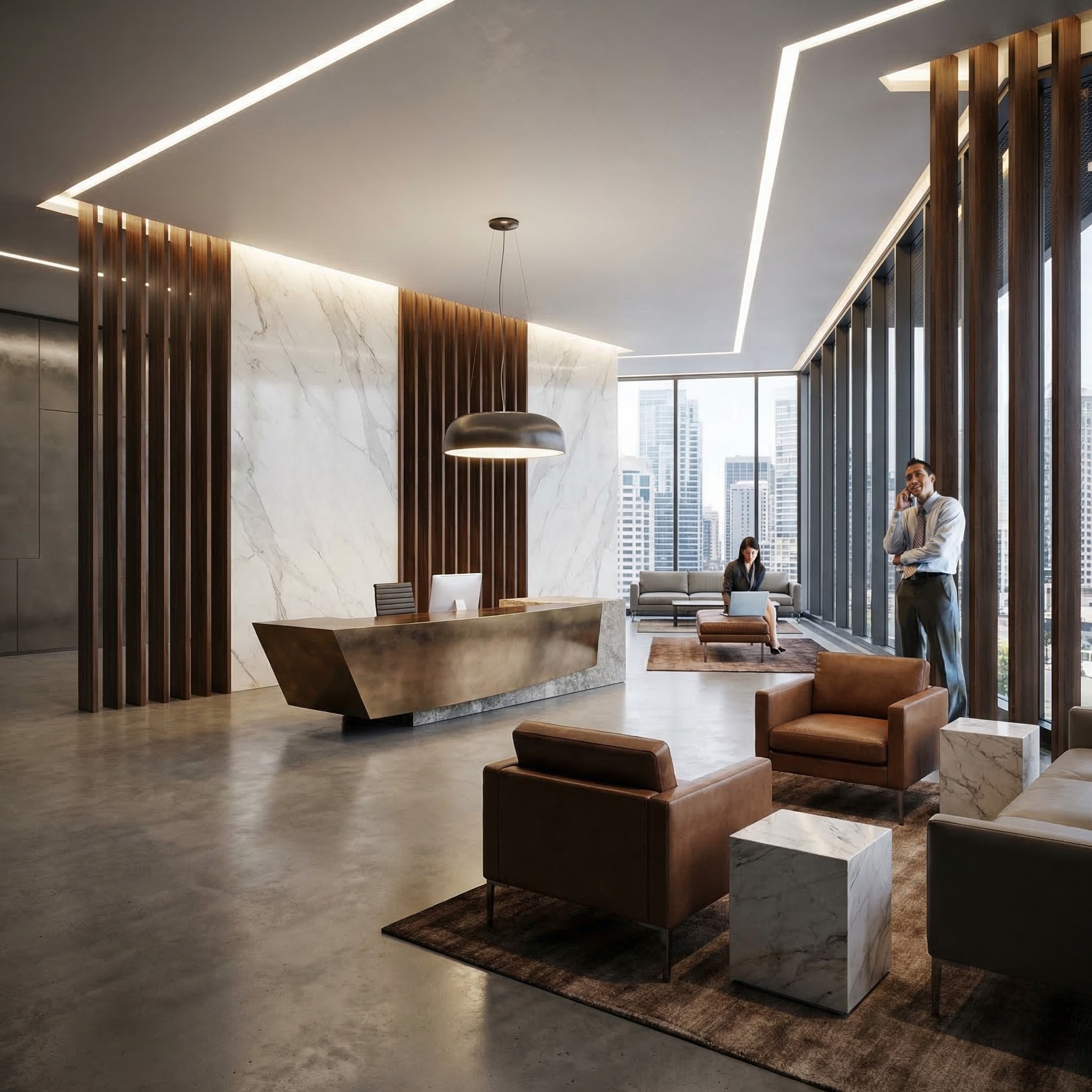
A workstation system that looks modern but fails acoustically will quickly frustrate employees. A boardroom chair that photographs well but becomes uncomfortable during a two-hour meeting weakens the client experience. A reception seating area that wears poorly after a few years undermines the professionalism of the office itself.
Furniture planning should therefore be evaluated based on how the office performs over time, not simply how it appears on installation day.
Law Office Furniture Planning Should Reduce Friction, Not Add More of It
The best legal workplaces often feel simpler than trend-driven offices because the environment supports work naturally.
Employees know where confidential calls can happen comfortably. Associates can focus without constantly adjusting around noise. Clients feel supported during meetings instead of distracted by uncomfortable rooms or awkward circulation.
That level of operational ease usually comes from careful planning rather than expensive finishes alone.
Office furniture design, office interior design, and office space planning work best together when they are all shaped around legal workflow first.
When furniture supports confidentiality, comfort, concentration, and collaboration appropriately, the workplace feels more composed and professional overall.
That consistency is often what clients and employees notice most.
Frequently Asked Questions (FAQ):
Why is furniture planning especially important in law offices?
Legal workplaces depend heavily on confidentiality, concentration, and long-form client interaction. Furniture affects all three directly.
A poorly planned workstation layout can expose confidential information visually and acoustically. Uncomfortable boardroom seating can make long meetings more difficult. Oversized executive offices may weaken collaboration while still failing to support modern hybrid work patterns effectively.
Furniture planning in law firms therefore needs to support how legal work actually happens throughout the day rather than focusing only on appearance or hierarchy. When furniture is integrated properly into office interior design, the workplace feels calmer, more functional, and more professional overall.
Are private executive offices still necessary in modern law firms?
In many legal environments, yes. Executive offices continue supporting confidential discussions, focused legal work, and sensitive client communication very effectively.
However, expectations around executive offices are evolving. Many firms are moving away from oversized isolated offices toward more efficient private spaces that still support confidentiality while improving accessibility between partners, associates, and support staff.
The goal is not necessarily to eliminate private offices. It is to ensure they remain operationally useful within modern legal workflows and hybrid occupancy patterns.
How are hybrid work patterns changing workstation planning in law firms?
Hybrid work has made workstation planning significantly more complex because occupancy patterns now fluctuate throughout the week.
Law firms need workstations that support focus and confidentiality while still allowing flexibility for changing schedules and shared usage. This often requires stronger acoustic planning, more adaptable furniture systems, improved ergonomic support, and better zoning between quiet work areas and collaboration spaces.
Traditional dense workstation layouts often struggle under hybrid conditions because they were designed for consistent full occupancy rather than fluctuating daily use patterns. Modern legal workplaces usually require more layered workstation strategies to support both concentration and flexibility effectively.
Key Takeaways
- Office furniture design affects confidentiality, concentration, and workflow in law firms
- Executive offices still provide strong operational value when planned efficiently
- Boardrooms should support real legal conversations rather than visual formality alone
- Workstations in hybrid law offices require stronger acoustic and ergonomic support
- Office design layout strongly influences focus, collaboration, and circulation
- Canadian office furniture systems often support long-term legal workplace performance effectively
- Interior design services should integrate furniture planning early into office strategy
- The strongest legal workplaces balance professionalism, flexibility, and operational clarity
Law office furniture planning is not simply about choosing desks and meeting tables.
It shapes how confidential work happens, how clients experience the firm, and how employees function throughout the day.
When office furniture design, office interior design, office space planning, and commercial interior design are aligned around legal workflow, the workplace becomes quieter, more professional, and easier to operate long term.
That operational clarity is what makes legal workplaces perform effectively beyond appearance alone.
If your current office is no longer supporting how your legal team works, Studio Forma can help you plan a space that feels refined, practical, and built around trust.