
A law firm office relocation is not just a change of address.
It is a risk event.
Client meetings still need to happen. Confidential files still need to be protected. Lawyers still need access to case materials, secure systems, phones, calendars, printers, and meeting rooms. Reception still needs to feel calm and professional the moment clients arrive at the new office.
That is why relocating a law firm requires more than movers, boxes, and a weekend schedule. It requires a carefully sequenced plan that protects the firm’s operations before, during, and after the transition.
Many office relocations look manageable at the beginning. The lease is signed. The layout is approved. Furniture is ordered. IT is notified. Staff are told the relocation date.
Then the pressure starts.
Boardrooms are not ready for client meetings. Wi-Fi works in some areas but not others. Secure storage arrives late. Printers are not connected. The reception feels unfinished. Lawyers cannot find the right room for private calls. Associates lose time adjusting to a workplace that technically opened, but does not yet function.
For law firms, those gaps are not small inconveniences. They affect client trust, confidentiality, billable time, and professional credibility.
A strong law office relocation plan starts with one principle: the firm cannot afford for the relocation to be felt by clients.
Start With the Legal Work That Cannot Pause
Every law firm has core functions that must continue throughout a relocation.
For some firms, that means client consultations. For others, it means litigation deadlines, closing dates, intake calls, court preparation, partner meetings, or document-heavy review work. These functions should shape the relocation strategy from the beginning.
Many firms make the mistake of planning around furniture first. In a legal workplace, operational continuity should come first.
Before deciding what to relocate first, the firm should identify which teams, files, rooms, systems, and client-facing areas need immediate readiness. A litigation team with active deadlines may need secure workstations and printing access before other departments. A family law or employment law practice may need private consultation rooms available on day one. A corporate law firm handling closings may need boardrooms, video conferencing, and secure document access fully tested before the first client arrives.
This is where office space planning becomes more than layout. It becomes risk control.
A strong office interior design strategy examines how legal work moves through the firm. It considers where confidential conversations occur, how clients travel from reception to meeting rooms, which teams need proximity, and how files move between storage, workstations, and boardrooms.
The relocation plan should support that workflow.
Sequencing Matters More in Law Firm Relocations
A law firm relocation involves a chain of dependencies.
If secure storage arrives late, files have nowhere to go. If the team does not test IT systems before occupancy, lawyers lose access to essential tools. If meeting rooms remain unfinished, client appointments become awkward. If furniture installers work alongside arriving staff, the first week becomes chaotic.
Sequencing prevents those issues.
The best law office relocations work backward from the first fully operational day. Not the relocation date. Not the furniture delivery date. The first day the firm must operate confidently in front of clients.
Reception should be ready before visitors arrive. Teams should furnish, power, connect, and acoustically prepare boardrooms and consultation rooms before anyone books them. Staff should receive assigned and tested workstations before they begin working. The firm should secure file storage before moving confidential materials.
Commercial interior design and relocation planning need to work together. The office design layout should do more than look correct on paper. It should support the order in which people, furniture, technology, and files enter the space.
Poor sequencing often allows a firm to complete the relocation on schedule while dealing with disruption for weeks afterward.
That is where hidden costs emerge. Firms pay not only through invoices but also through lost focus, delayed work, and unnecessary pressure on staff.
Downtime Avoidance Is About Protecting Billable Time
Most firms try to complete their relocation over a weekend.
That approach can help, but only if the new office is truly ready by Monday morning.
A weekend relocation does not prevent downtime when lawyers arrive to untested systems, missing storage, incomplete meeting rooms, or poorly coordinated furniture. Instead, it pushes disruption into the first working days after occupancy.
Law firms should define downtime risks before relocation begins.
Downtime may mean lawyers cannot access documents. Clients may not receive proper service. Video meetings may fail. Assistants may lose the ability to print, scan, or route calls. Associates may spend valuable time solving office problems instead of practicing law.
Each risk requires a different prevention strategy.
Office furniture design plays a practical role here. Workstations need alignment with power and data. Boardroom tables need integrated technology access. Reception desks need to support check-in, calls, privacy, and visitor flow. Storage systems need to arrive before files do.
Furniture is not a finishing touch. In a law firm relocation, it is part of day-one readiness.
A successful relocation should feel almost uneventful to the legal team. People should arrive, know where to go, access what they need, and continue working.
That level of smoothness comes from early planning.
IT Coordination Should Start Before the Layout Is Final
Technology coordination remains one of the most common weak points in law firm relocations.
Legal offices depend on secure systems. Case management platforms, phones, printers, scanners, Wi-Fi, access control, video conferencing, monitors, docking stations, digital filing systems, and meeting room technology all need to function immediately.
When firms involve IT too late, the office often reflects that decision.
Visible cables create clutter. Boardroom technology feels improvised. Reception systems sit in awkward locations. Printers interrupt circulation paths. Video calls suffer because designers overlooked lighting, camera placement, and acoustics.
For law firms, these issues quickly affect professionalism.
A client meeting that begins with technology problems creates the wrong impression. A confidential call in the wrong location creates risk. Poor boardroom audio weakens hybrid meetings. An improperly designed reception desk can expose sensitive information.
IT coordination should begin before the floor plan reaches its final stage.
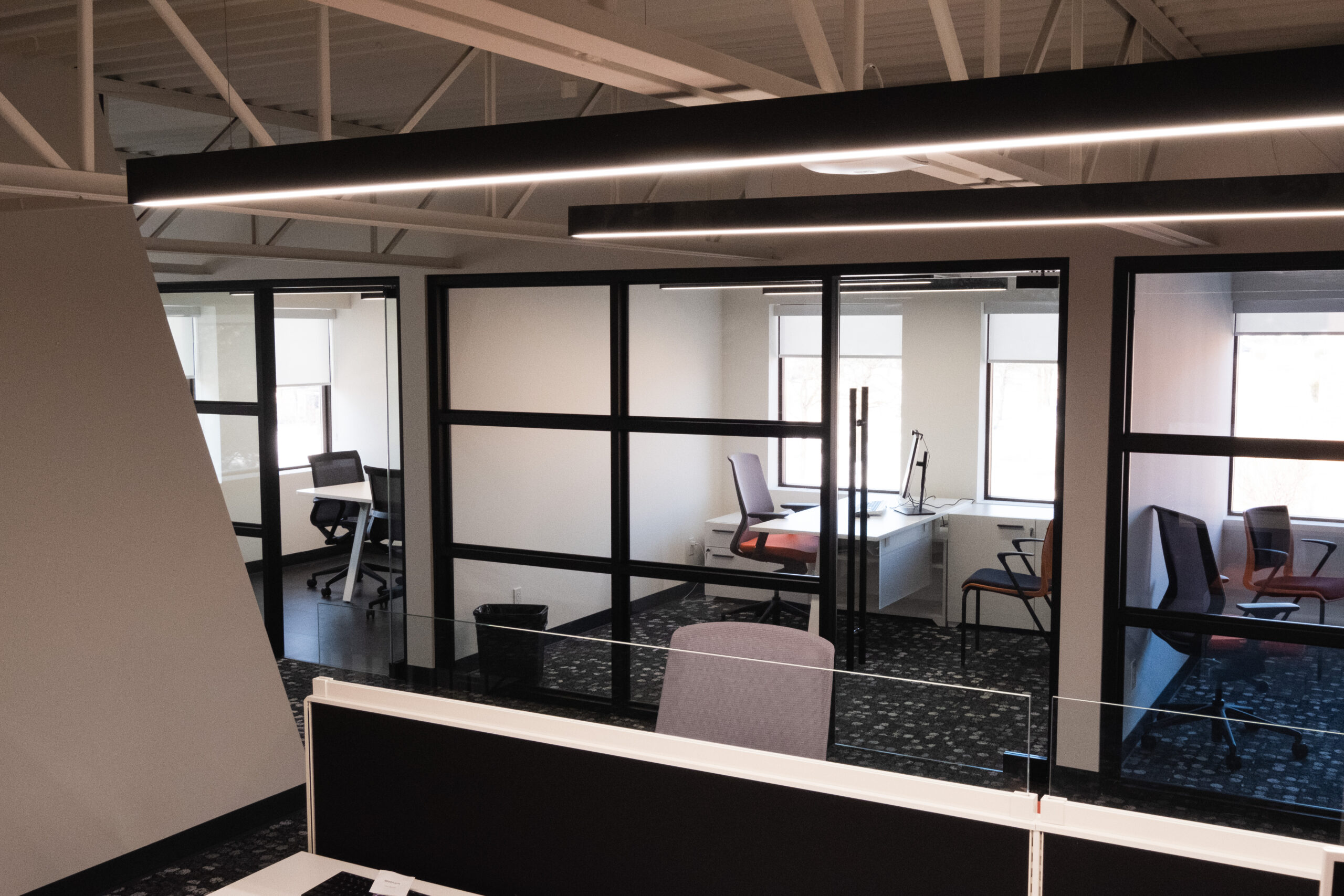
The office design layout determines where power, data, screens, phones, cameras, printers, and access systems belong. Boardrooms require a different level of planning than general meeting rooms. Consultation rooms need privacy and technology without feeling overbuilt. Hybrid firms may also require dedicated phone rooms for confidential conversations.
The best legal workplaces make technology feel invisible because designers integrated it into the space from the beginning.
Occupancy Planning Should Reflect How the Firm Actually Works
Many law firms still plan office relocations around assigned seats and partner offices.
Today’s workplace often operates differently.
Hybrid work has changed legal office occupancy. Some lawyers work in the office daily. Others come in for court preparation, client meetings, mentoring, or collaboration. Associates may need quiet focus space on specific days. Meeting rooms may sit empty early in the week and become fully booked later.
Occupancy planning should account for those patterns before the relocation.
A firm should evaluate peak attendance days, client meeting volume, consultation room demand, private office use, hybrid calls, and support staff workflow. The goal is not simply to fit everyone into the space. The goal is to ensure the office performs well under real conditions.
A smaller footprint may work when planners allocate meeting rooms, focus spaces, and storage effectively. A larger office may still feel strained if critical areas remain undersized.
Prioritize Reception and Client Flow
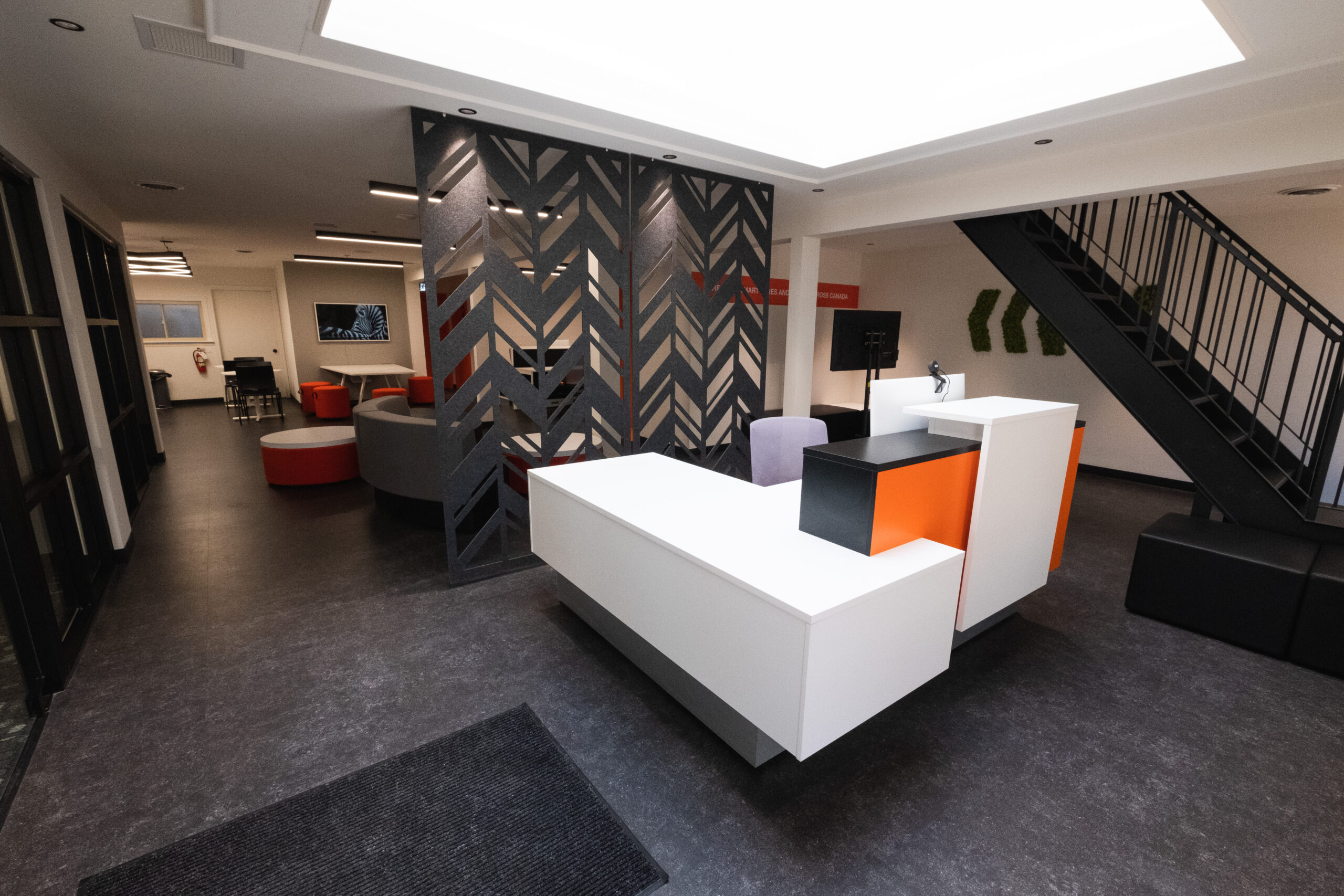
Reception deserves special attention. If clients arrive frequently, the front-of-house experience must support privacy, comfort, and smooth circulation. When firms treat reception as leftover space, the office can feel disorganized even if the rest of the layout works well.
Corporate interior design in legal environments should protect employee performance while reinforcing client confidence. The office needs to function efficiently behind the scenes while presenting a controlled and professional image.
Confidentiality Should Shape the Relocation Plan
A law firm relocation involves sensitive information at every stage.
Files, devices, printed documents, client records, archived materials, and digital access all require careful handling. That reality makes a legal relocation more complex than a standard office move.
Confidentiality should influence both the physical plan and the relocation sequence.
Teams should prepare secure storage before files arrive. Staff should never leave sensitive documents in exposed areas. Designers should position workstations so clients cannot view screens from circulation paths. Planners should locate meeting rooms away from noisy or public zones. Reception areas should support discreet conversations without broadcasting details into waiting spaces.
Interior design services for law firms should address confidentiality through layout, storage, acoustics, and circulation planning.
A beautiful office can still fail if confidential work feels exposed. Clients may never see the planning behind the relocation, but they will notice whether the workplace feels calm, private, and professional.
Trust depends on that experience.
Client Experience Should Be Ready on Day One
The first client visit in the new office matters.
It sets the tone for how clients perceive the relocation.
Clients should not feel like they are entering a workplace that is still finding its footing. Reception should be complete. Signage should be clear. Meeting rooms should be ready. Technology should function properly. Materials should feel finished. Staff should know how to guide visitors through the space.
For law firms, client experience directly influences brand trust.
A relocation often creates an opportunity to elevate the firm’s image. The new office can communicate stability, growth, discretion, and professionalism. However, that only happens when the firm carefully plans the client journey.
Design the Arrival Experience
The experience starts before the boardroom.
Where does the client enter? How quickly does someone greet them? Can they wait comfortably without feeling exposed? How far is the consultation room? Do they pass internal work areas? Can others overhear conversations? Does the space feel organized?
These operational details shape brand perception.
A law firm relocation should do more than move the business into a new space. It should improve how clients experience the firm.
The Best Law Firm Relocations Reduce Last-Minute Decisions
Relocations become stressful when teams leave too many decisions unresolved.
Where will active files go? Which rooms will be client-ready first? Who confirms IT testing? Which furniture stays? Which pieces are replaced? What happens if boardroom technology is delayed? How will staff know where to sit? Who approves relocation-day changes?
Teams should answer these questions long before moving day.
A strong relocation plan gives the firm clear responsibilities, timelines, fallback options, and communication points before pressure builds. Leadership, operations, IT, design teams, movers, furniture vendors, and staff all need to follow the same plan.
This is where a law firm office relocation becomes a valuable strategic opportunity.
When firms execute the process well, the relocation reduces friction, improves workflow, strengthens client experience, and creates a workplace that better supports legal work.
When firms execute it poorly, they create weeks of avoidable disruption.
Frequently Asked Questions (FAQ):
When should a law firm start planning an office relocation?
A law firm should begin planning as early as possible, ideally before the lease is finalized or construction timelines are locked. Early planning gives the firm time to assess whether the new space can support confidentiality, client meetings, private offices, hybrid work, storage, IT infrastructure, and reception needs.
Waiting too long often creates rushed decisions. Furniture may not align with power and data. Secure storage may arrive late. Meeting rooms may not support hybrid calls properly. Reception may look finished but fail operationally.
For law firms, the cost of late planning is not only an inconvenience. It can affect client experience, billable time, and internal confidence during the transition.
What is the biggest mistake law firms make during relocation?
The biggest mistake is treating the relocation as a physical relocation instead of an operational transition.
Relocating desks and files is only one part of the process. The more important issue is whether lawyers, associates, assistants, and client-facing staff can continue working without disruption. If IT, storage, meeting rooms, and reception are not coordinated properly, the new office may open before it is truly functional.
A strong law firm relocation plan should protect the firm’s most important workflows first. That includes confidential conversations, document access, client meetings, and time-sensitive legal work.
How can law firms avoid downtime during an office relocation?
Downtime is reduced through sequencing, testing, and early coordination.
Before staff arrive, the firm should test internet, phones, printers, scanners, access systems, boardroom technology, video conferencing, and workstation setups. Furniture should be installed in the right sequence so active teams can work immediately. Secure file storage should be ready before documents are relocated.
A weekend relocation can help, but it does not solve downtime by itself. The office must be operational when the legal team returns. Otherwise, disruption simply moves into the workweek.
Key Takeaways
- A law firm office relocation should be planned around client work, confidentiality, and operational continuity
- Sequencing determines whether the relocation feels smooth or disruptive
- Downtime avoidance protects billable time and client confidence
- IT coordination should begin before the office layout is finalized
- Reception, boardrooms, consultation rooms, and storage should be ready before occupancy
- Occupancy planning should reflect hybrid schedules, meeting demand, and peak office use
- Confidential files and sensitive conversations require secure planning throughout the relocation
- Client experience should be ready on day one, not treated as a final detail
- The strongest relocations reduce last-minute decisions through clear coordination
A law firm office relocation is not simply about relocating people and furniture.
It is about protecting the work, the clients, the information, and the trust that keep the firm operating.
When office interior design, office space planning, IT coordination, furniture procurement, and relocation sequencing are aligned early, the relocation becomes far less disruptive and far more strategic.
If your law firm is preparing for a relocation, expansion, or workplace redesign, Studio Forma can help plan the sequence, layout, furniture, and operational details that make the relocation work.