
Public sector renovations rarely happen under ideal conditions.
The building is usually still occupied. Services still need to operate. Staff still need to move through the space safely while construction happens around them. In some cases, the public continues accessing the building every day during renovation.
That level of complexity changes the entire renovation strategy.
A phased office renovation is not simply about breaking a project into smaller stages. It is about maintaining operations while upgrading the workplace without creating disruption that affects employees, visitors, or public services.
This is where many institutional projects become difficult.
A renovation that works well on paper can quickly create operational issues once construction begins. Circulation paths change unexpectedly. Temporary workspaces become overcrowded. Accessibility routes are interrupted. Staff lose focus because noise and movement were underestimated during planning.
The strongest phased renovations avoid these problems by treating implementation as part of the design process from the beginning.
That requires a more strategic approach to office interior design, office space planning, and commercial interior design than most conventional workplace projects demand.
Office Interior Design Must Support Operations During Construction
Most institutional workplaces cannot fully shut down during renovation.
Municipal offices still need to serve the public. Educational facilities still need to support students and staff. Healthcare and administrative environments often operate continuously even while upgrades are underway.
This changes how office interior design needs to be planned.
The workplace must function in two conditions at once. One part of the building may be under construction while another remains fully operational. Employees may temporarily relocate multiple times throughout the project. Public circulation may need to shift without creating confusion.
Commercial interior design in these environments should reduce operational stress instead of adding to it.
That often means designing temporary swing spaces that still support productivity, maintaining clear circulation paths throughout each phase, and planning construction sequencing carefully so that high-disruption work happens during lower occupancy periods whenever possible.
Office design layout becomes especially important here because movement through the building changes constantly during phased construction. Employees and visitors should still be able to navigate the space safely and intuitively even while parts of the workplace are being renovated.
Accessibility Cannot Be Treated as a Temporary Compromise
Accessibility challenges often become more complicated during phased renovations than during completed projects.
Routes that work in the final layout may become interrupted during construction. Temporary entrances may create confusion. Employees and visitors who rely on accessible circulation can quickly become affected if planning focuses too heavily on construction logistics alone.
This is why accessibility planning needs to remain active throughout every project phase, not just the final occupancy stage.
Office space planning should account for how people move through the building during renovation, not only after construction is complete. Accessible workstations, temporary reception points, meeting spaces, and circulation routes all need to remain functional throughout implementation.
Corporate interior design in public sector environments performs best when accessibility feels integrated into daily operations rather than treated as a separate compliance exercise.
That consistency reduces frustration significantly during longer renovation timelines.
Stakeholder Coordination Often Determines Whether the Project Succeeds
Institutional projects usually involve a large number of decision makers.
Facilities teams, operations leaders, procurement departments, accessibility consultants, contractors, public representatives, and internal departments may all influence the project simultaneously.
Without clear coordination, phased renovations become difficult very quickly.
Approvals slow down. Communication gaps increase. Construction sequencing changes unexpectedly because operational priorities were not aligned early enough.
Interior design services that specialize in institutional environments often spend as much time coordinating stakeholders as designing the physical space itself.
That coordination becomes especially important during phased implementation because decisions made in one phase often affect every stage that follows.
The strongest projects create clarity around:
- who approves what
- when operational changes happen
- how staff communication is managed
- how temporary disruptions are handled
When those expectations are aligned early, the renovation process becomes significantly smoother operationally.
Long Life Materials Reduce Future Disruption
Public sector and institutional workplaces experience constant daily use.
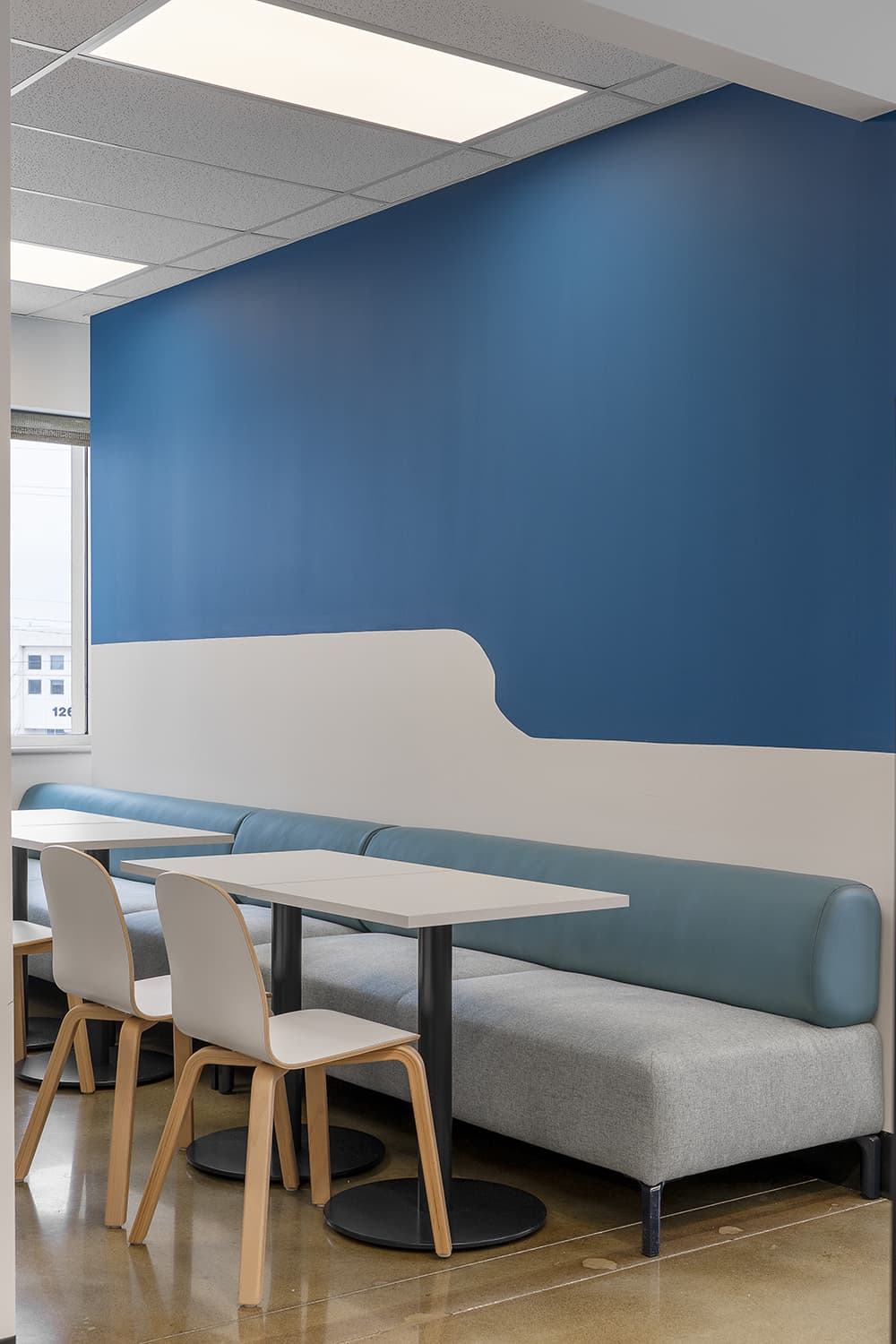
Floors handle continuous foot traffic. Shared seating areas experience heavy wear. Reception spaces, corridors, and collaborative zones often operate at full capacity throughout the day.
This is why material selection matters far beyond appearance.
Commercial interior design in institutional environments should prioritize materials that maintain performance over long periods without requiring frequent replacement.
Durability affects operational continuity directly. Materials that wear quickly create additional maintenance disruptions later, often forcing organizations into repeated repair cycles that become expensive and difficult to coordinate.
Office furniture design plays a similar role.
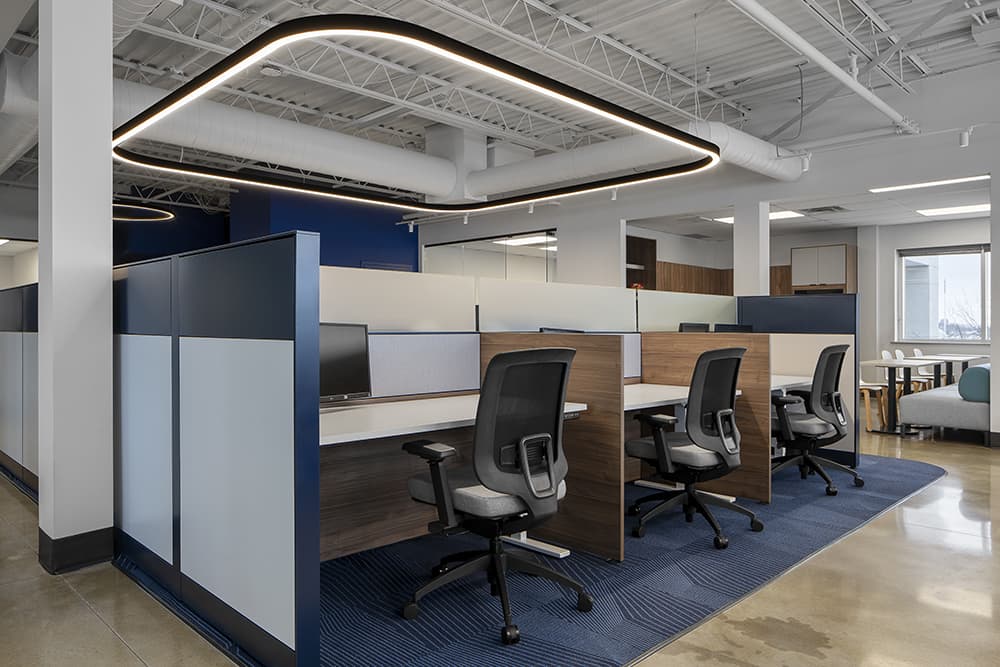
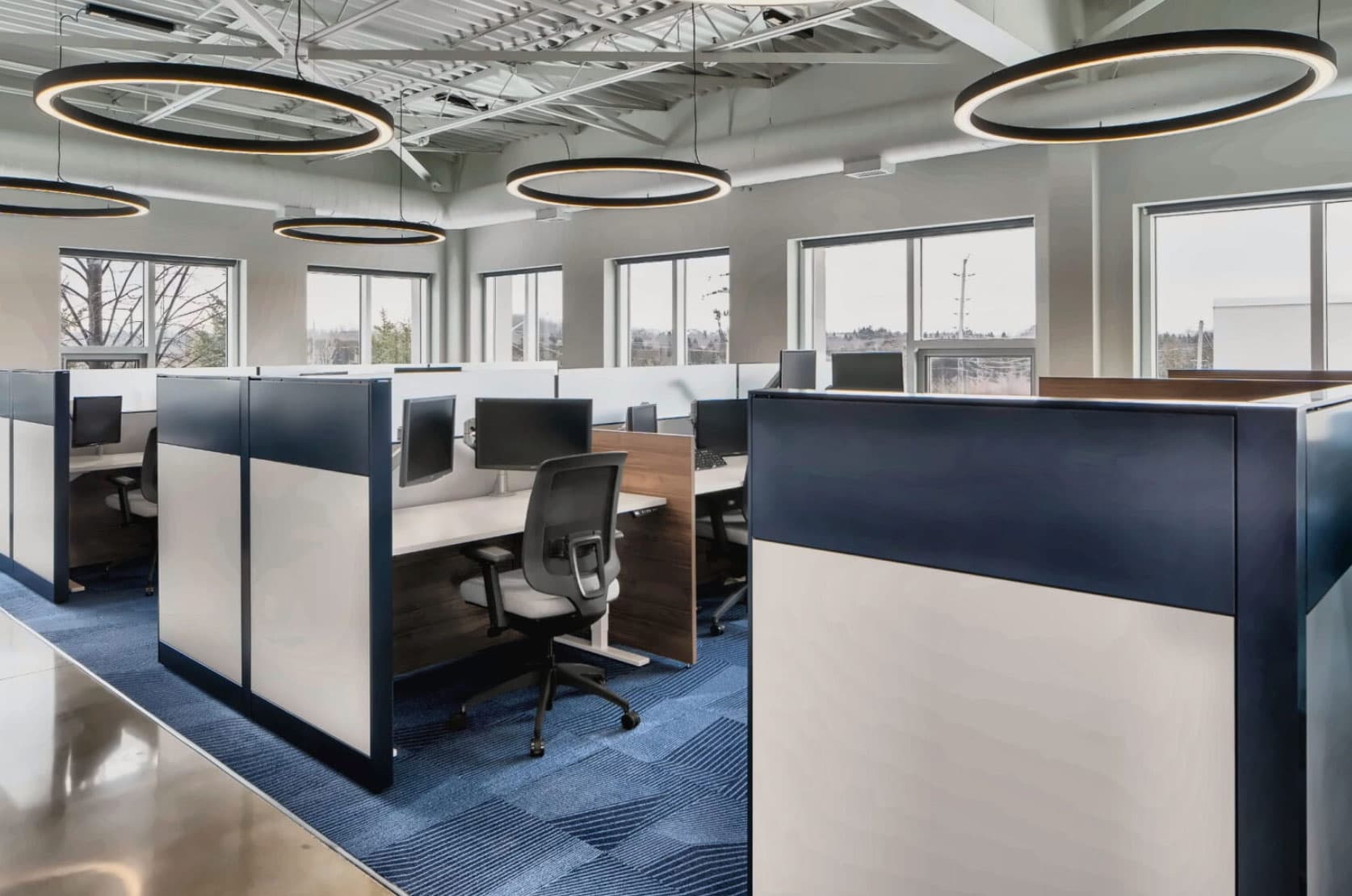
Canadian office furniture systems are often well suited for institutional projects because they are designed around adaptability, maintenance, and long-term durability rather than short-term visual trends.
Furniture, finishes, and layouts that support long-term use reduce future operational disruption significantly.
That long-term thinking becomes especially important in environments with longer capital planning cycles.
Office Design Layout Should Anticipate Future Flexibility
One of the biggest mistakes in phased renovations is solving only the immediate problem.
Institutional workplaces continue evolving after construction ends. Departments grow, staffing shifts, and service delivery models change over time.
Rigid layouts become difficult to adapt under those conditions.
Office design layout should allow future flexibility without requiring another major renovation cycle within a few years.
Flexible meeting spaces, modular furniture systems, adaptable work zones, and scalable office space planning all help institutional workplaces evolve more easily.
This is where interior design firms Toronto with institutional experience often approach planning differently from traditional private-sector workplace projects.
The focus is not simply on delivering a finished office. It is on creating a workplace that can continue adapting operationally over time while maintaining consistency for employees and the public.
That flexibility becomes one of the most valuable long-term outcomes of a phased renovation strategy.
Renovation Success Is Usually Measured by What Did Not Go Wrong
The strongest phased projects rarely feel dramatic.
Employees continue working. Visitors continue navigating the building without confusion. Services remain operational. Construction progresses without major interruption.
That level of stability does not happen accidentally.
It comes from planning the renovation around operations instead of forcing operations to adjust around construction.
Office interior design, office space planning, and commercial interior design become significantly more valuable when implementation strategy is treated as part of the project itself rather than a secondary construction issue.
In public sector and institutional environments, that operational continuity is often what defines success more than the visual outcome alone.
Frequently Asked Questions (FAQ):
Why are phased renovations common in institutional workplaces?
Many public sector and institutional buildings cannot fully shut down during renovation. Phased implementation allows operations and services to continue while upgrades are completed gradually.
What is the biggest challenge during phased office renovations?
Maintaining operational continuity while construction is happening. Circulation, accessibility, and employee workflow all need to remain functional throughout the project.
Why is accessibility planning important during renovation phases?
Temporary circulation changes can create barriers if accessibility is not considered throughout construction, not just in the final completed layout.
Key Takeaways
- Phased renovations should prioritize operational continuity from the beginning
- Office interior design must support both active construction and ongoing workplace use
- Accessibility planning needs to remain active throughout every renovation phase
- Stakeholder coordination strongly affects project efficiency and approvals
- Durable materials reduce long-term maintenance disruption and operational cost
- Office furniture design should support adaptability and long-term usability
- Flexible office design layout helps institutional workplaces evolve over time
- Successful phased renovations reduce disruption rather than simply managing it
Public sector and institutional workplaces carry operational demands that most commercial projects do not.
They need to remain accessible, functional, and organized while renovation happens around them, often over extended timelines and multiple phases.
When office interior design, office space planning, commercial interior design, and phased implementation strategies are aligned properly, the workplace continues supporting employees and the public even during major transformation.
That continuity is what makes phased renovation successful in institutional environments.