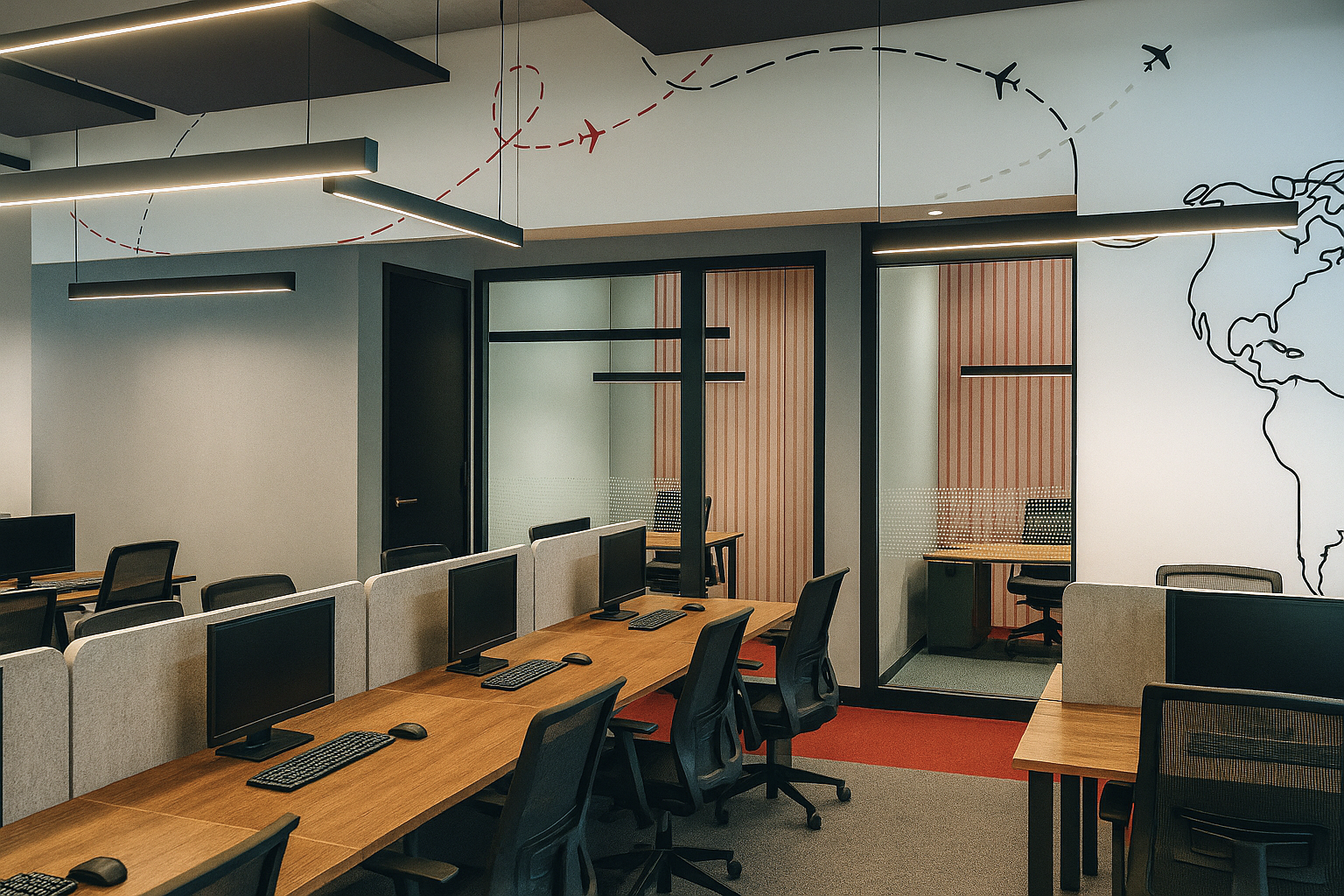
The phone rings on a Tuesday morning. A move is confirmed. Six months to deliver a new office.
The first instinct is always the same. Start listing visible costs. Desks. Chairs. Paint. Lighting. It feels manageable.
But three months in, the numbers start to shift. Electrical upgrades for modern systems can run anywhere from $25 to $45 per square foot. Permit fees quietly add $5,000 to $20,000 depending on scope. Installation for office furniture design alone can reach $50 to $150 per workstation. What looked like a clean estimate begins to stretch.
This isn’t unusual. It’s how most office projects unfold. In Canada, office fit out costs now average around $250 to $300 per square foot, but that number only tells part of the story.
For founders and finance leads, the goal is not just to set a budget. It’s to control how that budget behaves. And that starts by looking beyond the obvious line items.
Where Office Interior Design Budgets Actually Start
Most budgets begin with what’s easy to see. Furniture, finishes, and basic upgrades. But those are only part of the picture.
A complete office interior design project is built on layers. Design, construction, furniture, and coordination all interact. When one shifts, the others follow.
Design and professional fees typically account for 10 to 15 percent of the total investment. For a $1 million project, that means $100,000 to $150,000 allocated toward planning, drawings, and coordination.
It’s often the first place businesses try to reduce cost. But projects with limited design development tend to pay for it later. Change orders during construction can increase total costs by 10 to 20 percent when details are not resolved early.
For cost-focused teams, design is not where savings begin. It’s where cost control begins.
Why Commercial Interior Design Costs Drift Mid-Project
The biggest budget increases rarely come from one large decision. They come from a series of smaller ones made too late.
Commercial interior design projects often shift once construction begins. A layout adjustment might require moving electrical lines at $2,000 to $5,000 per zone. A ceiling redesign can add $15 to $30 per square foot.
Each change seems manageable on its own. Together, they create momentum. And that momentum drives cost.
This is where many teams lose control. Not because the project was too ambitious, but because key decisions were still open when work started.
Strong office design layout planning reduces this risk. Projects with fully resolved layouts before construction typically see 5 to 10 percent fewer cost overruns compared to those finalized during build.
The Cost Layers Most Teams Underestimate
What typically catches businesses off guard are the costs just outside the initial scope.
Permits and compliance can add $5,000 to $25,000 depending on the municipality and building type. Older buildings may require upgrades to meet current code, especially for accessibility or fire safety.
Technology is another major layer. A fully equipped meeting room with integrated AV can cost between $8,000 and $25,000 per room. Structured cabling for data and power can add $10 to $20 per square foot across the office.
Logistics also add up quickly. Delivery, installation, and coordination between trades can account for 5 to 10 percent of the furniture and construction budget. Delays between trades can increase labour costs by 10 to 15 percent if scheduling is not tight.
These are not hidden costs. They are simply costs that are not always visible at the start.
Interior design services help surface these early, so they can be planned instead of absorbed.
How Office Furniture Design Impacts Total Spend
Furniture is often treated as a final step. In reality, it behaves more like a system within the system.
Office furniture design typically accounts for 20 to 30 percent of the total project cost. For a mid-sized office, that could mean $150,000 to $400,000 depending on quality and scale.
A standard workstation can range from $1,500 to $3,500 per seat. Executive offices and boardrooms can easily exceed $10,000 to $25,000 depending on finishes and customization.
Furniture also affects layout. A high-density office might reduce lease costs but require more complex workstation systems and acoustic solutions. Modular systems cost more upfront but reduce long-term reconfiguration costs.
When furniture is selected late, it often creates conflicts with power locations or circulation paths. Fixing those issues can add thousands in rework.
When planned early, it integrates smoothly with the office design layout and avoids those adjustments.
The Role of Procurement, Timing, and Contingency
Even with strong planning, timing plays a critical role in how budgets hold.
Procurement decisions affect both cost and schedule. Custom millwork can take 8 to 12 weeks. Imported furniture may take 12 to 16 weeks. If decisions are delayed, rush fees can increase costs by 10 to 20 percent.
Contingency is another critical layer. Typically set at 5 to 10 percent of the total budget, it acts as protection against unknown conditions. For a $1 million project, that means setting aside $50,000 to $100,000.
Older buildings may reveal structural or mechanical issues once construction begins. Without contingency, these become budget shocks. With it, they remain controlled adjustments.
Phasing also affects cost. Projects that require working around active teams can increase construction costs by 10 to 25 percent due to extended timelines and coordination.
This is where office space planning, procurement strategy, and business priorities intersect.
Frequently Asked Questions (FAQ):
How much should businesses budget per employee for modern office design projects?
Industry benchmarks suggest budgeting between $1,800 and $5,000 per workstation for complete office furniture design solutions, with the range depending on quality levels and storage requirements. When you include all commercial interior design elements like construction, technology, and professional services, total costs typically range from $8,000 to $15,000 per employee. Companies that source office furniture through professional channels and work with experienced interior designers often achieve better value within these ranges through strategic procurement and avoiding costly mistakes.
What percentage of the total budget should be allocated for office furniture versus construction costs?
Construction and core building work typically represents 50% to 55% of office interior design budgets, while office furniture design and equipment accounts for 20% to 25%. Design and professional fees consume 10% to 15%, with the remainder allocated for permits, contingencies, and specialized installations. This distribution can shift when businesses source office furniture at trade pricing levels or when modern office design projects require extensive building modifications. Professional commercial interior design teams help optimize these allocations based on specific project requirements and business priorities.
How can businesses determine if hiring professional interior designers provides cost savings?
Professional interior designers near me typically provide measurable value through trade pricing access that saves 20% to 40% on furnishings, mistake prevention that eliminates costly change orders, and strategic guidance that optimizes budget allocation. When you calculate the total cost savings from these benefits, they often exceed professional service fees. Additionally, professional teams coordinate projects more efficiently, reducing timeline delays and associated costs. Businesses can evaluate this value by comparing quotes for office furniture design pieces at retail versus trade pricing and considering the cost of potential mistakes when managing commercial interior design projects without professional expertise.
Key Takeaways:
- Professional office interior design teams provide trade pricing access that can save 20% to 40% on office furniture design purchases
- Hidden costs like permits, technology infrastructure, and logistics typically add 15% to 25% to initial budget estimates
- Contingency funds of 5% to 10% prevent budget crises when unexpected issues arise during commercial interior design projects
- Strategic timing of purchases and bulk procurement can reduce office furniture costs by 15% to 25% through volume discounts
- Mixing new and remanufactured office furniture pieces provides quality solutions at 60% lower cost than all new purchases
- Professional teams prevent costly mistakes through proper coordination and planning that often exceed their service fees in value
- Phased implementation spreads costs across budget cycles while delivering immediate workplace improvements
- Value engineering reviews identify alternative approaches that maintain quality while reducing project costs
- Early specification development prevents scope creep that typically inflates budgets during construction
- When you source office furniture through professional channels, selection and customization options expand significantly
Smart budgeting for modern office design requires understanding both visible and hidden costs while leveraging professional expertise to maximize value. Companies that invest in proper planning and professional guidance create superior workspaces while maintaining budget control. The key lies in recognizing that office interior design represents an investment in employee productivity and business success rather than simply an expense to minimize. When approached strategically, modern office design projects deliver measurable returns through improved employee satisfaction, enhanced productivity, and reduced operational costs over time. Professional commercial interior designers provide the expertise and resources necessary to achieve these outcomes while optimizing budget efficiency through smart procurement and strategic planning approaches.