Walk through any growing office and you can usually spot the pressure points without asking a single question.
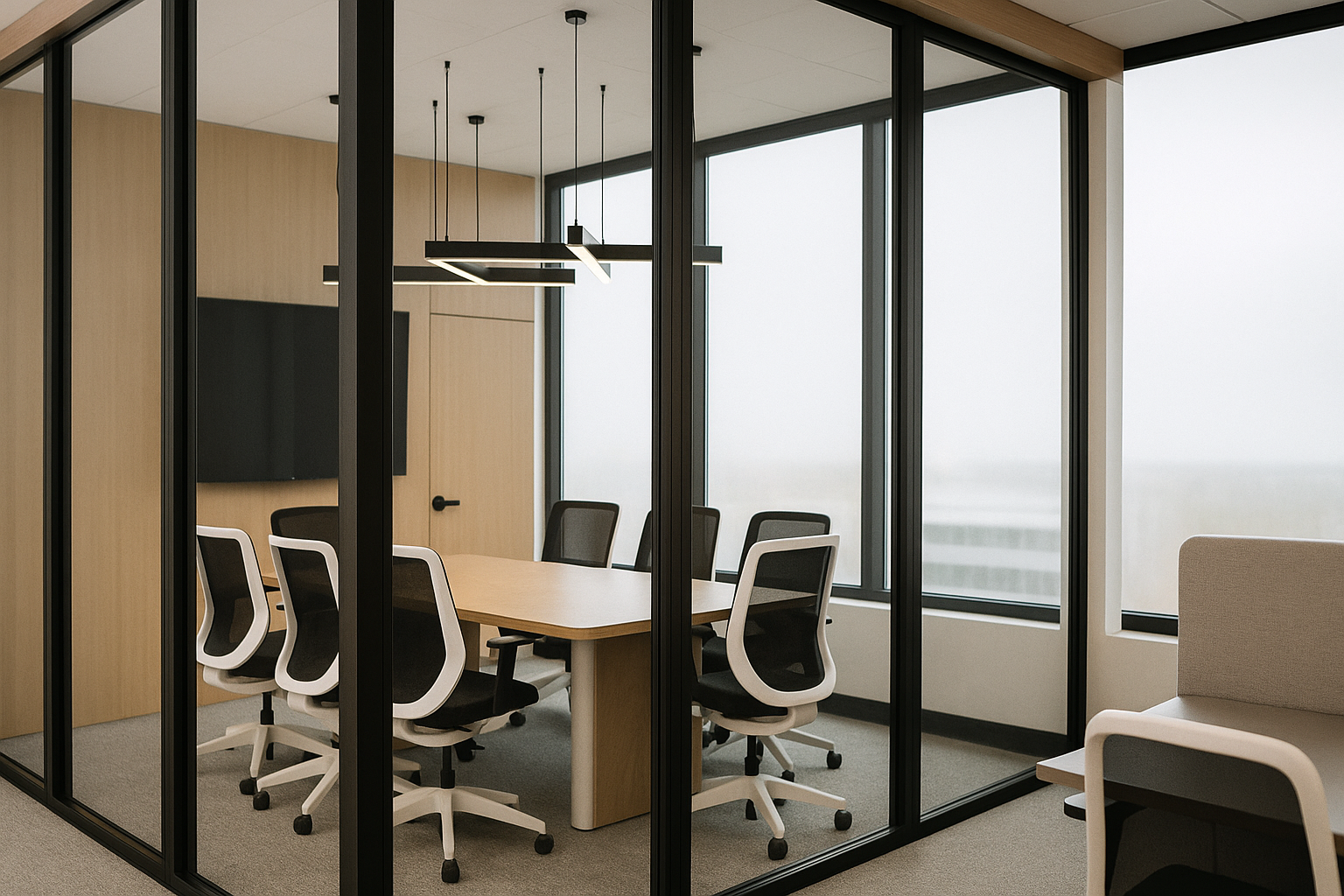
A meeting room that’s always booked.
Desks added in places they were never meant to go.
Teams splitting across floors because there’s nowhere else to sit.
None of these happen overnight. They build slowly. One hire at a time. One quick adjustment after another.
And that’s the problem. Growth rarely breaks a space all at once. It wears it down.
By the time the issue feels obvious, the layout has already been stretched past what it was designed to do.
Planning for expansion isn’t about creating extra space. It’s about preventing that slow breakdown before it starts.
Office Interior Design Should Leave Room for Movement, Not Just Headcount
Most offices are planned to fit a number.
Thirty desks. Two meeting rooms. One collaboration area. It works well at the start because everything is balanced.
But growth doesn’t follow those clean ratios. One team expands faster than another. Hiring accelerates in one department while others stay stable.
What begins as a balanced office quickly becomes uneven.
Office interior design needs to account for that imbalance. Not by adding excess space everywhere, but by allowing certain areas to shift as demand changes.
This is where layouts either hold up or fall apart.
Spaces that rely on fixed positions tend to struggle first. Circulation tightens. Shared areas disappear. Teams start working around the space instead of within it.
A layout that allows movement, where zones can stretch, compress, or change function absorbs growth with far less friction.
Commercial Interior Design Should Expect Hybrid Patterns to Change Again
There’s a tendency to treat hybrid work as a fixed model. It isn’t.
Some teams return more often than expected. Others stay remote longer. Client-facing roles behave differently from internal ones.
The pattern keeps shifting.
Commercial interior design that locks into one version of hybrid often ends up outdated within a year.
Instead, the focus should be on adaptability.
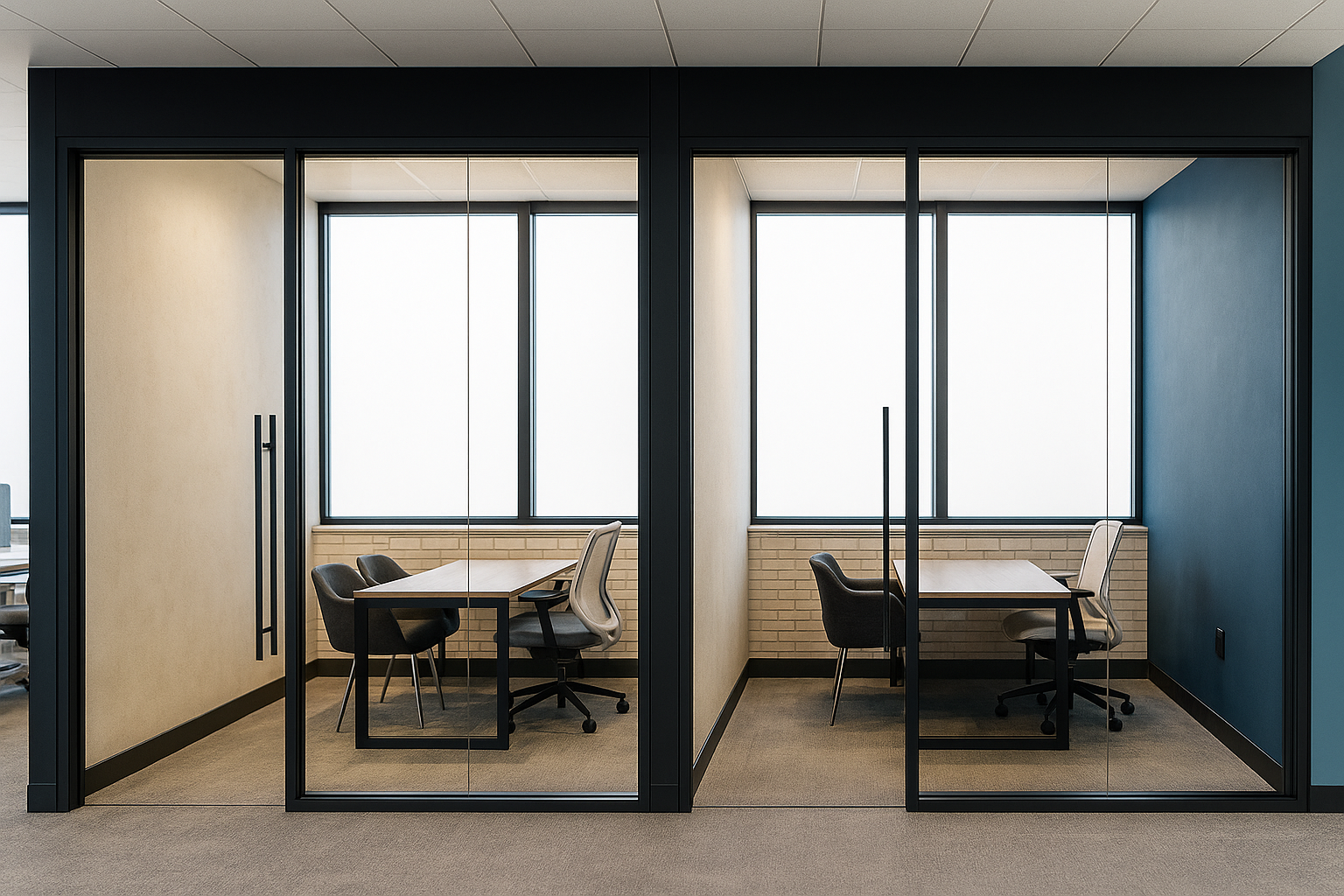
Work areas that can switch between assigned and shared use. Meeting spaces that serve both in-person and virtual collaboration. Circulation that doesn’t depend on a fixed number of people being present at any given time.
Office space planning becomes less about predicting behaviour and more about accommodating change.
That shift alone prevents the need for constant layout adjustments.
Office Design Layout Quietly Shapes How Growth Is Perceived
As teams grow, the office becomes more than a place to work. It becomes a signal.
Clients notice when spaces feel tight or improvised. New hires pick up on whether the environment feels stable or temporary.
This isn’t about aesthetics. It’s about structure.
An office design layout that maintains clear zones, consistent circulation, and defined boundaries between functions communicates control. Even during periods of growth.
When those elements break down, the space starts to feel reactive.
Corporate interior design plays a subtle role here. Not by adding more features, but by keeping the environment legible. People should be able to move through it without second-guessing where things belong.
Growth should feel intentional, even when it’s happening quickly.
Office Furniture Design Is Where Short-Term Thinking Shows First
You can usually tell how an office was planned by looking at the furniture.
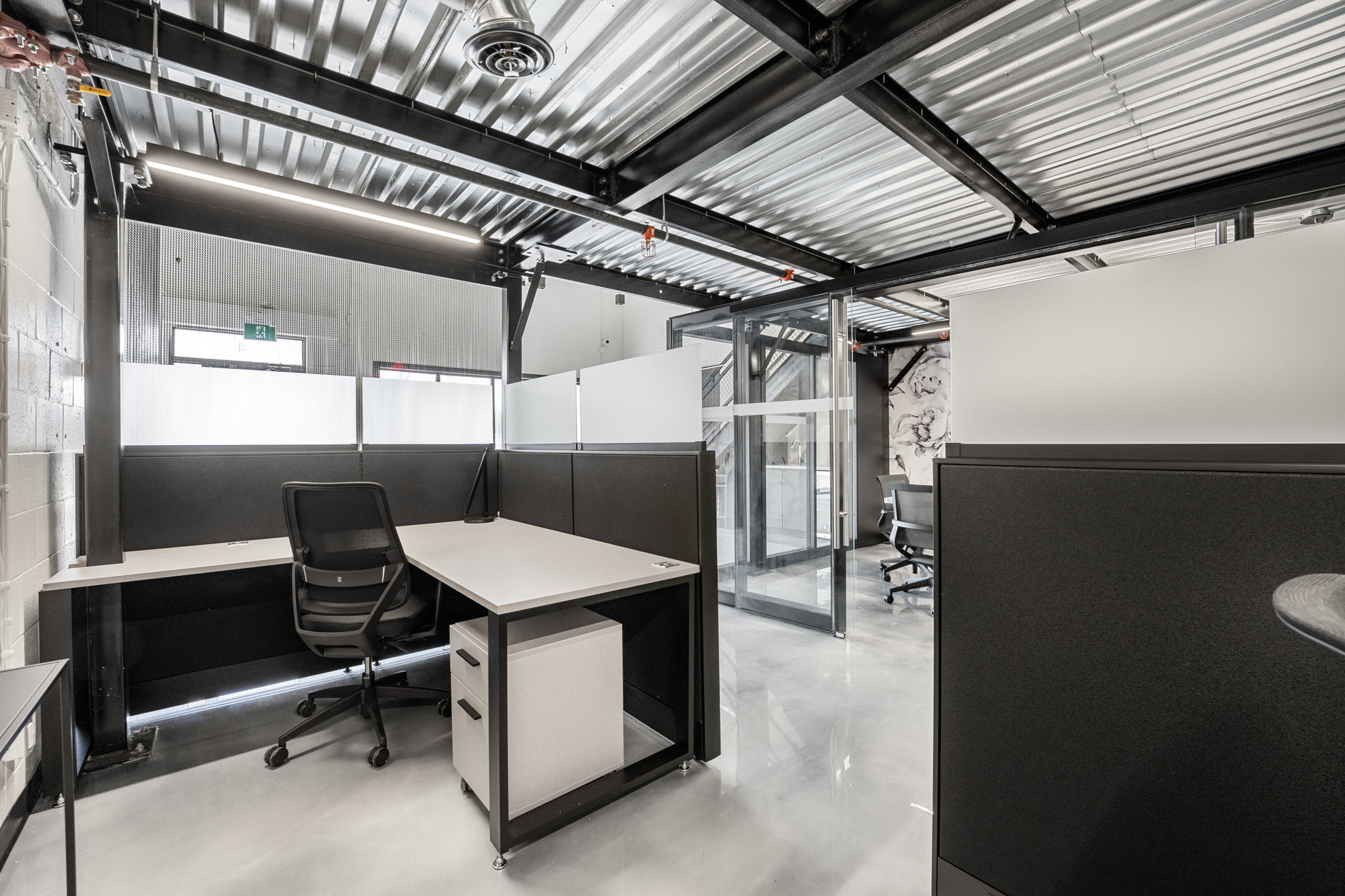
Mismatched desks. Temporary seating that becomes permanent. Storage that spills into circulation paths.
These are signs that decisions were made for the moment, not for what comes next.
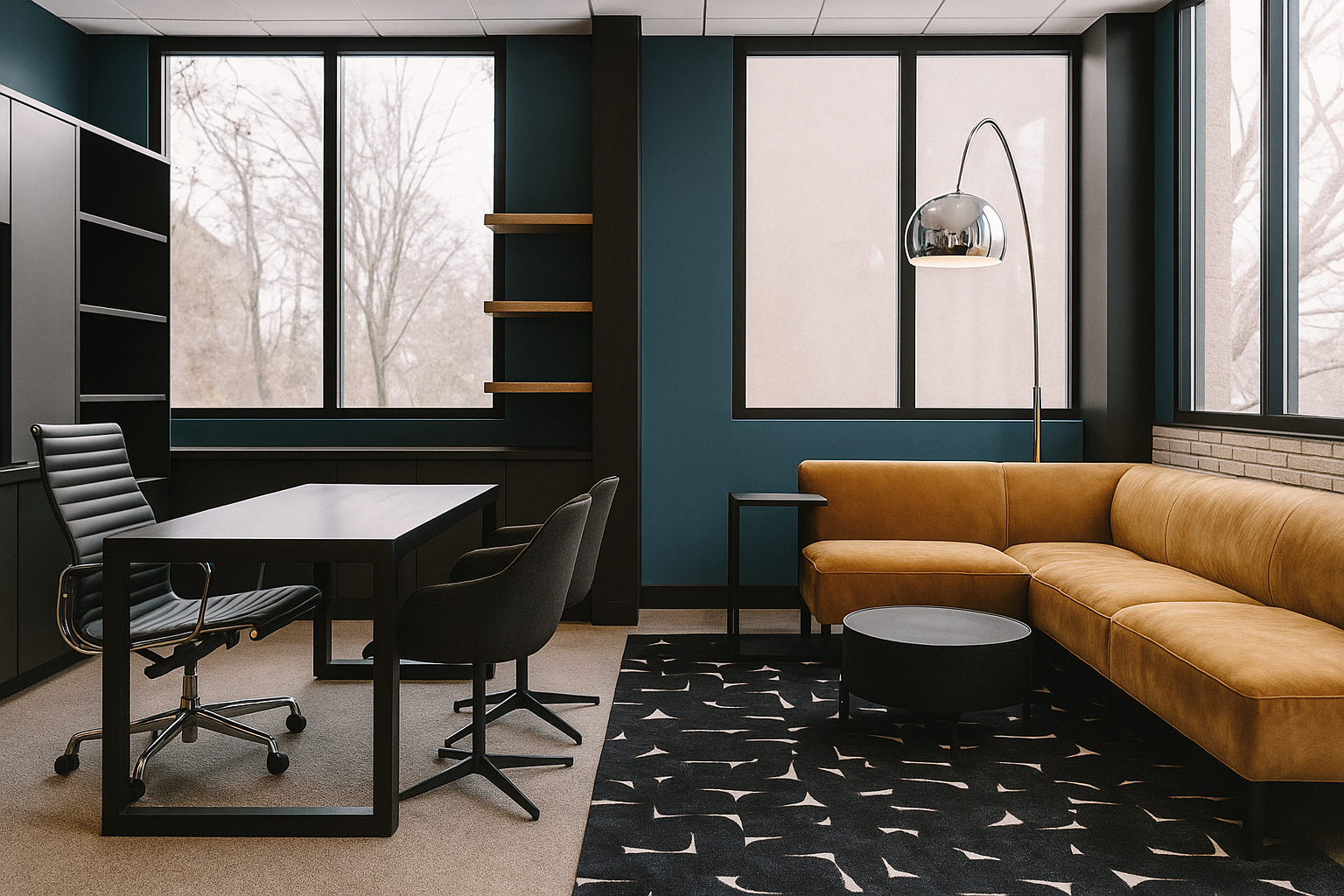
Office furniture design doesn’t need to predict every future scenario, but it should allow for change without forcing replacement.
Modular systems tend to hold up better. They can expand, shift, or be reconfigured as teams grow.
Canadian office furniture often supports this kind of flexibility, which is why it’s commonly used in workplaces that expect ongoing change.
The difference is subtle at first. But over time, it’s what separates a space that adapts from one that constantly needs fixing.
Interior Design Services Help Prevent Reactive Growth Decisions
Most growing offices don’t fail because of one wrong move. They struggle because decisions are made in isolation.
A desk gets added here. A room gets repurposed there. Over time, those decisions start to conflict with each other.
Interior design services bring those decisions back into a single framework.
Instead of reacting to each stage of growth, the space is guided by a plan that anticipates how different parts of the office will evolve.
Interior design firms Toronto often approach this by mapping growth scenarios rather than fixed outcomes.
Where will the next team sit.
What happens when meeting demand increases.
How will circulation change as headcount grows.
These are not abstract questions. They shape how the office performs over time.
Planning for expansion is less about adding capacity. It is about reducing the number of times the space needs to be rethought.
Frequently Asked Questions (FAQ):
How far in advance should businesses start planning for office expansion?
Successful expansion planning should begin at least six to twelve months before anticipated growth. This timeline allows corporate interior design teams to analyze current utilization, project future needs, and source office furniture through proper procurement channels. When you work with office interior designers early in the planning process, they can identify infrastructure requirements and coordinate with building management for any necessary approvals. Early planning also provides time to implement modular office furniture design solutions that make actual expansion faster and less disruptive when growth occurs.
What percentage of office space should remain flexible for future expansion?
Industry best practices suggest maintaining 15% to 25% flexible capacity in modern office design plans. This flexibility can take the form of convertible spaces, modular furniture arrangements, or areas designed for easy reconfiguration. Professional commercial interior design teams calculate this ratio based on business growth projections and industry expansion patterns. When you source office furniture using modular systems, this flexibility becomes easier to maintain because pieces can be reconfigured or expanded without complete replacement.
How do modular furniture systems reduce expansion costs compared to traditional approaches?
Modular office furniture design reduces expansion costs through several mechanisms. First, existing pieces can be reconfigured and integrated with new additions, eliminating replacement costs. Second, installation becomes faster because systems are designed for easy assembly and modification. Third, consistent aesthetics are maintained without custom matching requirements. Research shows that businesses using modular approaches spend 40% less on furniture during expansion projects. When office interior designers specify coordinated modular systems from the beginning, these cost advantages compound over multiple growth phases, making corporate interior design investments more cost effective long term.
Key Takeaways
- Growth rarely breaks an office all at once. It builds pressure over time
- Layouts should allow movement and flexibility, not just fixed capacity
- Hybrid work patterns will continue to shift, not stabilize
- Clear spatial structure supports both operations and client perception
- Furniture decisions reveal whether a space was planned for growth
- Reactive changes often lead to higher long-term costs
- Planning early reduces the need for repeated adjustments
- A well-planned office doesn’t resist growth. It absorbs it.
When office interior design, commercial interior design, and office space planning are aligned with how a business actually evolves, the space becomes more resilient. Not bigger, not more complex, just more capable of handling change without disruption.
If the office is starting to feel stretched, the issue may not be how much space you have. It may be how that space was designed to handle what came next.