A small office design is not a smaller version of a problem. It is a different problem entirely.
In a large space, design mistakes get absorbed. There is room to spare, so a clumsy layout or a missed storage need rarely becomes a daily frustration. In a small office, every decision is visible immediately. A poorly placed desk, a door that does not fully open, a meeting room that doubles as a storage closet: none of it can hide.
That makes small office design higher stakes, not lower. The good news is that a small footprint is not a disadvantage if the space is planned with intention. Some of the most functional, impressive offices we have seen are under 1,500 square feet. The difference is never the square footage. It is whether every part of that footage is doing real work.
This guide walks through the layout decisions, storage strategies, and design moves that let a small office punch above its size, along with the mistakes that make a small space feel smaller than it actually is.
Why Most Small Offices Feel Smaller Than They Actually Are
Before getting into solutions, it helps to understand the problem. Most small offices are not actually short on square footage. They are short on planning.
A common pattern: a business leases a compact space, brings in furniture sized for a bigger office, and arranges it based on where the power outlets happen to be. The result is a layout that fights the room instead of using it. Walkways narrow to the point of discomfort. Storage ends up wherever there was leftover space, rather than where it is actually needed. Meeting areas get squeezed into corners as an afterthought.
None of this is really about size. It is about sequence. When furniture and function are decided before the layout is, the space loses before it starts.
Start With How The Space Is Actually Used, Not How It Looks On A Floor Plan
The biggest difference between a small office that works and one that does not is the order of operations. A floor plan should follow function, not the other way around.
Before any layout decision, it is worth mapping out three things: how many people are in the office on a typical day, what kind of work happens most often, and where conversations and collisions naturally occur. A 12-person team that is mostly heads-down at desks needs a very different layout than a 12-person team that is constantly moving between calls, client meetings, and collaborative work.
This sounds obvious, but it is the step most businesses skip. They start with furniture catalogues and Pinterest boards instead of an honest accounting of how the team actually spends its day. In a small office, that shortcut is expensive. There is no spare square footage to absorb a wrong guess.
Layout Strategies That Make A Small Office Work Harder
Let Furniture Do More Than One Job
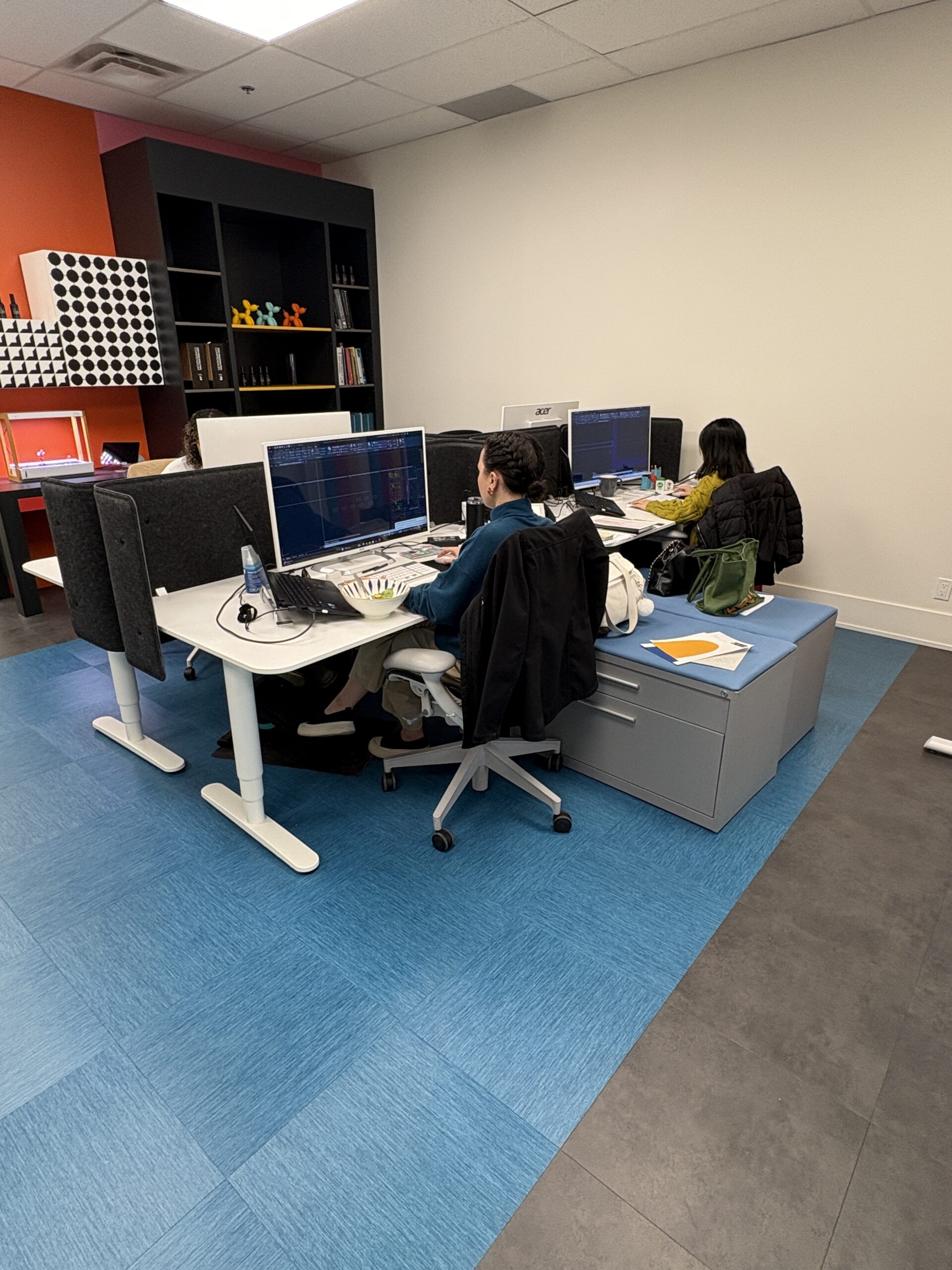
In a small office, single-purpose furniture is a luxury most layouts cannot afford. A bench seat with storage underneath. A meeting table that converts to a stand-up work surface. A reception desk with built-in filing. Every piece of furniture in a tight footprint should be evaluated for whether it can carry a second function.
This is not about cramming more into less space. It is about reducing the total number of objects competing for the same square footage.
Treat Circulation Space As Design, Not Leftover Space
Hallways and walkways are often treated as the space left over after everything else is placed. In a small office, that thinking backfires. Circulation paths that are too narrow make the entire office feel cramped, even if individual rooms are generously sized.
A well-planned small office treats the path through the space as part of the design. Sightlines matter. A clear view from the entrance to a window or a piece of art makes a 1,200 square foot office feel considerably larger than a layout where every angle dead-ends into a wall or a filing cabinet.
Zone By Activity, Not By Department
In larger offices, it is common to zone by department: sales here, operations there, leadership in the corner offices. In a small office, this approach wastes the one advantage a compact space has, which is flexibility.
Zoning by activity, rather than department, tends to work better. A focus zone for heads-down work. A collaboration zone for two or three people to work through something together. A single well-designed meeting space that flexes for client visits, team check-ins, and phone calls. This approach lets every zone serve the whole team rather than one slice of it.
Use Vertical Space Deliberately
Floor space gets all the attention in small office planning, but vertical space is just as valuable and far more often wasted. Wall-mounted storage, raised shelving, and ceiling height all contribute to how spacious an office feels.
A small office with 9-foot ceilings and floor-to-ceiling storage will almost always feel larger than a similarly sized office with a dropped ceiling and low cabinets, even when the actual square footage is identical.
Light, Colour, and Materials: The Fastest Way To Change How Big A Space Feels
Layout solves function. Light, colour, and material choices solve perception, and perception is most of what people notice when they walk into a small office.
Maximize Natural Light Before Adding Artificial Light
Natural light does more to make a small office feel open than almost any other single design decision. If the space has windows, the layout should protect sightlines to them. Private offices and storage should generally be placed away from window walls, not in front of them, so that light can travel as far into the space as possible.
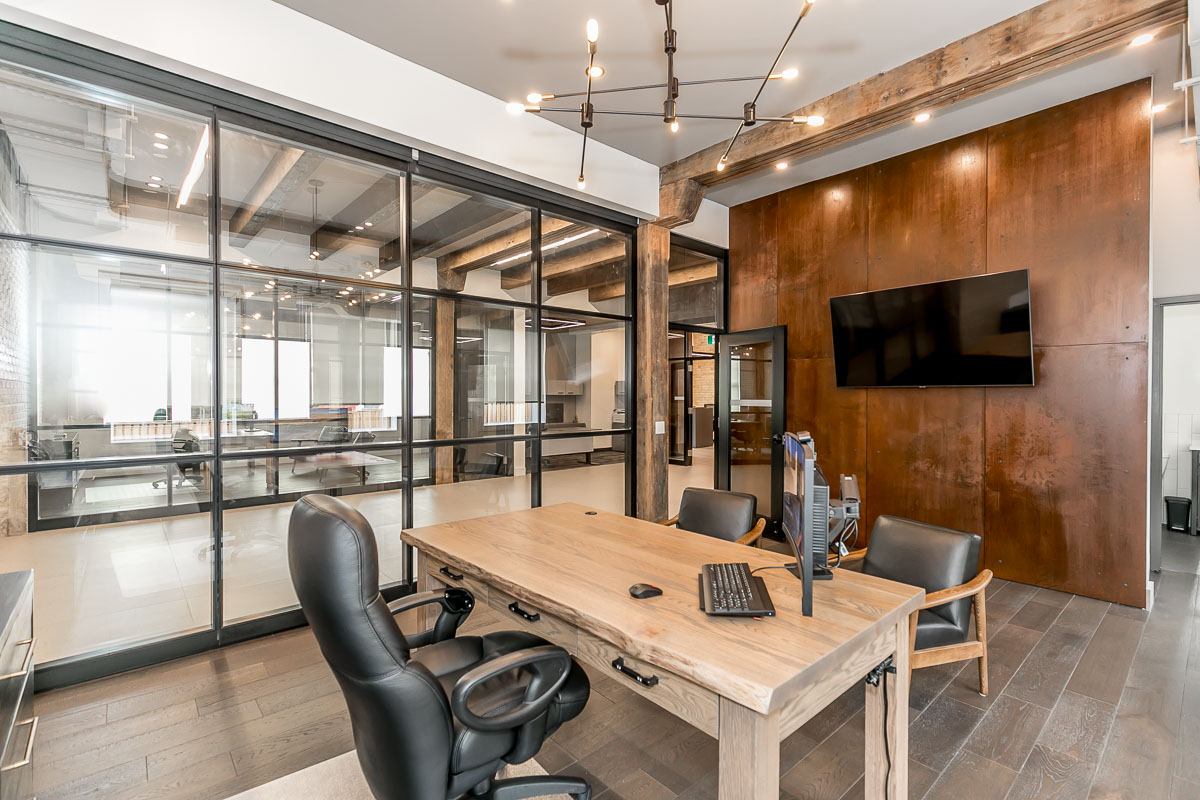
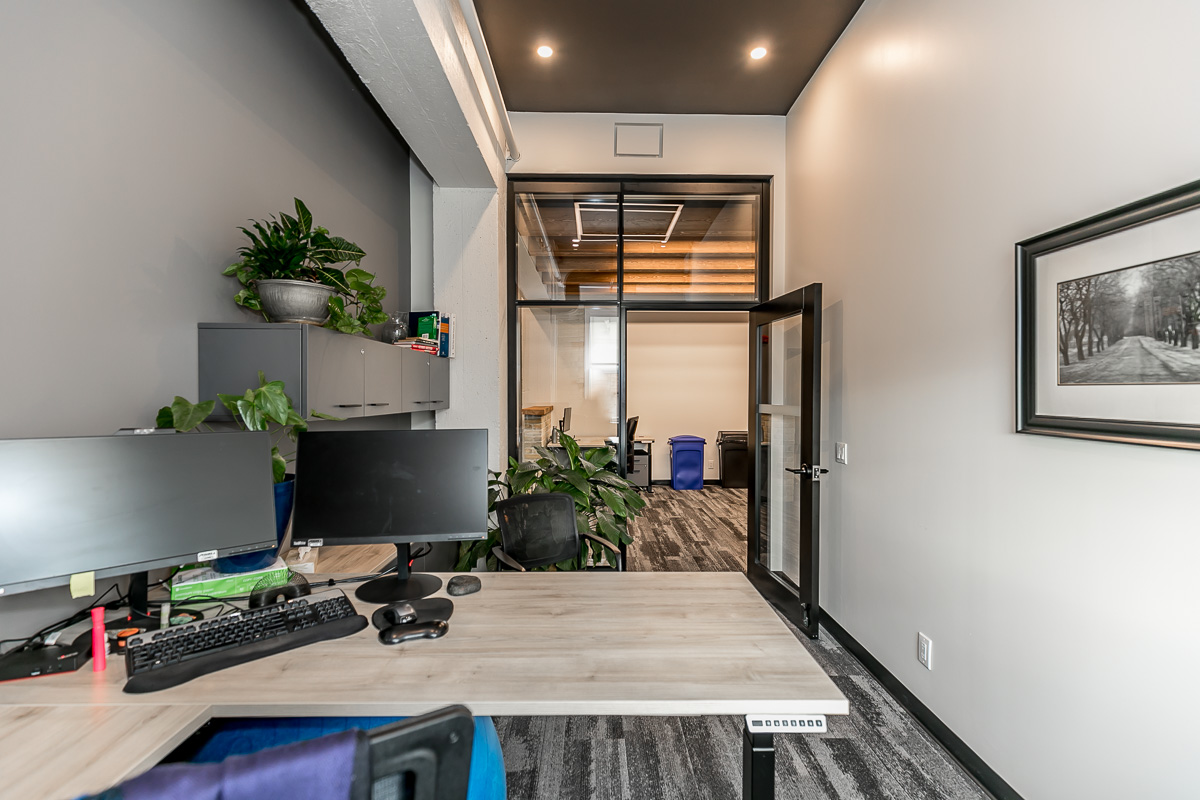
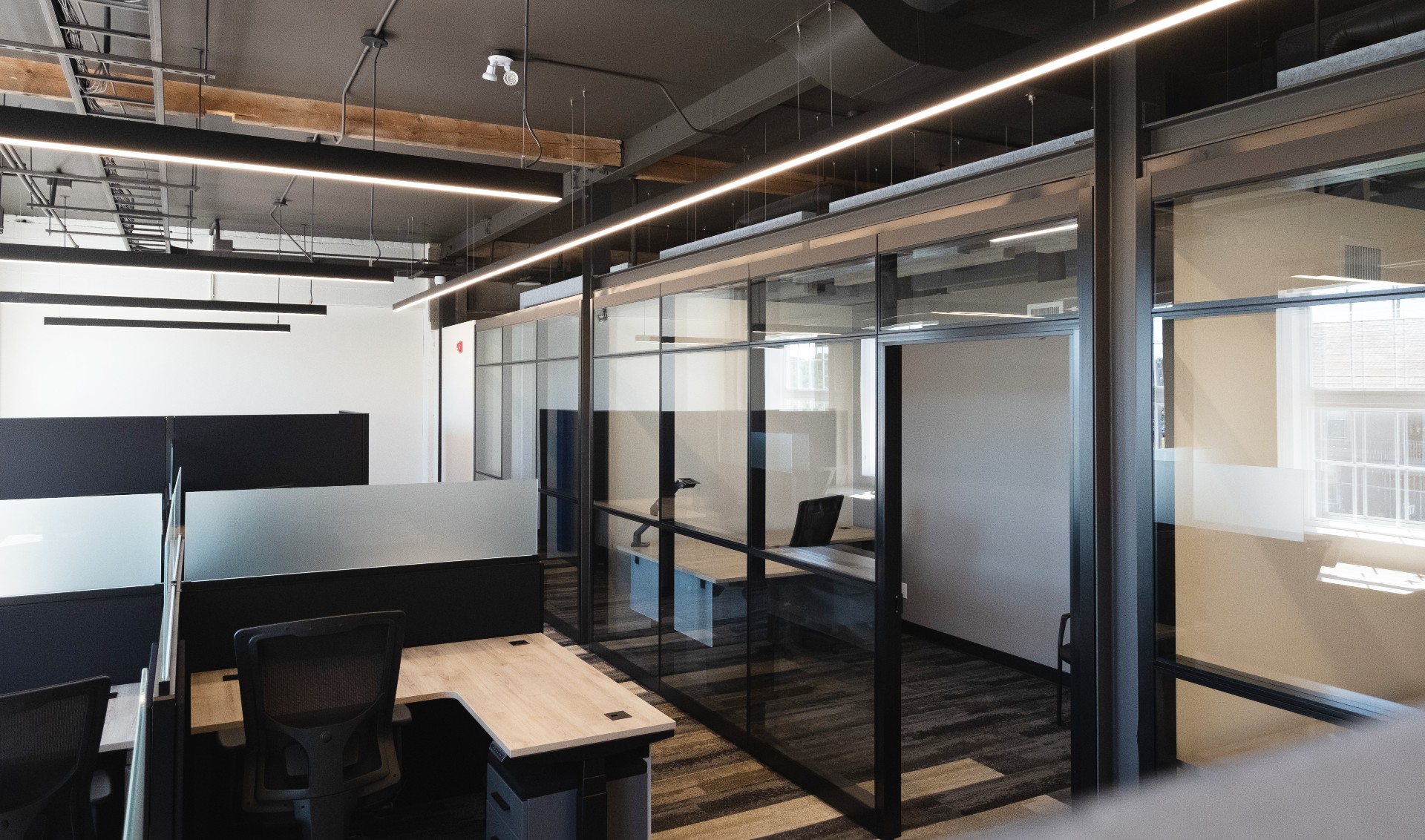
Glass partitions are a practical workaround when private offices are unavoidable near a window wall. They preserve the sense of openness while still creating acoustic and visual separation.
Choose A Lighter, More Cohesive Colour Palette
Dark colours absorb light and visually shrink a room. This does not mean a small office needs to default to plain white walls. A cohesive palette of lighter, warmer tones, paired with one or two deliberate accent colours, creates depth without the visual weight that comes from busy or dark finishes.
Consistency matters more than the specific palette chosen. A space that uses three different flooring materials and four wall colours will feel chopped up and smaller, regardless of how light each individual choice is.
Use Reflective and Transparent Materials Intentionally
Mirrors, glass, and polished surfaces bounce light around a room and create the illusion of depth. A single well-placed mirror or a glass-fronted meeting room can change how an entire office feels without changing a single wall.
Storage Solutions For A Small Office That Don’t Look Like Storage
Storage is usually where small office design goes wrong first. Filing cabinets pile up in corners. Supply closets get repurposed as overflow storage. Boxes end up under desks because there was nowhere else to put them.
The fix is to plan storage capacity into the layout from the start, rather than reacting to it after the fact.
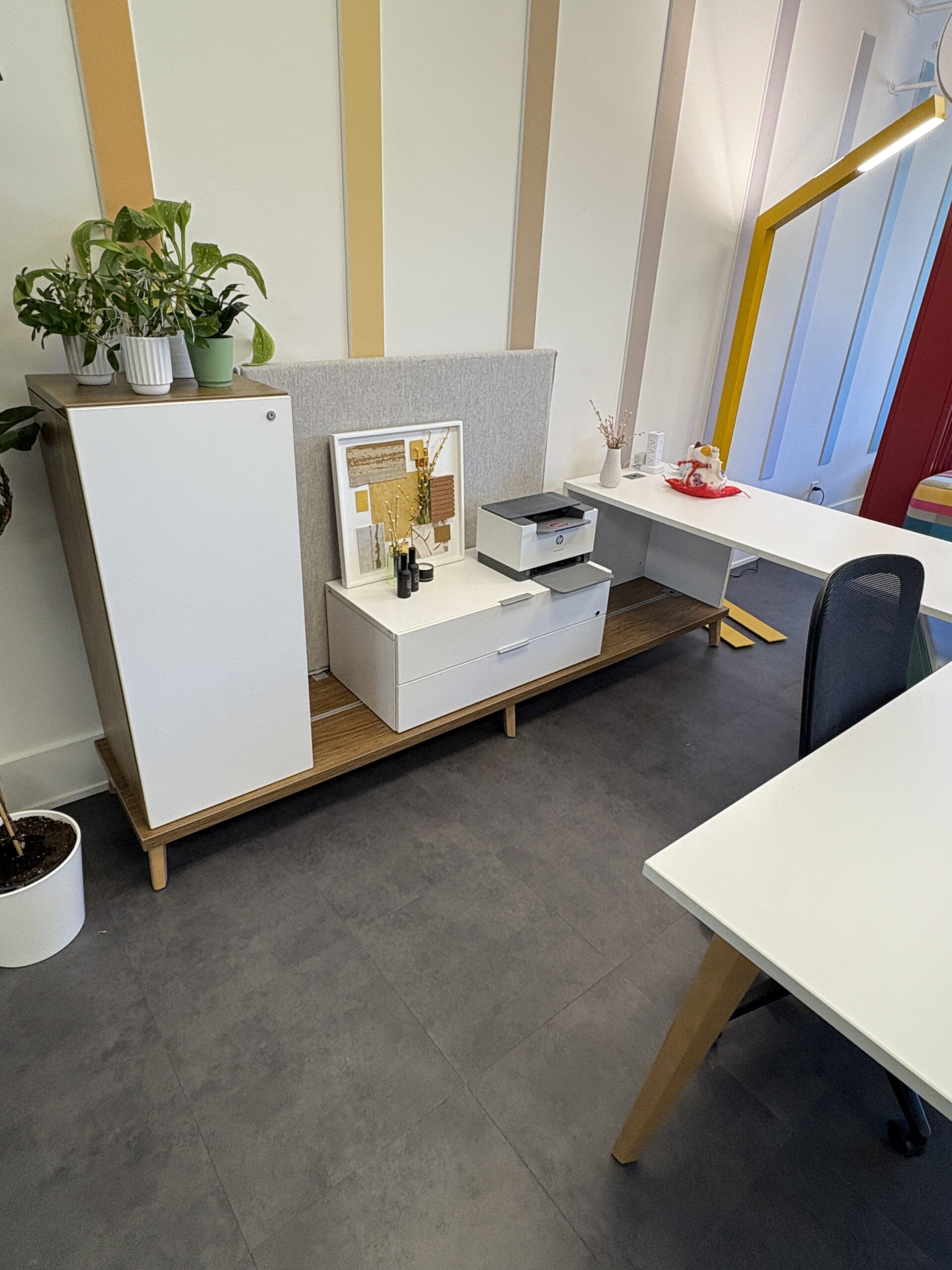
- Built-in millwork along underused walls, designed to match the rest of the space rather than reading as separate furniture
- Closed storage near entry points and reception areas, where clutter is most visible to clients and visitors
- Modular shelving that can be reconfigured as the team and its storage needs change
- Digital-first systems for any documents that do not legally require physical storage, reducing the square footage allocated to filing altogether
The goal is not to hide every object in the office. It is to make sure storage has a planned place, so it never ends up competing with workspace for the same square footage.
Common Small Office Design Mistakes To Avoid
- Buying furniture before finalizing the layout, which often results in pieces that are too large for the space they end up in
- Placing private offices or storage rooms along window walls, which blocks natural light from reaching the rest of the office
- Treating every available wall as storage space, which can make a small office feel like a warehouse rather than a workplace
- Mixing too many flooring materials, wall colours, or finishes, which fragments a small space visually
- Skipping a dedicated meeting or call space, which forces private conversations into open areas and undermines focus for everyone nearby
Frequently Asked Questions (FAQ):
Can a small office still have a meeting room?
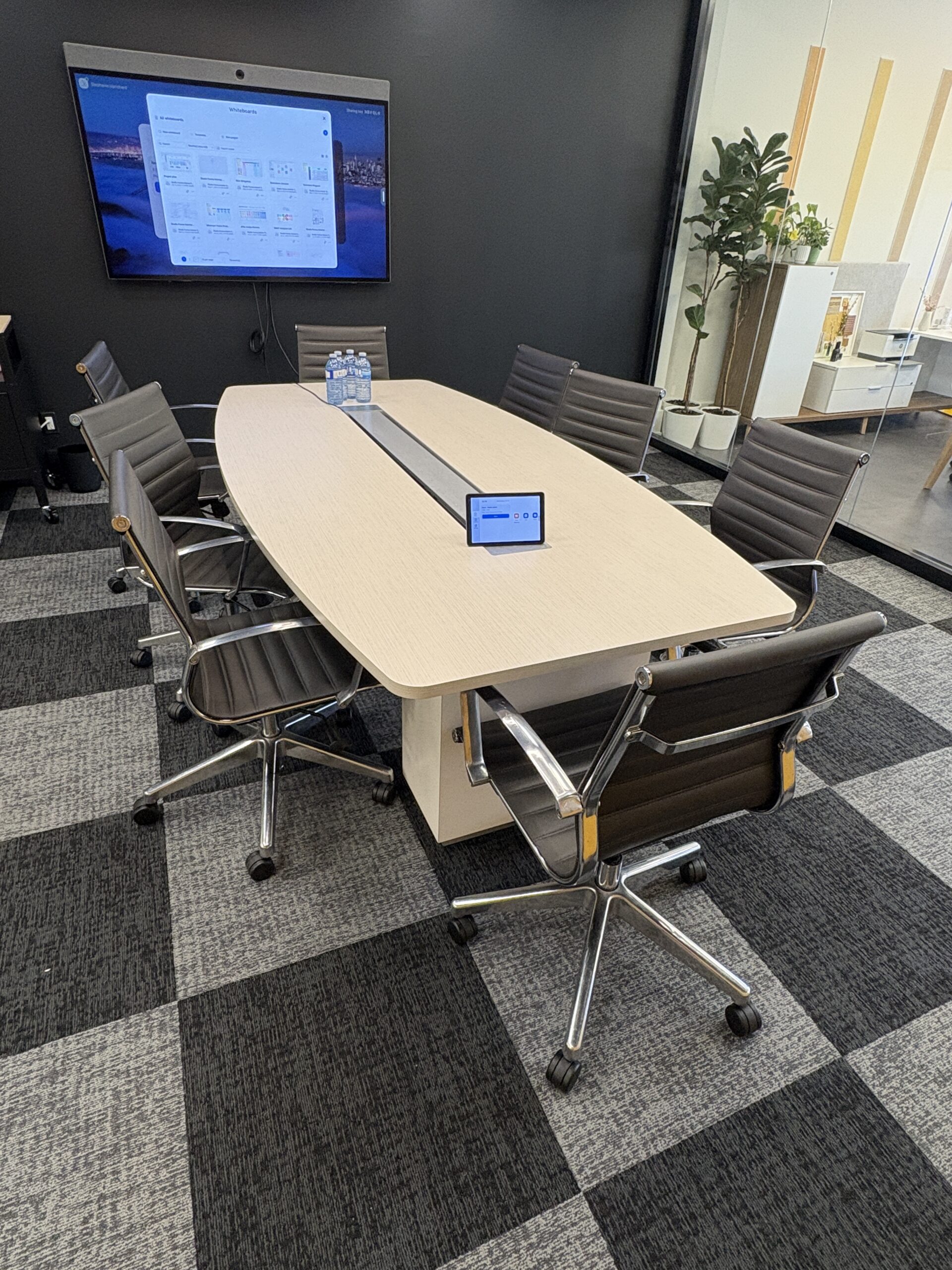
Yes, and it generally should. Even a 1,000 to 1,500 square foot office can accommodate a small dedicated meeting space if it is planned early in the layout process. The key is sizing the room for its actual use. A space for two to four people, with a glass partition to preserve light and sightlines, takes up far less room than most businesses assume and solves a problem that open-plan layouts cannot.
What is the most cost-effective way to make a small office feel bigger?
Lighting and colour consistency typically deliver the most visible impact for the lowest cost. Maximizing natural light by keeping window sightlines clear, choosing a cohesive and lighter colour palette, and reducing visual clutter from mismatched furniture or storage can change how a space feels without any structural changes or major renovation work.
How much storage does a small office actually need?
This depends on the type of business, but most small offices overestimate their physical storage needs. A useful exercise is to audit what is currently being stored and confirm which items genuinely require physical space versus what could move to digital systems. Planning storage capacity based on this audit, rather than guessing, usually reveals that less square footage is needed than expected.
Key Takeaways
- A small office’s biggest design risk is sequence, not square footage: deciding on furniture before function and layout is the most common mistake.
- Zoning by activity rather than department makes better use of a compact footprint and keeps every zone useful to the whole team.
- Circulation space and sightlines should be planned deliberately, not treated as whatever space is left over.
- Natural light, a cohesive colour palette, and reflective materials do more to change how big a space feels than any layout change alone.
- Storage needs to be planned into the layout from the start, including a digital-first approach for anything that does not require physical filing.
- A well-planned small office can outperform a poorly planned larger one, both in daily function and in the impression it leaves on clients and visitors.
A small office is not a constraint to design around. It is a space where every decision matters more, which means a thoughtful plan pays off more visibly than it would in a larger footprint.
The businesses that get the most out of a small space are not the ones that found a clever furniture hack. They are the ones that planned function first, let the layout follow, and treated every square foot as something that needed to earn its place.