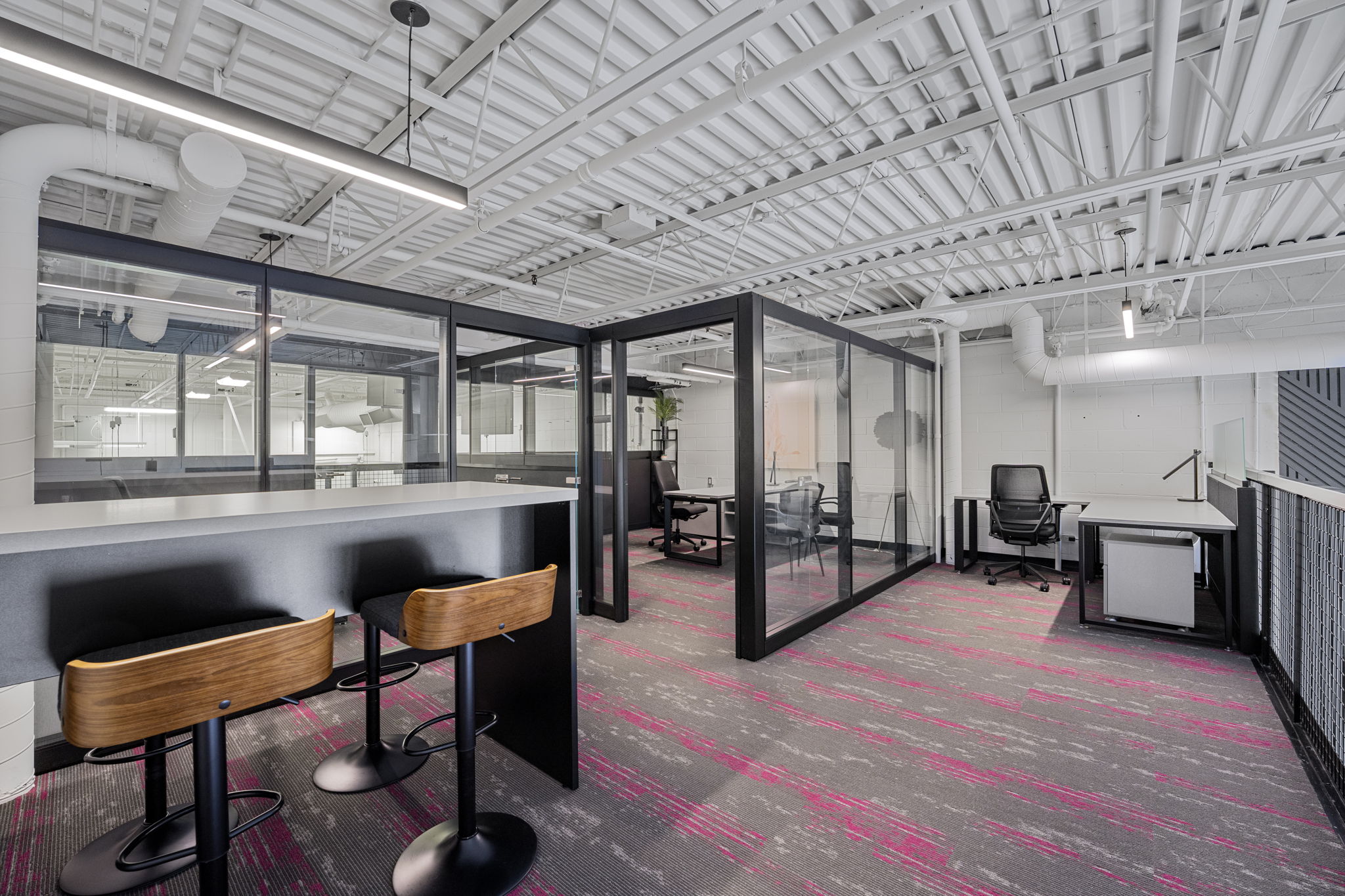
Noise is one of the biggest hidden productivity challenges in office interior design. In large office environments, especially repurposed industrial or manufacturing spaces, uncontrolled sound can significantly impact focus, morale, and overall performance.
At Studio Forma, we believe exceptional office interior design goes beyond aesthetics. A well designed workspace must support wellbeing, collaboration, and concentration. Thoughtfully integrated acoustic solutions transform echo filled environments into productive, comfortable settings.
Research shows workplace noise can reduce productivity by up to 66 percent, increase stress hormones, elevate heart rates, and double error rates. In contrast, well designed quiet zones can increase output by an average of 15 percent.
Below are five proven acoustic strategies used by leading Toronto interior design services to enhance large commercial interior design.
Acoustic Wall Panels as the Foundation of Quiet Office Interior Design
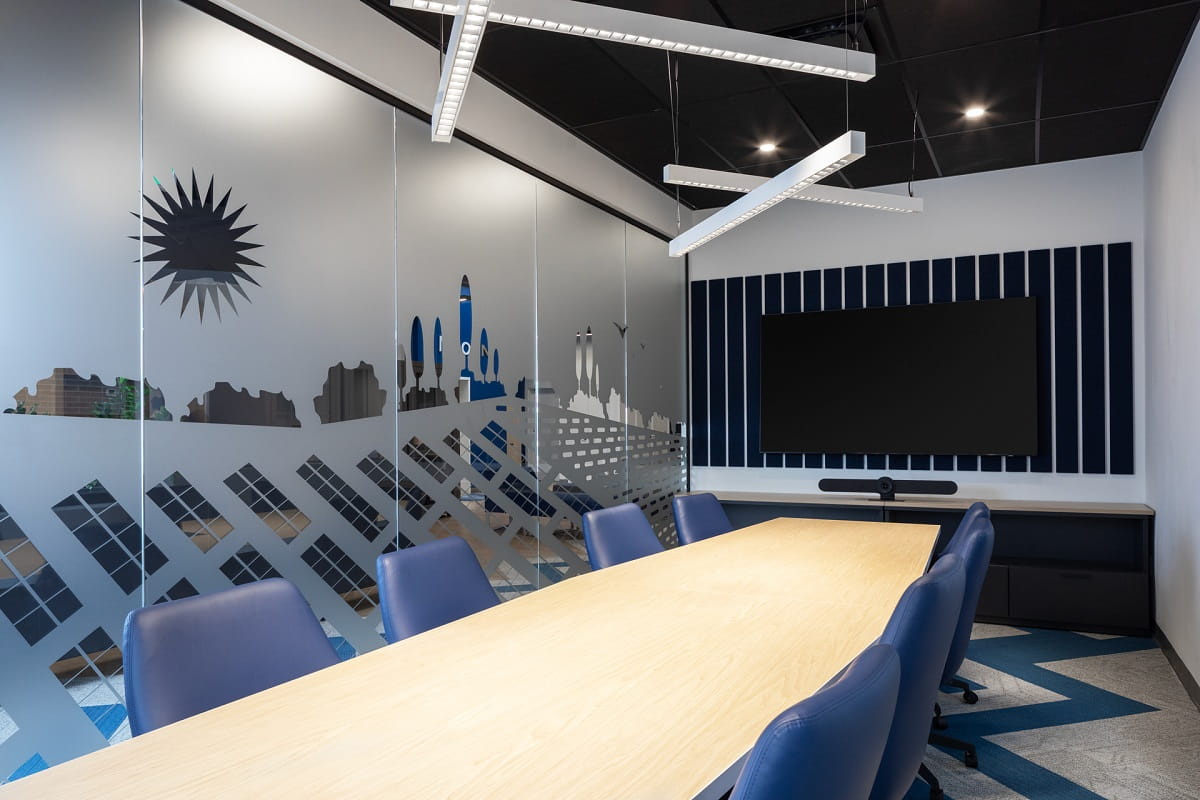
Walls are one of the most effective surfaces for sound absorption. High performance acoustic panels help control reverberation, reduce echo, and create calmer work zones.
Sound absorption coefficients can reach 0.8 or higher, and proper installation can reduce noise levels by up to 10 decibels. In open plan offices and converted industrial spaces, covering 20 to 30 percent of wall surfaces with acoustic treatment significantly reduces reverberation time. Commercial interior design professionals typically aim for a reverberation time below 0.5 seconds in focused work environments.
At Studio Forma, acoustic panels are carefully integrated to align with brand identity and architectural intent. We incorporate durable wool blends and high performance textiles, sculptural or curved panels that scatter sound waves, and acoustic art features that combine visual impact with performance. In manufacturing to office conversions, bass traps can also be introduced in corners to manage low frequency machine noise. The result is a seamless blend of science and style, a defining element of effective corporate interior design.
Ceiling Clouds and Baffles for Tall Commercial Spaces
High ceilings amplify sound issues in large office layouts. Noise travels upward and reflects back into the workspace, increasing distraction.
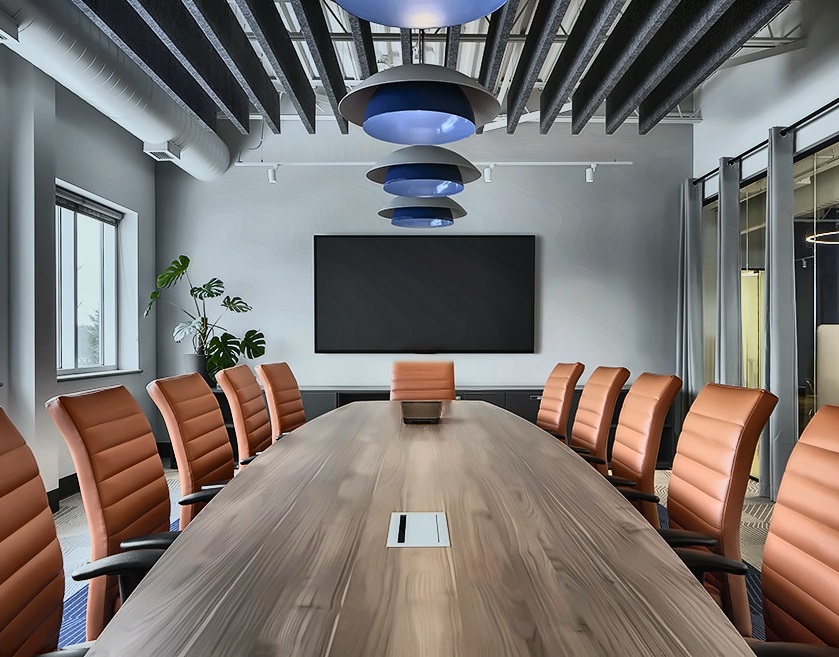
Suspended acoustic baffles and ceiling clouds absorb mid and high frequency sounds before they return to the occupied zone. With Noise Reduction Coefficient ratings of 0.9 or higher, these systems can reduce reverberation by up to 50 percent. In tall commercial environments, spacing baffles approximately 1.2 metres apart maintains airflow while controlling acoustics effectively.
Studio Forma customizes ceiling treatments to align with ceiling heights and architectural features while integrating LED lighting and maintaining HVAC efficiency. This dual purpose approach ensures that spaces remain bright, functional, and acoustically balanced.
Acoustic Flooring Solutions for Impact and Reflection Control
Hard flooring surfaces reflect sound and amplify foot traffic noise. In large office environments, this contributes to constant background distraction.
Thick carpet combined with acoustic underlay can reduce impact noise by up to 15 decibels. High density pile absorbs significantly more reflected sound than hard surfaces such as tile or polished concrete. Strategic zoning of flooring materials improves both acoustics and workflow, placing more absorbent materials in high traffic areas and focused work zones.
Commercial grade nylon and stain resistant blends ensure durability without compromising performance. Area rugs placed under desks or collaborative areas create subtle acoustic islands that reduce noise spill and support concentration. Thoughtful flooring selection plays a key role in comprehensive office interior design planning.
Acoustic Partitions and Glass Systems for Flexible Sound Control
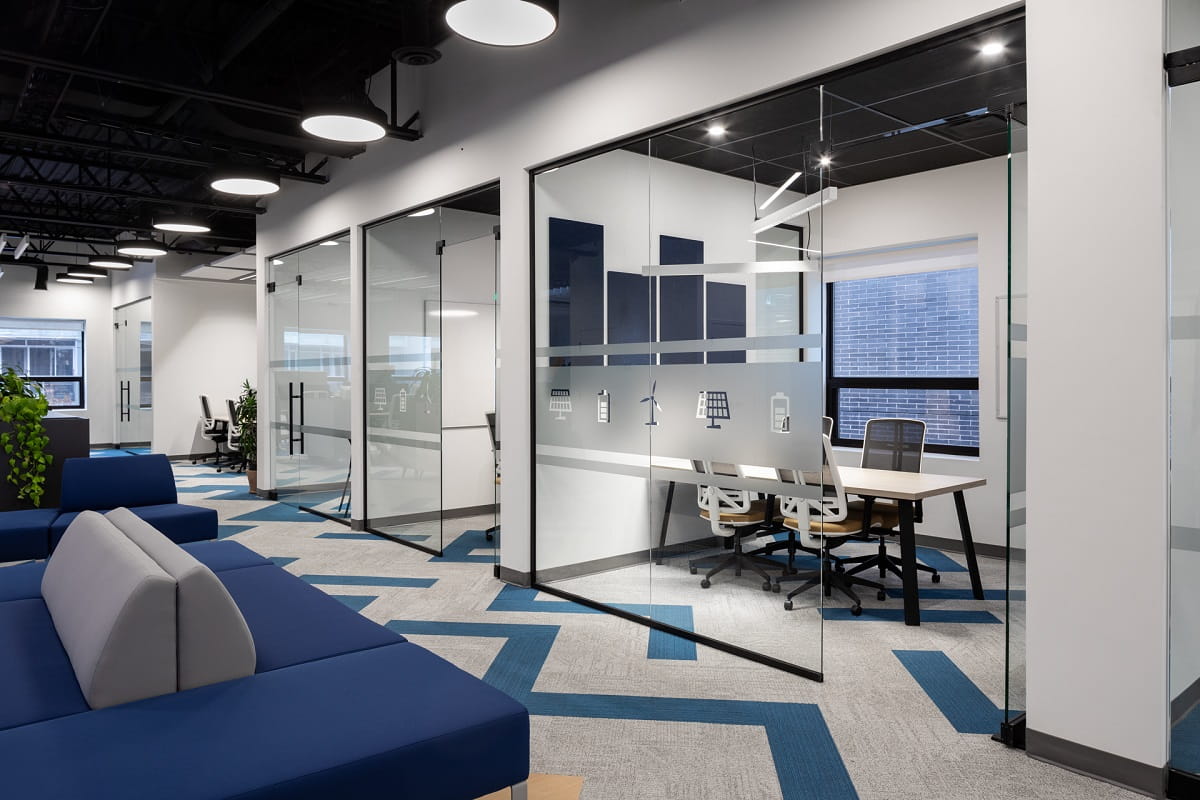
Open office layouts require balance between collaboration and privacy. Modular partitions offer adaptable sound control without sacrificing openness or natural light.
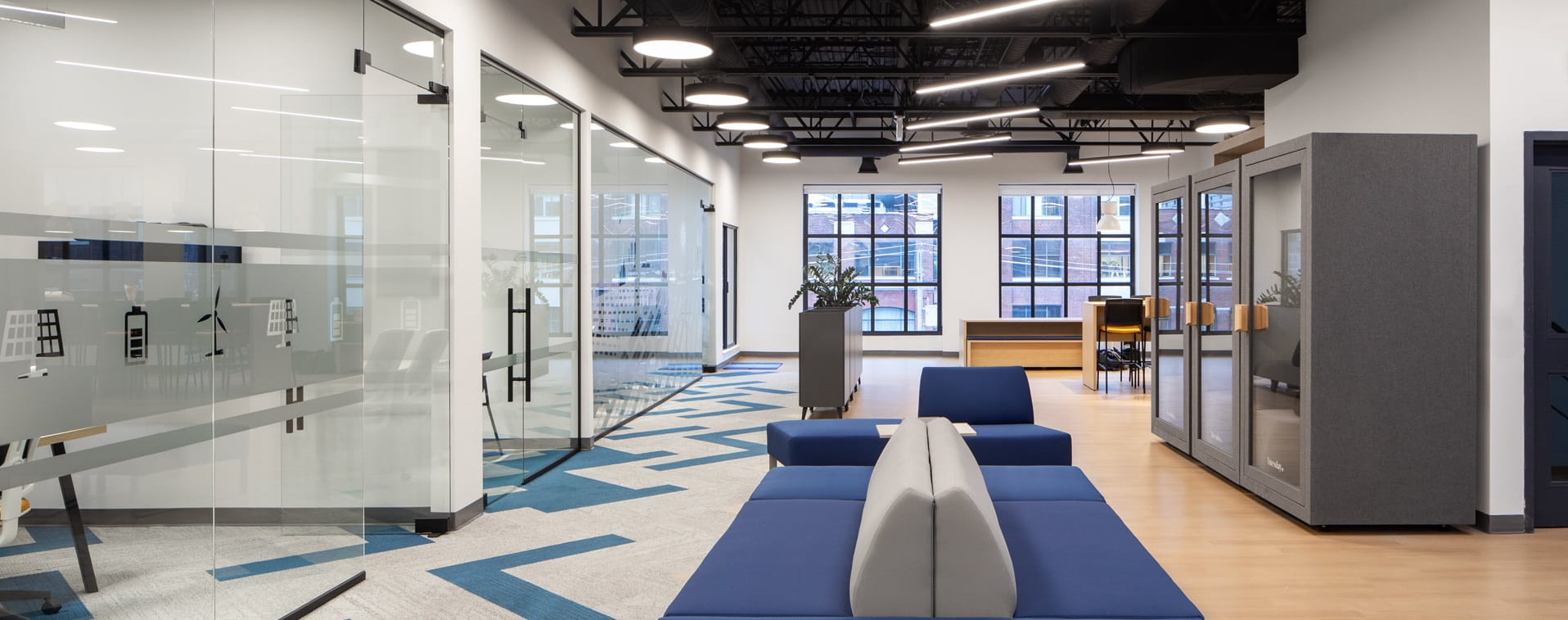
Freestanding acoustic screens and high performance glass systems with STC ratings above 45 can significantly reduce sound transmission. Triple glazed partitions are capable of reducing transmission by up to 35 decibels, making them ideal for meeting rooms and executive offices within larger open plans. Perforated panels can also be used to allow ventilation while maintaining acoustic integrity.
Research shows that improved acoustic privacy enhances cognitive performance and creativity. When employees have better control over their sound environment, stress levels decrease and focus improves. Studio Forma often integrates modular reconfigurable partitions, durable steel framed systems, and biophilic elements such as greenery that naturally buffer sound. This flexibility supports evolving corporate interior design needs in large, dynamic workplaces.
Sound Masking and Acoustic Technology Integration
Modern office interior design increasingly incorporates smart acoustic technology to complement architectural treatments.
White noise and pink noise systems calibrated around 50 decibels effectively mask speech distractions and improve concentration in open offices. Evenly distributed sound masking prevents conversations from travelling across large spaces and maintains speech privacy.
In high noise industrial office settings, active noise control systems capture unwanted sound through microphones and emit inverse sound waves to reduce targeted noise levels by up to 20 decibels. When combined with passive acoustic materials such as panels and ceiling treatments, these systems create comprehensive coverage.
Studio Forma calibrates all systems after installation to ensure optimal performance tailored to each workspace. This integrated approach ensures technology and design work together seamlessly.


Frequently Asked Questions (FAQ):
How much do sound barriers cost for large offices?
Costs vary depending on materials and scope. Acoustic wall panels may start around 50 dollars per square metre, while integrated sound masking systems represent a higher investment. A comprehensive acoustic strategy often delivers measurable return on investment through improved productivity and employee satisfaction.
Do acoustic solutions work in manufacturing based office spaces?
Yes. Layered acoustic strategies can reduce overall noise levels by up to 40 decibels in challenging environments. A tailored commercial interior design plan ensures maximum effectiveness.
Can acoustic solutions work with open office layouts?
Yes. Strategic zoning, partitions, and ceiling treatments preserve openness while minimizing distraction.
Key Takeaways
- Covering 20 to 30 percent of wall space with acoustic panels can reduce noise by up to 10 decibels
- Ceiling clouds with NRC ratings above 0.9 significantly reduce reverberation in tall spaces
- Carpet and acoustic underlay reduce impact noise by up to 15 decibels
- Partitions with STC 45 plus ratings provide effective privacy in open layouts
- Sound masking systems at approximately 50 decibels improve concentration and reduce speech distraction
Large office interior design requires more than thoughtful layouts and furniture selection. Acoustic planning is essential to creating environments where teams can perform at their best.
Studio Forma’s Toronto interior design services combine architectural precision, acoustic science, and refined aesthetics to design workplaces that support both productivity and wellbeing. Whether converting a manufacturing facility into office space or optimizing a corporate headquarters, carefully integrated sound barriers ensure that every design decision enhances comfort and performance.
Ready to design a quieter, more effective workspace. Connect with Studio Forma today to discuss your commercial interior design project.