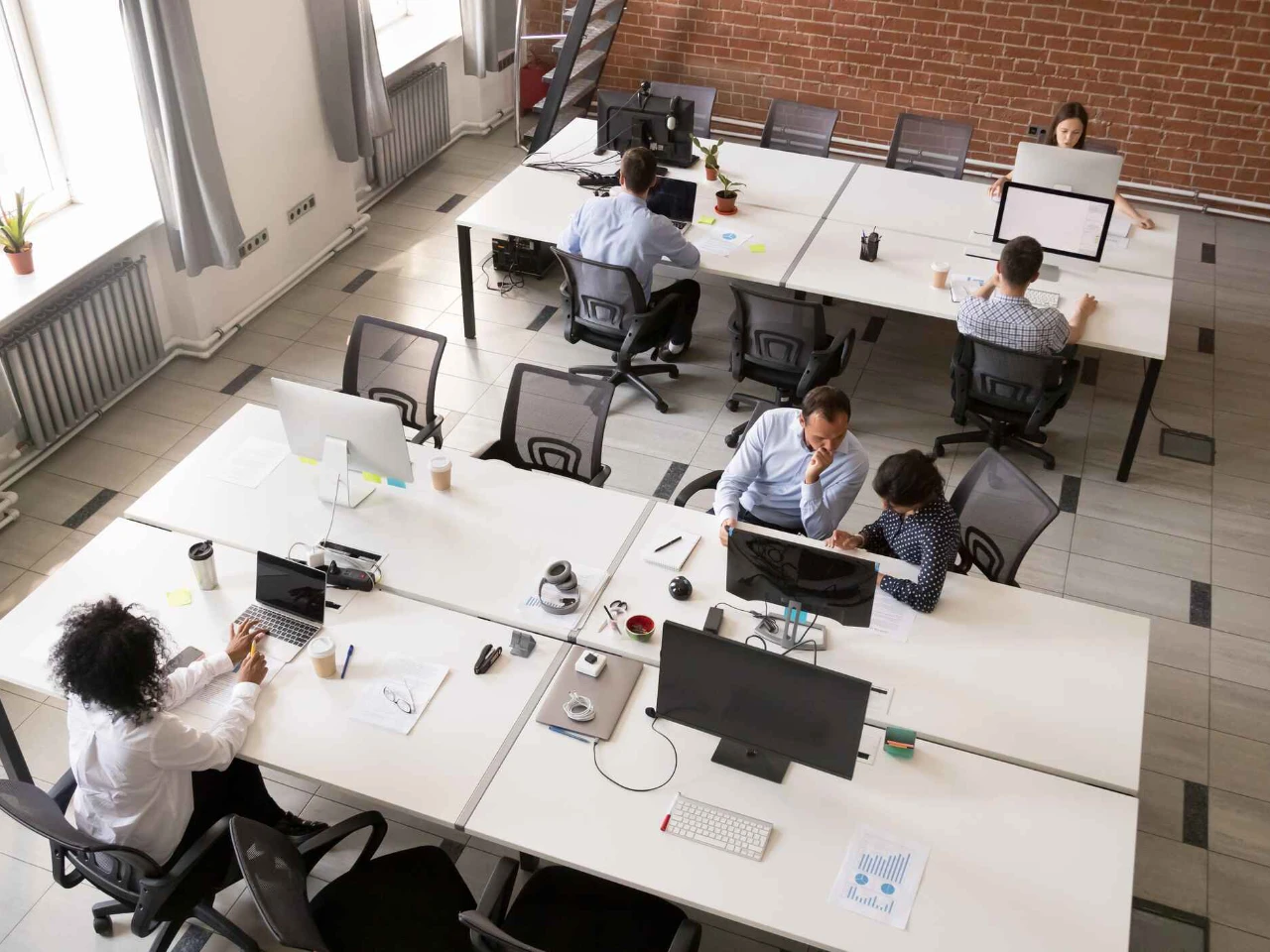
Losing a good employee is expensive in ways that rarely show up cleanly on a spreadsheet. There is the obvious cost: recruiting fees, job board listings, weeks of management time spent interviewing. Then there are the less obvious ones: the institutional knowledge that leaves with them, the slowdown in the team while the role sits open, the onboarding time before their replacement is genuinely productive.
Add it all up, and research consistently puts the cost of replacing a salaried employee at between 50% and 213% of their annual salary. For a mid-level hire earning $80,000, that is somewhere between $40,000 and $170,000 per departure.
Most business owners think about employee retention in terms of compensation, management, and culture. Those things matter. But there is a fourth factor that rarely makes it onto the retention agenda, and it is one of the most actionable things a company can change: the physical environment people work in every day.
The Environment Is Part Of The Offer
When someone decides to stay with or leave a company, the decision is rarely about one thing. It is an accumulation of how they feel at work, day after day. And the physical environment plays a direct role in that feeling whether or not anyone is consciously naming it.
Research from the Leesman Index, one of the most comprehensive workplace experience databases in the world, shows that the quality of the physical workplace directly influences employee engagement, productivity, and loyalty. Employees who feel their environment does not support the way they work are significantly more likely to be looking elsewhere.
That connection between space and retention is not abstract. It is reflected in how people describe their decision to leave. Ask someone why they quit and they will tell you about management or pay. Ask them what their last office was like and the words that come up are almost always the same: noisy, cramped, uninspiring, like the company did not really care about us.
That last phrase is the one worth sitting with. The office communicates investment. When a business puts genuine thought into its workspace, it sends a message to the people inside it: you matter here, and we have built an environment that reflects that. When it does not, the message is just as clear.
What The Numbers Actually Say
The turnover numbers for 2025 and 2026 tell a complicated story. Voluntary quit rates have declined from their post-pandemic highs, sitting at around 13% in 2025. But that lower quit rate is not the same as higher engagement. According to Gallup’s most recent data, 51% of employees are actively looking for or watching for new job opportunities, even while staying put. The job market is uncertain enough to keep people in their seats. It is not good enough to keep them engaged.
That is pent-up turnover. When hiring conditions improve, companies with weak retention environments will feel it immediately.
According to Gallup, voluntary departures cost U.S. businesses roughly one trillion dollars per year, with 75% of those exits classified as preventable. Three out of four resignations did not have to happen.
The question is not whether retention matters. The question is what levers a business actually has. Compensation is often constrained by budget. Management is slow to change. Culture is built over years. The physical environment is something a company can meaningfully improve in a matter of months, and the impact shows up faster than most leaders expect.
The Ways A Poor Office Environment Drives People Out
It tells employees how much they are valued, even within the first six months.
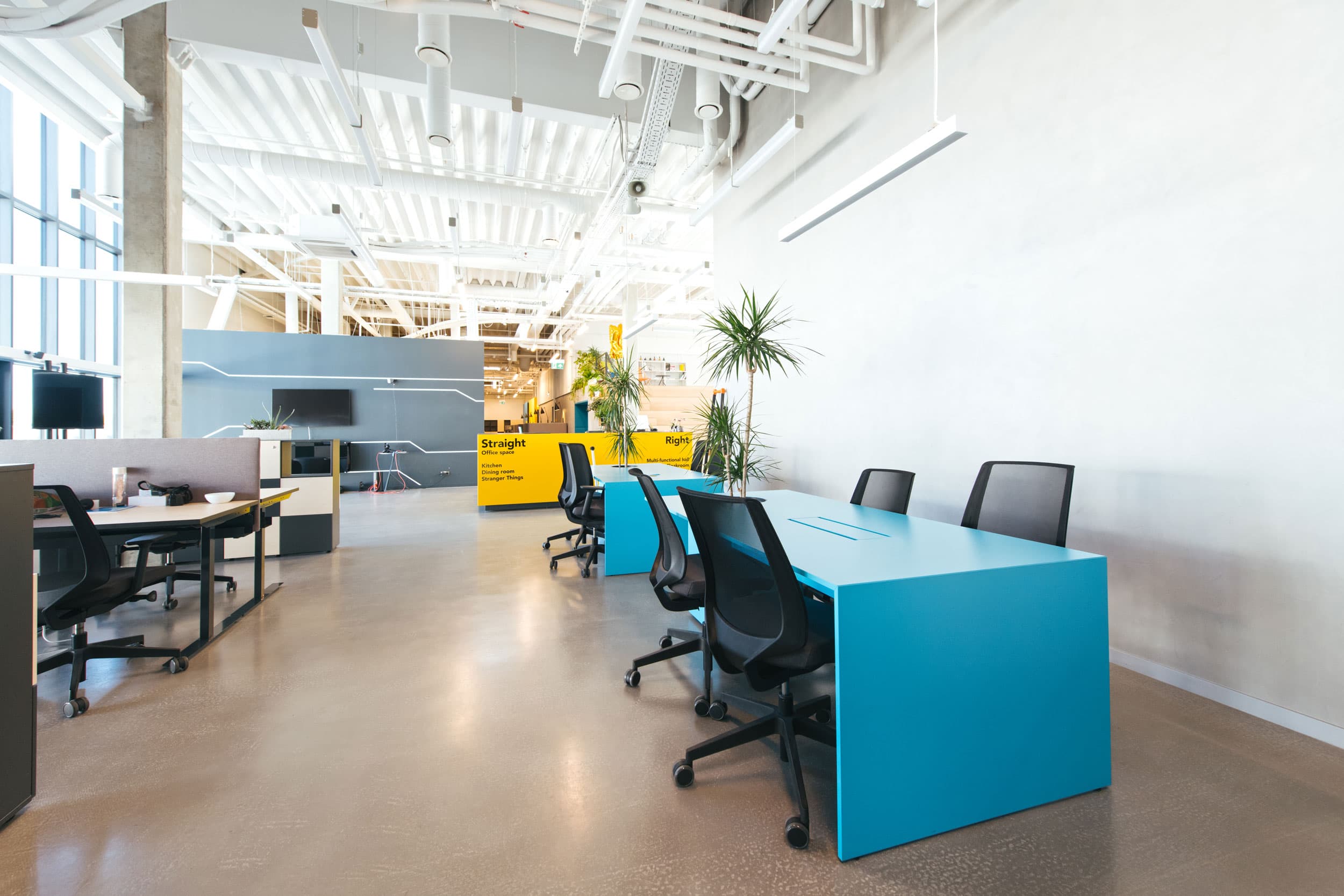
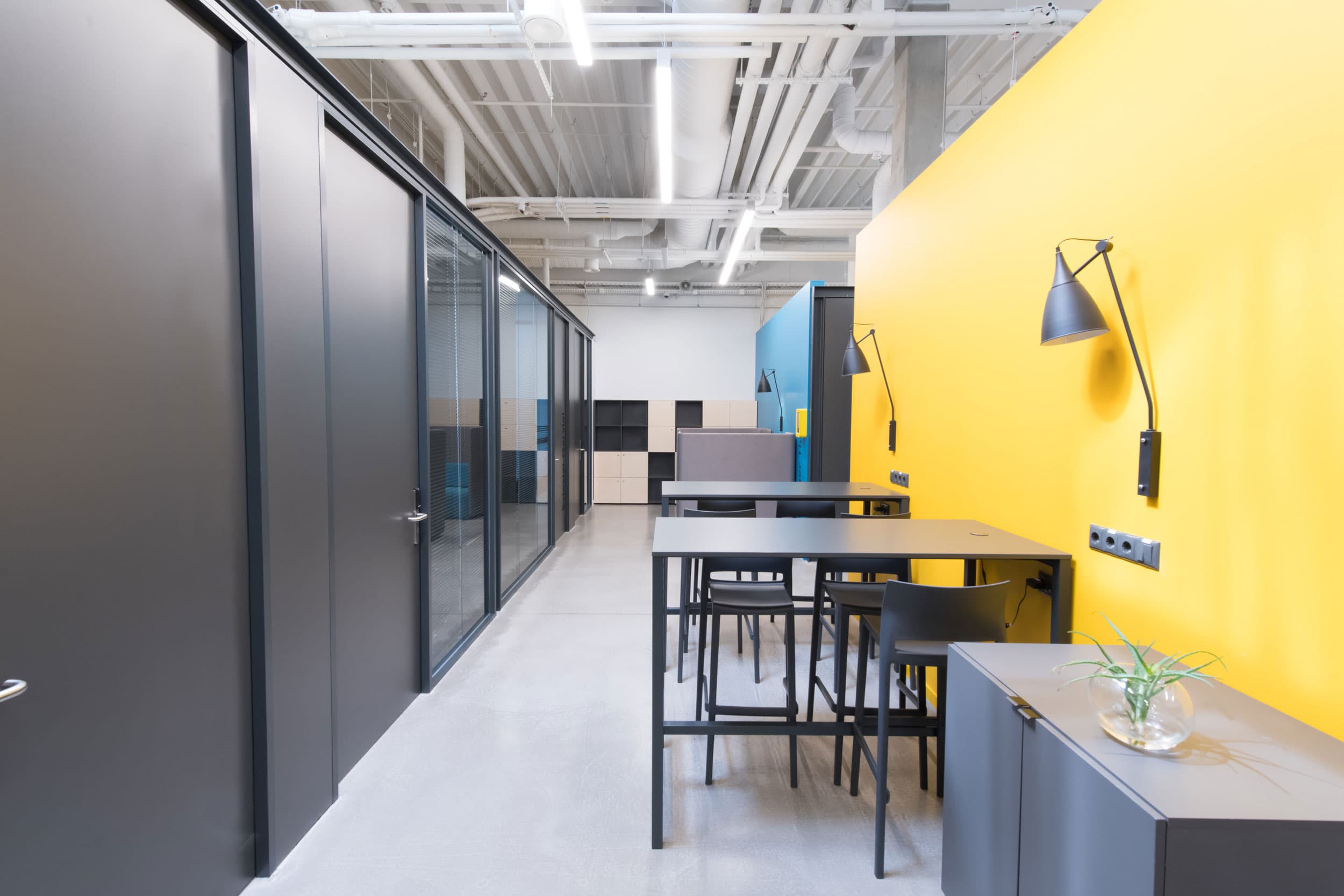
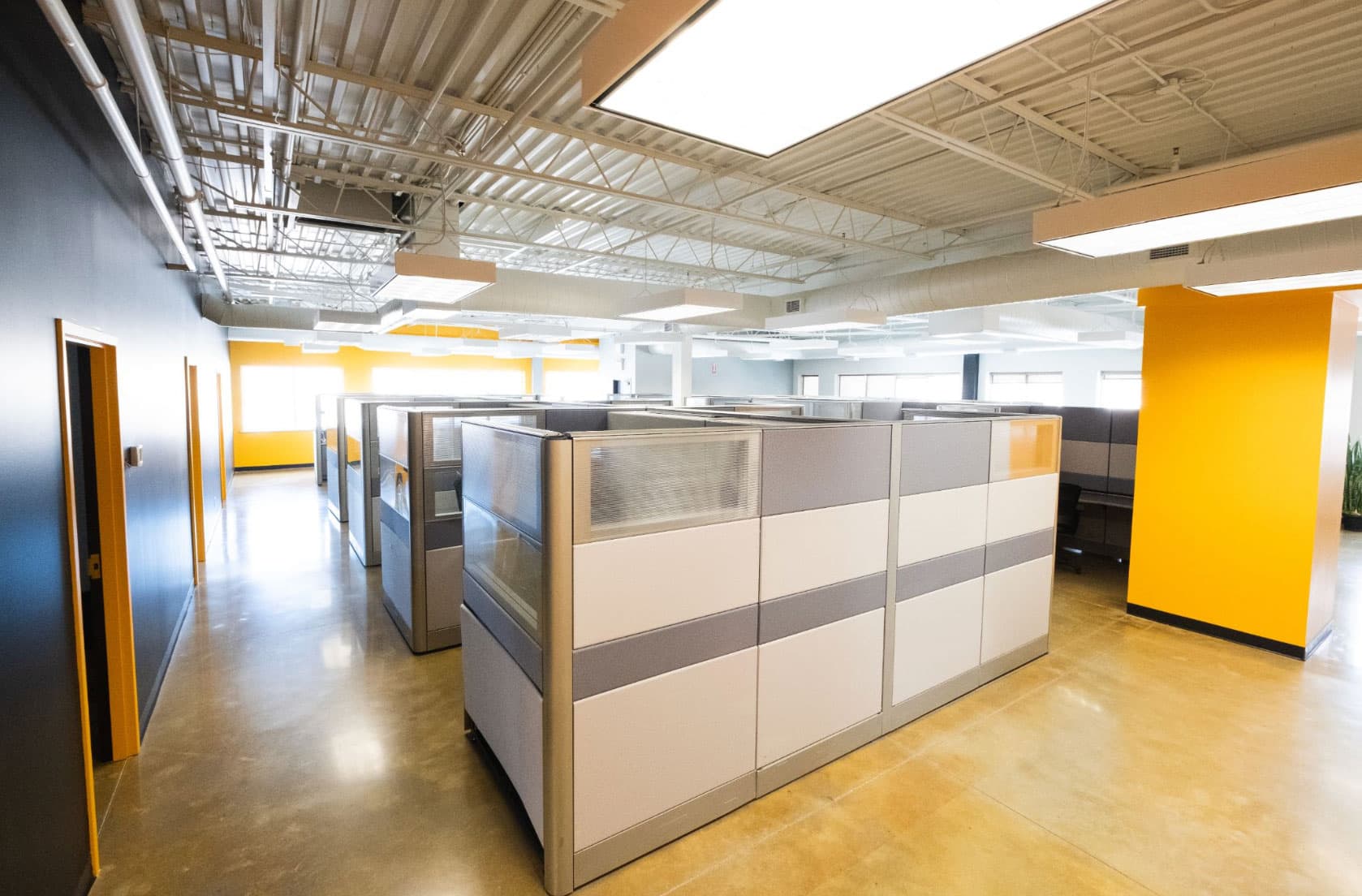
People are perceptive. They notice when the office has not been updated since the company’s early days, when the furniture is mismatched and worn, when the kitchen is an afterthought, when there is nowhere quiet to focus or recover. They do not always say it directly. But the environment registers as a signal about how the business feels about the people inside it.
Wellness-focused office design, according to research cited by Harvard Business Review, can reduce stress-related absences by 20% and improve employee retention by 15%. That is not a minor improvement. Applied to a team of 40 people with an average salary of $70,000, a 15% retention improvement could represent hundreds of thousands of dollars in avoided replacement costs over three years.
It makes daily work harder than it needs to be.
An office that was not designed for how the team works creates friction. People cannot find quiet space for focus work. Collaboration happens in hallways because there is no appropriate room. Noise from the open plan bleeds into calls and makes client conversations difficult. Video meetings are taken from stairwells.
None of these things feel dramatic in isolation. But they add up to a workday that is consistently harder than it should be, and over time, that daily friction erodes the goodwill that keeps people choosing to come in.
It fails on the return-to-office promise.
The implicit deal behind most return-to-office policies is that coming in offers something that working from home does not. Connection. Collaboration. Energy. A sense of shared purpose.
If the office cannot deliver on that promise, the commute becomes a one-sided bargain. People come in, sit in a loud open plan, spend the day in headphones, and go home having had no meaningful interaction that they could not have had on a video call. They do not leave immediately. But they start to disengage, and disengagement is almost always the first chapter of a resignation story.
It hurts most during the first year.
Research on turnover timing shows that 18% of employees who quit do so within their first month of employment, with another 15% leaving within the first week. The first-year experience is the most fragile period in a new hire’s relationship with a company, and the physical environment is among the first impressions they form.
A well-designed space tells a new hire that this is a company worth committing to. A space that feels temporary, cramped, or neglected confirms any doubts they may have had before accepting the offer.
What A Design Investment Actually Returns
The hesitation most business owners have around investing in the office design is understandable. It feels like a cost. The return is not immediately visible on a revenue line. But when you stack the actual numbers, the calculation shifts.
Take a team of 35 people with an average salary of $75,000. At a 13% voluntary turnover rate, that is roughly four to five departures per year. At a conservative replacement cost of 50% of salary, each departure costs $37,500. Four departures cost the business $150,000 in a single year.
A thoughtful office redesign for a space of that size, including layout reconfiguration, acoustic treatment, proper zoning for collaboration and focus work, and upgraded finishes, might cost anywhere from $150,000 to $300,000 depending on scope. If that investment reduces voluntary turnover by even 15%, the avoided replacement costs begin paying back the design investment within two to three years. And that calculation does not include the productivity gains, the improved hiring success rate, or the client perception improvements that come with a well-designed environment.
The office is not just a cost of doing business. It is an asset that either works for the company or against it.
The Signs The Office Is Working Against Retention
Not every space problem is visible to the people closest to it. Some of the clearest indicators that your environment is contributing to turnover are easy to overlook.
Watch for these:
- Exit interview themes that mention the environment, even indirectly. Phrases like “I felt undervalued” or “the culture did not feel right” often trace back to the physical space more than people realise.
- New hire attrition in the first 90 days, particularly if new employees comment on the office early in their tenure.
- Consistent low engagement scores in teams that sit in noisier or less well-equipped parts of the office.
- Difficulty getting your return-to-office policy to stick, even with mandates in place.
- Strong candidates who go quiet after the in-person interview stage.
Any of these patterns is worth examining through the lens of the physical environment before assuming the cause lies elsewhere.
Frequently Asked Questions (FAQ):
Does office design really affect whether employees stay or leave?
Yes, measurably so. Research from the Leesman Index shows that the quality of the physical workplace directly influences employee engagement and loyalty. Employees who feel their environment does not support the way they work are significantly more likely to be exploring other opportunities. The connection is rarely named explicitly in exit interviews, but the patterns appear consistently when companies examine turnover data alongside workplace experience scores.
What is the actual cost of employee turnover for a small to mid-sized business?
Research puts replacement costs at between 50% and 213% of a departing employee’s annual salary, depending on seniority and role complexity. For a team of 30 to 50 people with an average salary of $70,000 to $90,000, a single year of industry-average turnover can represent $120,000 to $300,000 in direct and indirect costs. That figure includes recruiting, onboarding, lost productivity during the vacancy, and the time it takes a replacement to reach full effectiveness.
How does the physical office environment contribute to employee disengagement?
Disengagement builds gradually through daily friction. An office that is too noisy for focused work, that lacks adequate quiet space, that feels visually uninspiring or physically uncomfortable, that communicates through its condition that the company is not invested in the experience of its people, all of these things accumulate over time. According to Gallup, 79% of employees globally are either not engaged or actively disengaged. The physical environment is not the only cause of that, but it is one of the most consistent contributing factors and one of the most directly addressable.
Key Takeaways
- Replacing a salaried employee costs between 50% and 213% of their annual salary. For most businesses, this makes retention one of the highest-leverage financial priorities they have.
- 51% of employees are currently watching for or actively seeking new jobs, even while staying put. When hiring picks up, companies with poor retention environments will feel it sharply.
- 75% of voluntary departures are preventable. The physical environment is one of the most actionable levers a business can pull in the near term.
- Wellness-focused office design has been linked to a 15% improvement in employee retention and a 20% reduction in stress-related absences, according to Harvard Business Review research.
- First-year attrition is heavily influenced by first impressions, and the office environment is among the earliest signals a new hire receives about how the company values its people.
- A well-scoped office redesign can pay back its cost within two to three years through avoided turnover costs alone, without accounting for productivity or hiring improvements.
- The office communicates investment. A neglected or outdated space tells employees something about how the business views them, whether that message is intended or not.
Not sure whether your office is contributing to your retention challenge? Reach us for a free 30-minute consultation for businesses across Newmarket and the GTA. We will give you an honest read of what your space is communicating to the people inside it, and what it would take to change that.