A law office should never make people wonder who can hear them.
That sounds simple, but it is where many legal workplaces fall short. A client sits in reception while a conversation carries from a nearby meeting room. A junior lawyer takes a sensitive call in a space never meant for privacy. A partner office looks enclosed, but sound travels through the ceiling return. Nothing looks obviously wrong, yet the space quietly weakens confidence.
Legal office design has a different burden than most workplaces. It has to support concentration, protect sensitive conversations, and still feel professional enough for clients who are often arriving with serious concerns.
That does not mean every law firm needs a traditional maze of private offices. It does mean the office design layout needs to be planned around confidentiality first, then collaboration second. The best legal workplaces are not the most closed. They are the most controlled.
Office Interior Design Starts With a Confidentiality Map
Before deciding where desks, lounges, or meeting rooms should go, a law firm needs to identify where sensitive work actually happens.
Confidentiality is not limited to boardrooms. It shows up in intake calls, partner discussions, document review, settlement conversations, and internal case strategy. Some of these moments happen formally. Others happen quickly between meetings.
A strong office interior design plan starts by mapping those moments across the day. Where do clients speak openly. Where do lawyers take calls. Where do files, screens, and printed materials become visible.
Once those points are clear, the layout becomes easier to judge. High privacy areas should not sit beside public circulation. Reception should not share sound paths with client rooms. Staff work zones should not expose screens or documents to visitors moving through the space.
This is where commercial interior design becomes less about style and more about risk control.
Commercial Interior Design Should Separate Public and Legal Work Zones
The most effective law office layouts usually have clear layers.
The public layer includes reception and waiting. The client layer includes meeting rooms and consultation spaces. The legal work layer includes lawyer offices, assistant work areas, file zones, and internal collaboration spaces.
When these layers overlap too much, privacy starts to fail.
A client should be able to arrive, wait, meet, and leave without passing through the firm’s working core. Staff should be able to move between offices, files, and support areas without crossing client waiting zones. Lawyers should have access to quick internal collaboration without pulling sensitive discussion into public view.
This kind of zoning does not have to feel rigid. It simply needs to feel deliberate.
Office space planning for law firms should create a clean path for clients and a separate working rhythm for the legal team. When both paths are respected, the office feels calmer and more professional.
Office Design Layout Must Treat Acoustics as a Core Strategy
Acoustic privacy is often treated too late.
Firms add panels, heavier doors, or white noise after the problem appears. These may help, but they rarely fix a layout that was not planned for sound control in the first place.
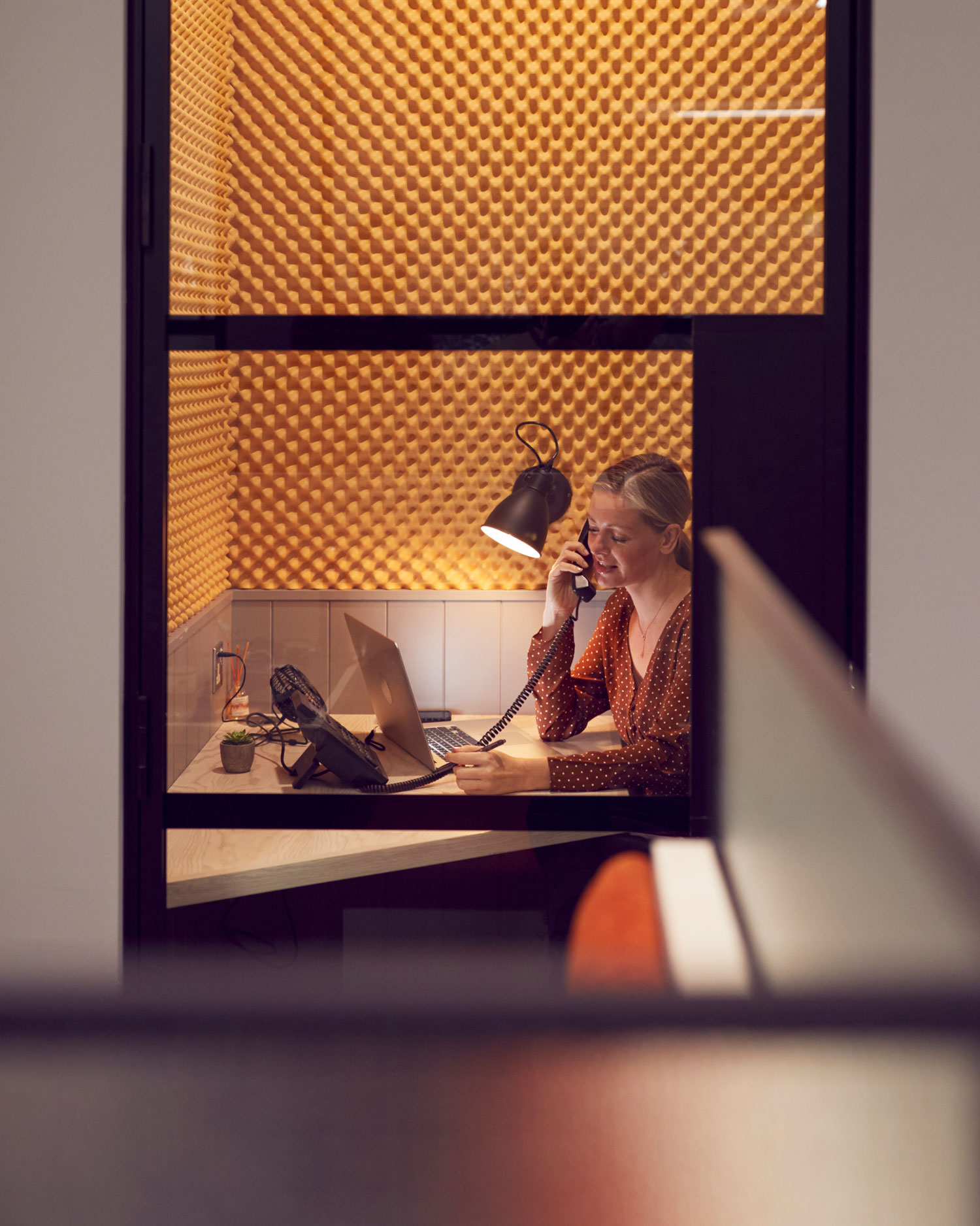
In legal workplaces, sound should be considered before rooms are finalized. A meeting room used for confidential discussions should not share weak partitions with a busy corridor. Partner offices should not rely on glass walls alone if sensitive conversations happen daily. Open work areas should not sit directly outside rooms where difficult client conversations take place.
Good acoustics come from layers. Room placement, wall construction, ceiling conditions, door seals, soft materials, and furniture all contribute.
Interior design services that are experienced with law firms will look at how sound moves, not just how a room looks. That is the difference between a space that appears private and one that truly supports confidential work.
Office Furniture Design Should Support Legal Conversations
A law firm does not need meeting rooms that simply look impressive. It needs rooms that support the type of conversations happening inside them.
Initial consultations may need warmth and privacy. Mediation or negotiation may require larger rooms with balanced seating. Document review may need screens, writing surfaces, and enough table space for files or laptops. Hybrid client meetings need clear audio, proper camera placement, and controlled lighting.
A generic boardroom cannot handle all of this well.
The office design layout should include a mix of meeting spaces, not just one large room and a few leftover spaces. Smaller consultation rooms are often just as valuable as formal boardrooms because they match the scale of everyday legal work.
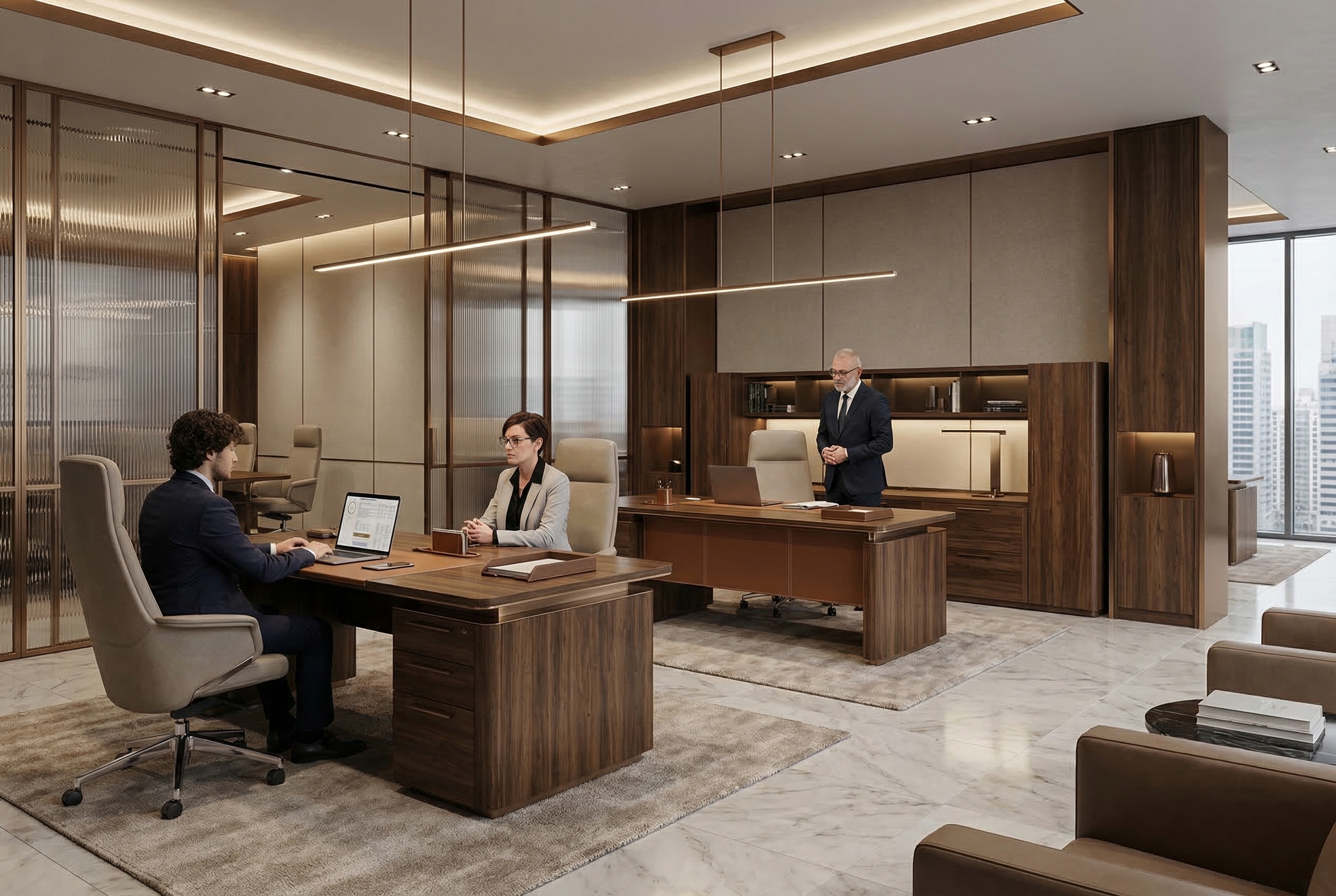
This is also where office furniture design matters. A table that is too wide can make a client meeting feel distant. Chairs that are uncomfortable can make long discussions harder. Storage that is missing forces documents onto surfaces that should stay clear.
The room should make the conversation easier, not heavier.
Corporate Interior Design Should Balance Privacy and Accessibility
Partner offices still matter in legal environments.
They support confidential calls, focused work, and private client conversations. Removing them entirely often creates more problems than it solves.
The better question is how they should function within the broader plan.
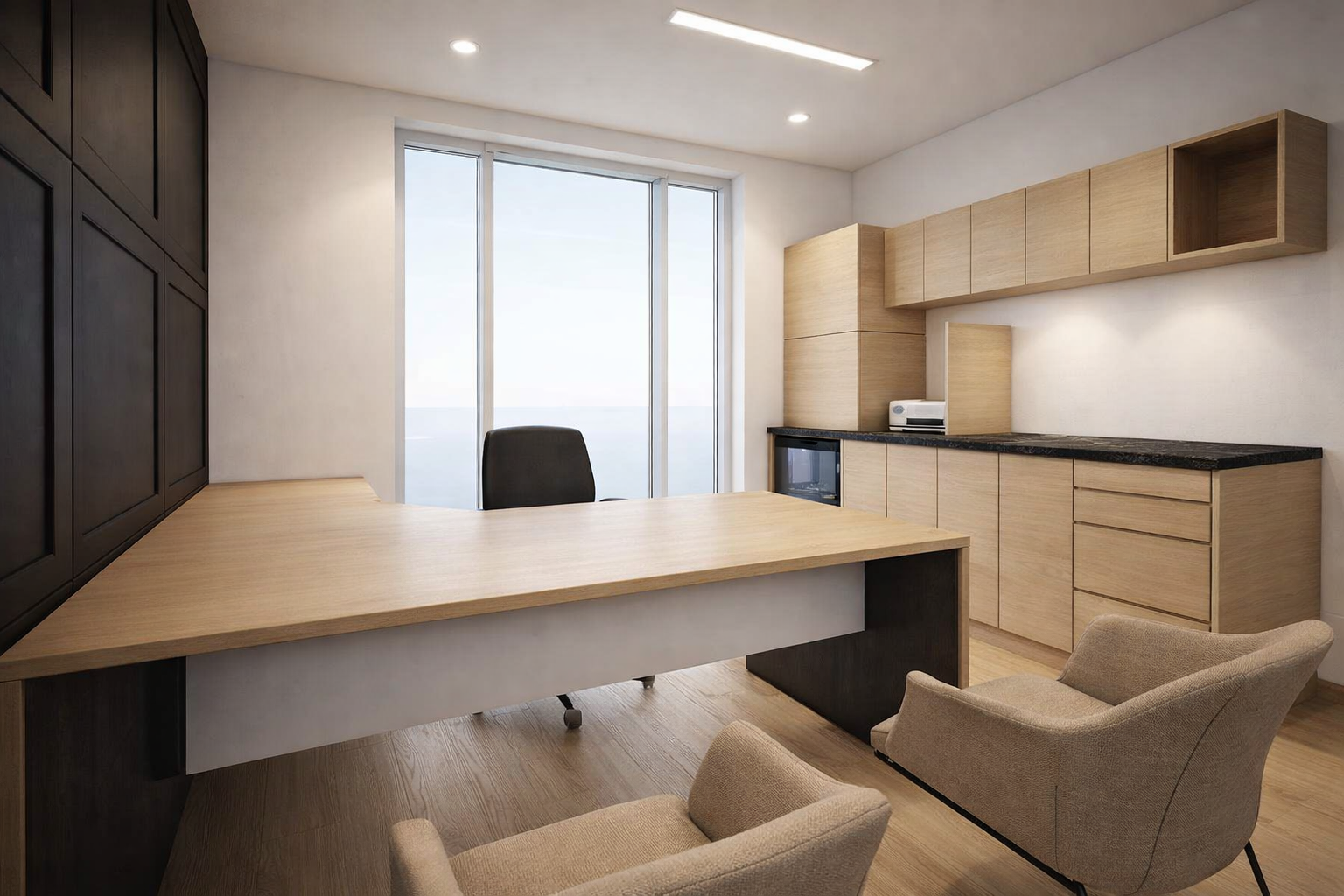
A strong legal workplace allows partners to remain accessible without making their offices feel exposed. Their rooms should connect logically to assistant areas, meeting rooms, and internal collaboration zones. They should not feel hidden from the team, but they should protect the type of work that happens inside.
This balance is important. Too much separation slows communication. Too much openness weakens confidentiality.
Corporate interior design for law firms should respect hierarchy where it supports workflow, but avoid layouts that make collaboration feel formal or difficult.
Interior Design Services Should Build Storage Into Workflow
Legal work still produces material.
Even firms with strong digital systems often handle printed documents, binders, exhibits, reference materials, signed agreements, and confidential files. If storage is not planned well, it quickly becomes visible.
Files appear on credenzas. Boxes sit near workstations. Shared storage fills up and spills into corridors.
That creates two issues. The office looks less organized, and confidential materials become harder to control.
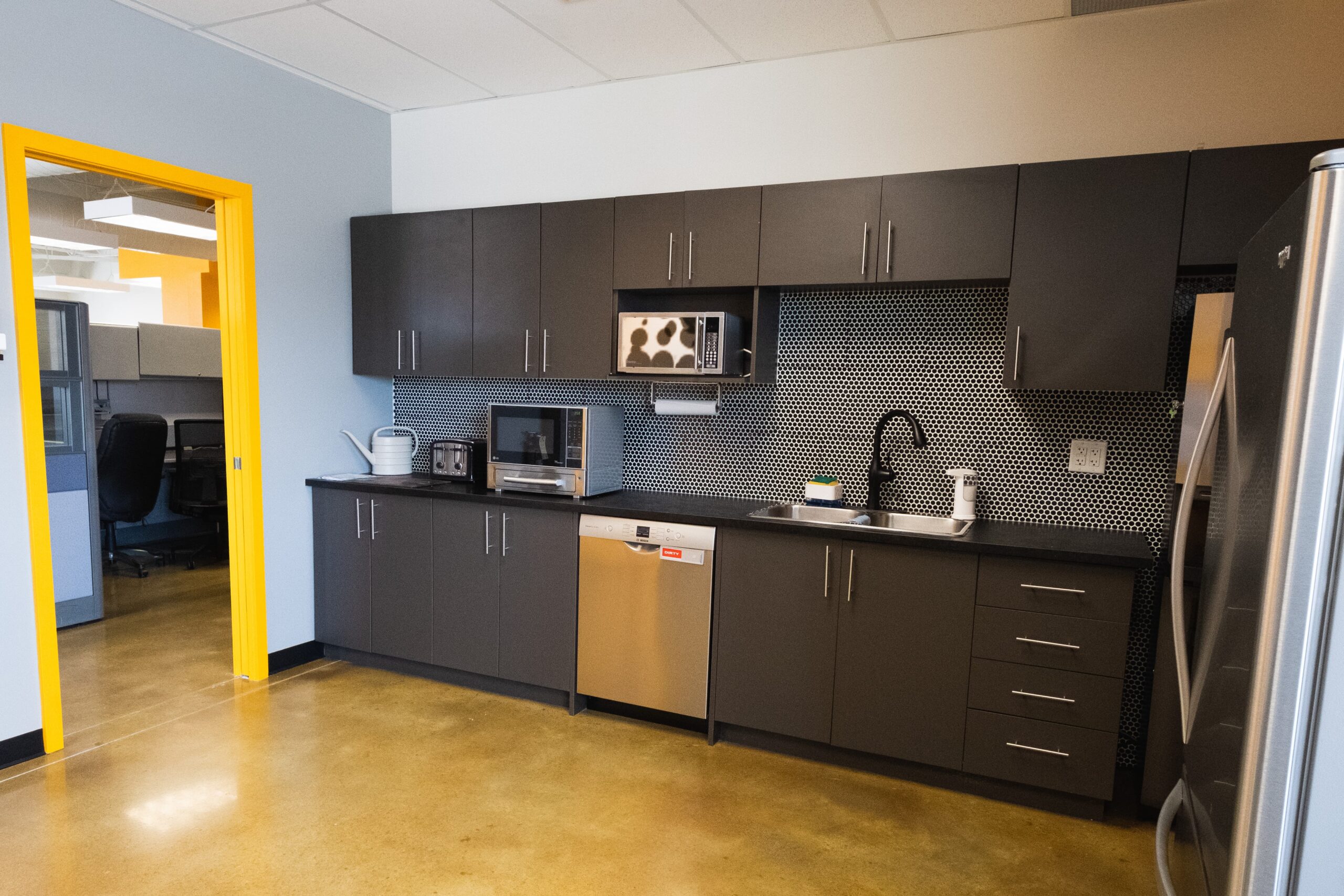
Storage should be built into the workflow rather than pushed into leftover areas. Frequently used documents need to be close to the people who use them. Archived materials need secure locations. Client meeting rooms need discreet storage support so surfaces remain clear and professional.
Canadian office furniture systems can be useful here when they combine durability, lockable storage, and consistent finishes. In law offices, furniture is not only about comfort. It helps maintain order.
Commercial Interior Design Should Keep Reception Calm and Controlled
Reception should not try too hard.
For a law firm, the goal is not to impress clients with a dramatic statement. The goal is to help them feel that they are in capable hands.
That means clear arrival, comfortable seating, controlled sightlines, and enough separation from internal work areas. Clients should not feel like they are waiting inside the firm’s operational traffic.
Materials should feel durable and composed. Lighting should be comfortable. Branding should be restrained. The space should communicate confidence without making clients feel overwhelmed.
This is where many firms overdo design. A reception area can be elegant without being loud. In legal environments, restraint often builds more trust than spectacle.
Office Interior Design Works Best When Operations Lead the Design
The strongest law office layouts are built from work patterns, not visual preferences.
Before selecting finishes or furniture, the firm should know how privacy, client movement, legal workflow, storage, and meeting demand will be handled. Style can then support those decisions.
This order matters.
When appearance leads the process, firms often end up with beautiful rooms that do not perform well. When operational needs lead the process, the final space feels more natural, more professional, and more durable.
Interior design firms Toronto that work with legal and professional services offices often approach this as a planning problem first. The visual result matters, but it should come from a layout that already protects confidentiality and supports the daily work of the firm.
Frequently Asked Questions (FAQ):
Why are open office layouts difficult for law firms?
Open office layouts can make legal work harder because they reduce control over sound, visibility, and movement. In a law firm, even a quick phone call or informal discussion can involve sensitive information. If workstations sit too close to public circulation, reception, or shared meeting areas, confidentiality becomes harder to protect.
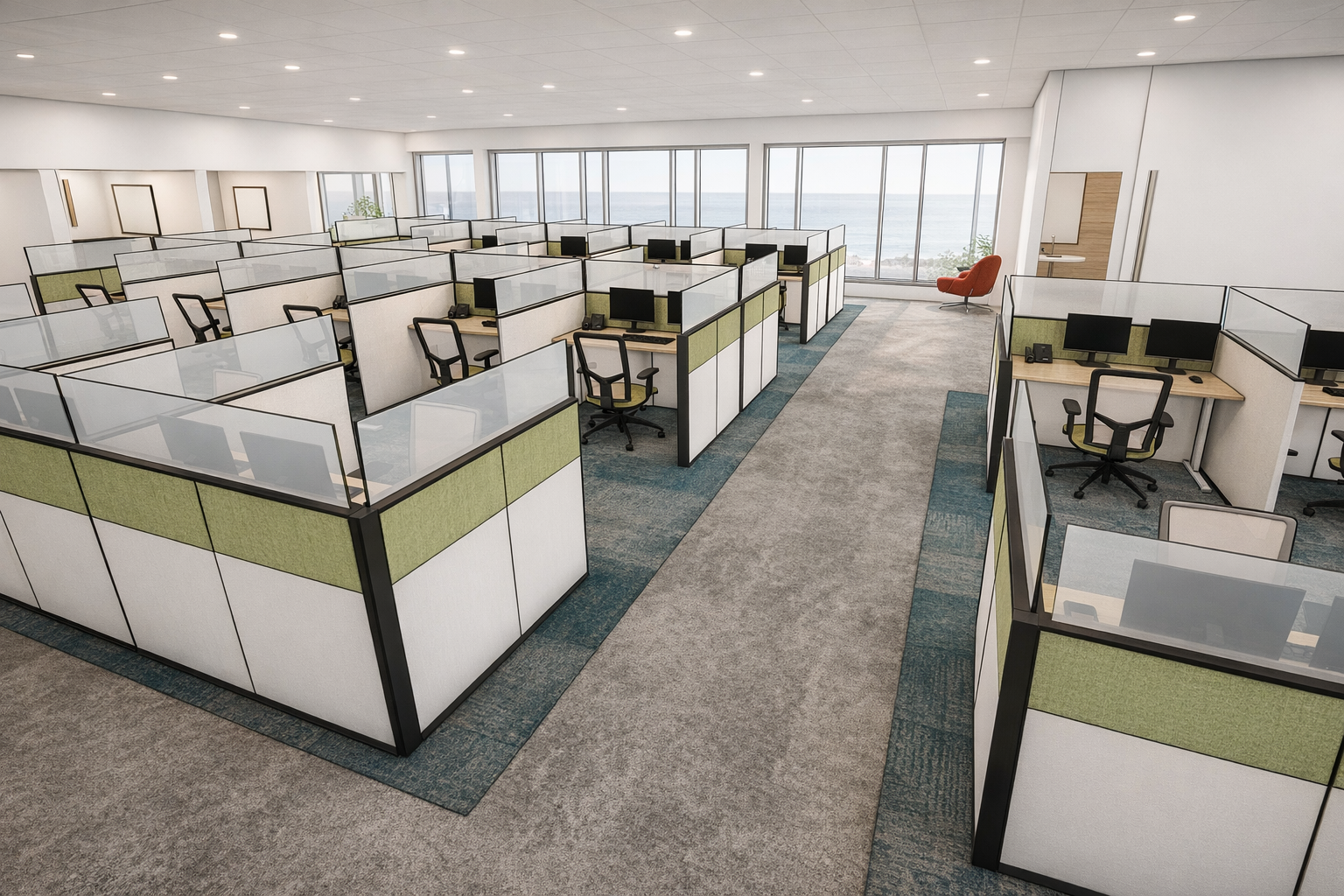
That does not mean law firms need to avoid openness completely. Open areas can still support teamwork, mentoring, and quick internal coordination. The key is to avoid making the entire office open. A better law office layout includes enclosed rooms for confidential work, quiet focus areas, and shared zones that are placed away from client paths. This gives legal teams flexibility without exposing sensitive conversations.
How does office design affect client trust in legal environments?
Clients often judge trust through small environmental cues before a meeting even begins. They notice whether reception feels calm, whether conversations seem private, and whether the office feels organized enough to handle serious matters. A cluttered waiting area, poor sound control, or unclear path to meeting rooms can quietly weaken confidence.
Strong office design supports trust by making the client experience feel controlled from arrival to departure. Meeting rooms should feel private and prepared. Reception should separate visitors from internal work areas. Circulation should feel simple, so clients are not walking through staff zones or past confidential materials. These details reassure clients that the firm handles both space and information with care.
What is the biggest layout priority for law offices?
The biggest priority is separating public, client, and legal work zones without making the office feel disconnected. Clients need a clear and professional path from reception to meeting rooms. Lawyers and support staff need private areas for focused work, document handling, and internal discussion. Those two flows should not constantly overlap.
A practical layout starts by mapping where confidential work happens. From there, meeting rooms, partner offices, assistant areas, file storage, and client spaces can be placed in a way that protects privacy while still allowing efficient collaboration. The goal is not to create a closed or old fashioned office. It is to create a layout where each space has a clear role and sensitive work is naturally protected.
Key Takeaways
- Law office layouts should begin with a confidentiality map, not a style direction
- Public, client, and legal work zones should be clearly separated
- Acoustic privacy must be planned through layout, construction, and materials
- Meeting rooms should match real legal conversations, not generic office use
- Partner offices still matter when confidentiality and focus are daily needs
- Secure storage should be built into legal workflow from the start
- Reception should feel calm, controlled, and professional rather than overly decorative
- The best legal office design protects trust without making the space feel closed or outdated
A law office does not need to feel old fashioned to protect confidentiality. It needs to feel controlled.
When office interior design, commercial interior design, office space planning, and office furniture design are planned around how legal work actually happens, the result is more than a polished workplace. It is a space that protects client trust, supports focus, and makes professional service feel consistent from arrival to meeting room.