Our approach considers how the space works in practice for staff, visitors, leadership, and facilities teams, with a focus on clarity, usability, and long-term performance.
Designing for Public-Facing Workplaces
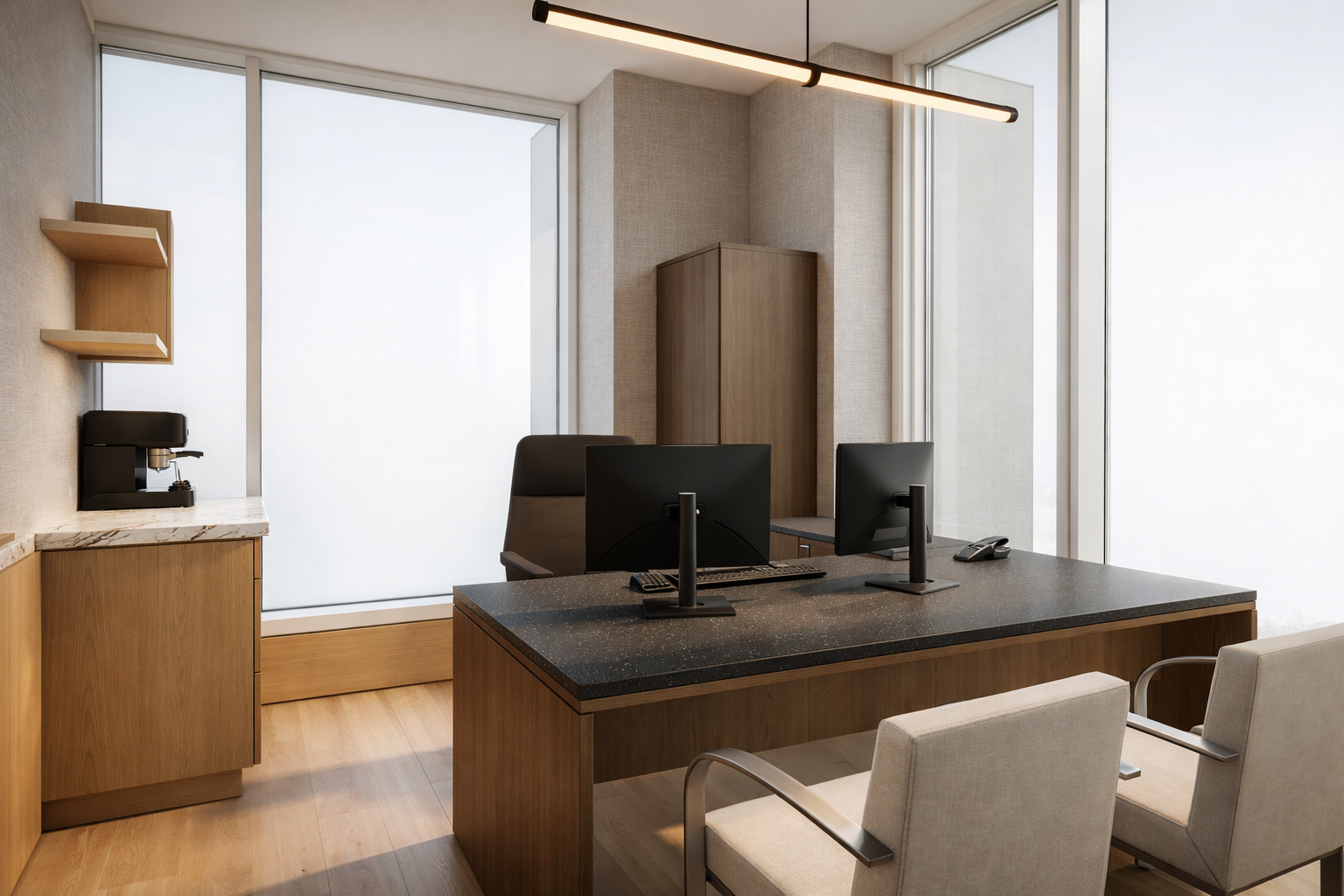
Public-facing workplaces often carry a broader set of design demands than a typical private office. The space may need to support staff workflow, visitor movement, reception, accessibility, privacy, wayfinding, and long-term daily use, often all at the same time.A well-designed municipal or institutional workplace should feel clear, organized, and welcoming while also supporting efficient day-to-day function behind the scenes. Good design helps reduce confusion, improve flow, and make the environment easier for both staff and visitors to use.
- ● PUBLIC-FACING WORKPLACES
- ● ACCESSIBILITY-AWARE PLANNING
- ● PHASED RENOVATIONS
- ● PERMIT DRAWINGS
Common Challenges in Municipal and Institutional Workplace Design
These environments often need to solve multiple competing needs at once. In many cases, the issue is not simply that the space looks outdated. It is that it no longer supports how staff and visitors need to use it.
Common challenges include:
- ● Public-facing areas that feel confusing or hard to navigate
- ● Inefficient layouts for staff operations
- ● Poor wayfinding for visitors
- ● Limited privacy where it is needed
- ● Materials and furnishings that do not hold up well over time
- ● Accessibility concerns
- ● Too many stakeholders with unclear priorities
- ● Renovation work that needs to happen in phases
- ● Environments that feel cold, dated, or difficult to use


What we consider when designing municipal and institutional workplaces
Public-Facing Experience
Reception areas, waiting areas, service counters, and meeting points should feel understandable, approachable, and well organized for the people using them.
Accessibility And Usability
Accessibility and usability should be considered from the start so the space supports a broader range of users more effectively and more comfortably.
Wayfinding And Clarity
People should be able to move through the space with confidence. Layout, signage, and circulation should help reduce confusion and improve the overall experience of the environment.
Durability And Maintenance
Municipal and institutional spaces often see heavier ongoing use. We consider long-life materials, practical finishes, and layout decisions that support easier maintenance and stronger long-term performance.
Staff Workflow
Behind every public-facing environment is a team that needs the space to function well. We look at staff movement, privacy, support areas, and practical planning so the workplace works better operationally.
Phased Renovation Planning
Some organizations need improvements while keeping operations running. We help think through phased approaches that reduce disruption and support continuity where possible.
Coordination And Approvals
These projects often involve leadership, operations, facilities, and administrative stakeholders. We help create design direction that is practical, clear, and easier to move through review and approval.
Our Approach
Studio Forma starts by understanding how the workplace is currently being used and what it needs to support going forward. That may include staff operations, visitor flow, public service interactions, accessibility needs, durability requirements, and project constraints.
Where needed, we can also support project planning through permit drawings and other documentation-related services, helping align design intent with a more practical path to implementation.
Our goal is to create municipal and institutional workplaces that are more functional, more welcoming, and better suited to the realities of public-facing use.
Understand current use
Define priorities
Plan the layout
Support implementation

Can you design spaces that serve both staff and the public?
Yes. Many municipal and institutional workplaces need to support internal operations and public-facing use at the same time. Good planning helps each area function better without creating unnecessary friction.
Do you consider accessibility in the design process?
Yes. Accessibility and usability should be part of the planning process from the start so the workplace is easier and more comfortable for people to use.
Can you help with phased renovation planning?
Yes. When operations need to continue during improvements, a phased approach may be the best fit. We can help think through how the workplace can evolve in a more manageable way.
What matters most in municipal or institutional office design?
In many cases, the main priorities are clarity, durability, accessibility, workflow, stakeholder coordination, and how the space supports both staff and visitor experience
Can you help improve outdated public-facing offices?
Yes. We can help rethink public-facing and administrative areas so they feel more functional, welcoming, and aligned with current needs.
Can you help improve visitor-facing areas without a full renovation?
Yes. In many cases, visitor-facing areas can be improved without a full renovation. Targeted updates such as reception redesign, signage, wayfinding, finishes, lighting, feature walls, furniture, and branded touchpoints can make the space feel more welcoming, functional, and aligned with your organization. The right approach depends on the condition of the space, how it is used, and what kind of visitor experience you want to create.