Many professional services firms invest in office renovations hoping to improve collaboration and productivity. Yet poorly planned office interior design often creates the opposite effect. Open offices become noisy, workstations feel cramped, and technology fails to support daily tasks.
For consulting, law, accounting, and corporate firms, workplace design must balance focus, confidentiality, and collaboration. When office design layouts ignore these realities, productivity drops and employee satisfaction declines.
Effective commercial interior design considers how professionals actually work. Interior design services evaluate acoustics, circulation, lighting, technology access, and office furniture design before finalizing a workspace plan.
Below are some of the most common office interior design mistakes professional services firms make and how better planning can avoid them.
Office Interior Design That Ignores Acoustics
One of the most common office interior design mistakes is poor acoustic planning. Open workspaces without sound control quickly become distracting environments.
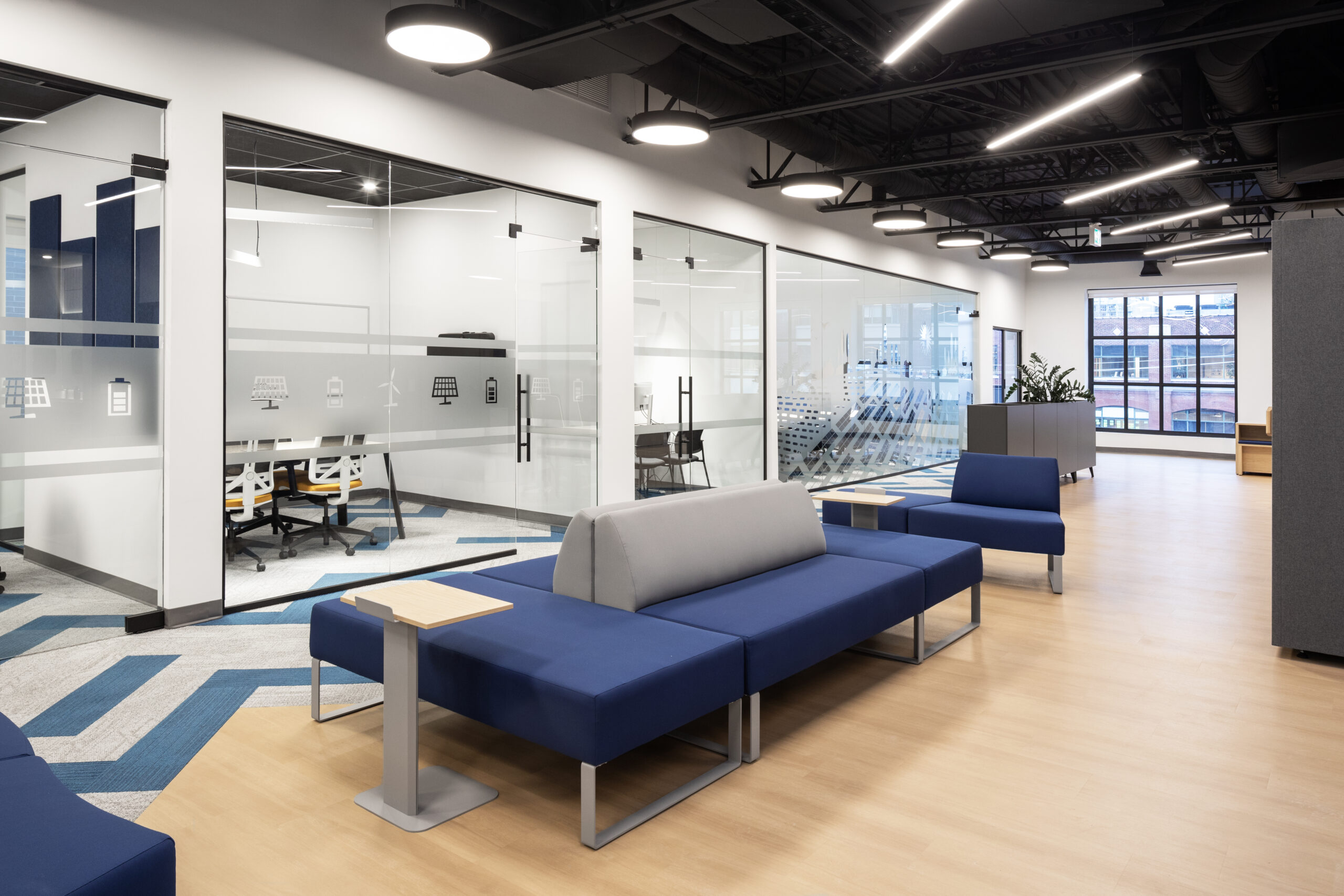
In many professional offices, glass partitions and hard surfaces allow sound to travel across the floor. This creates problems for client calls, confidential meetings, and focused work.
Commercial interior design should include acoustic panels, sound-absorbing materials, and quiet meeting rooms to control noise levels. Interior design services also evaluate reverberation and speech privacy to ensure conversations remain confidential.
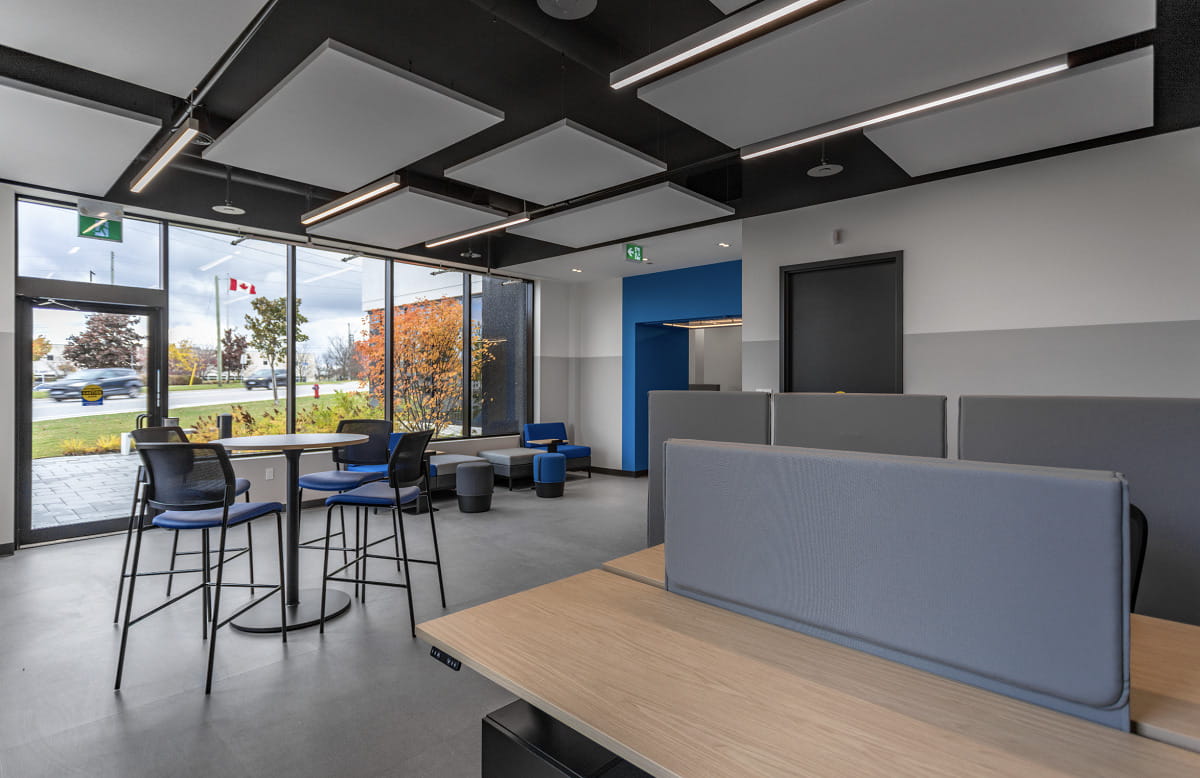
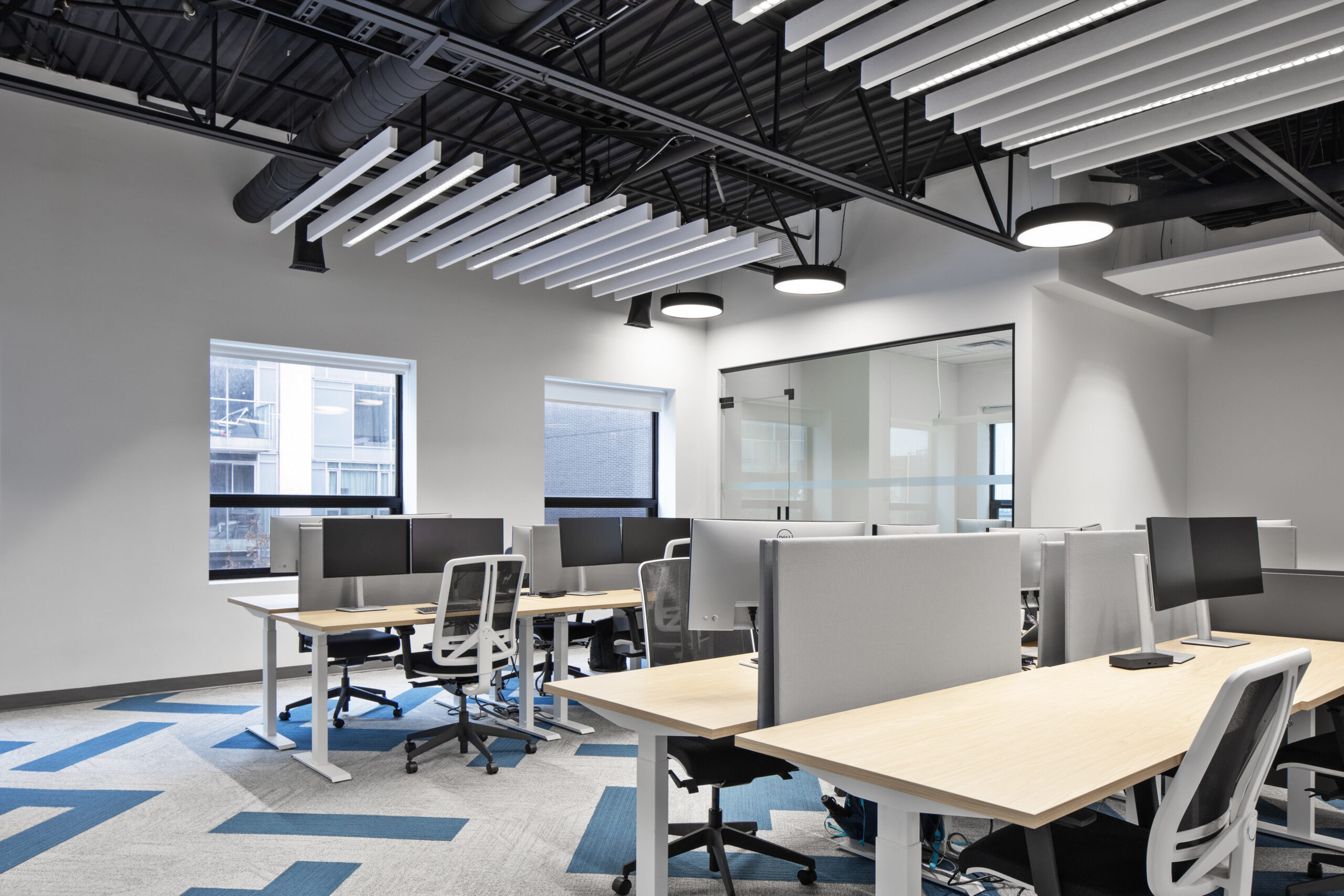
Office furniture design can help reduce noise as well. Upholstered partitions, acoustic screens, and soft materials between desks limit sound travel.
Canadian office furniture manufacturers often offer acoustic workstation systems designed specifically for professional workplaces. When combined with thoughtful office design layouts, these solutions help maintain privacy and concentration.
Commercial Interior Design That Overcrowds Workspaces
Another frequent mistake is designing offices with too little space between workstations. When office design layouts prioritize density over comfort, employees struggle to work efficiently.
Professional services often require large monitors, documents, and reference materials. Without adequate desk space and circulation areas, workstations quickly become cluttered.
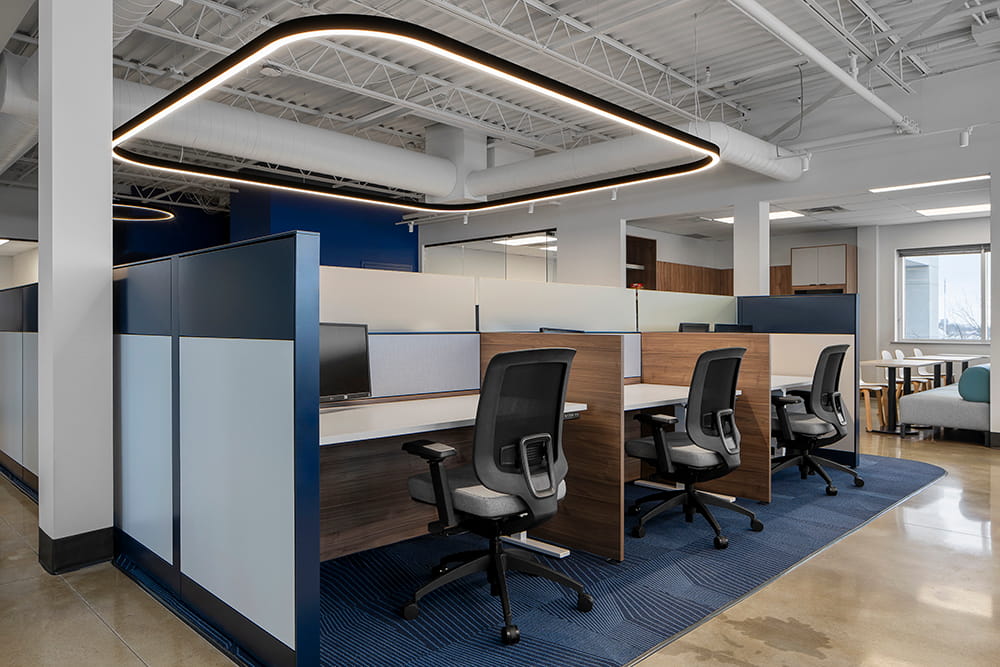
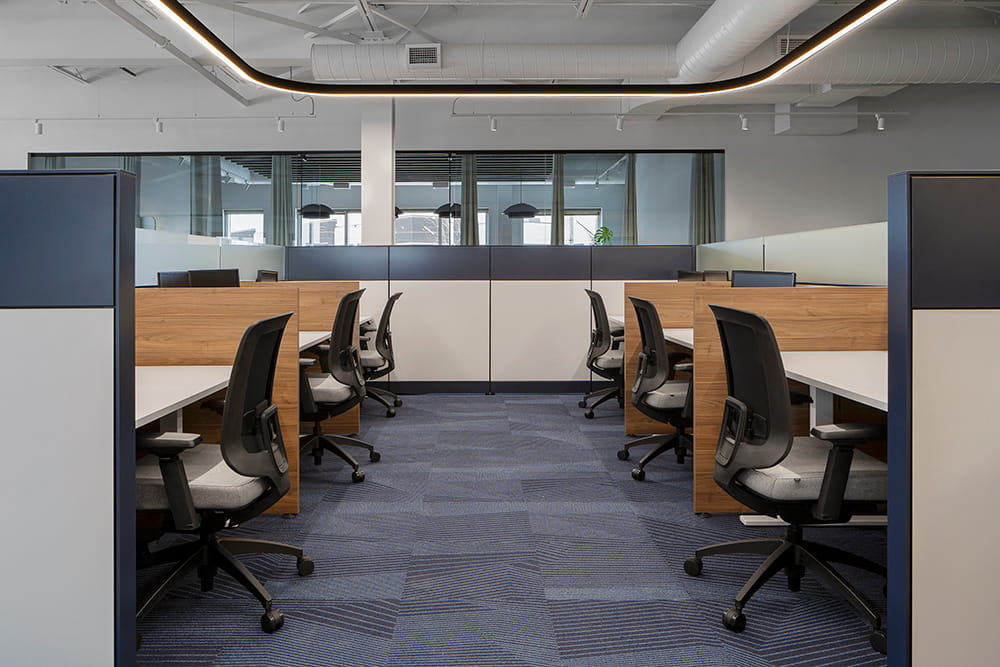
Commercial interior design must provide appropriate spacing between desks and clear pathways throughout the workplace. Interior design services study workflow patterns and employee movement to prevent congestion.
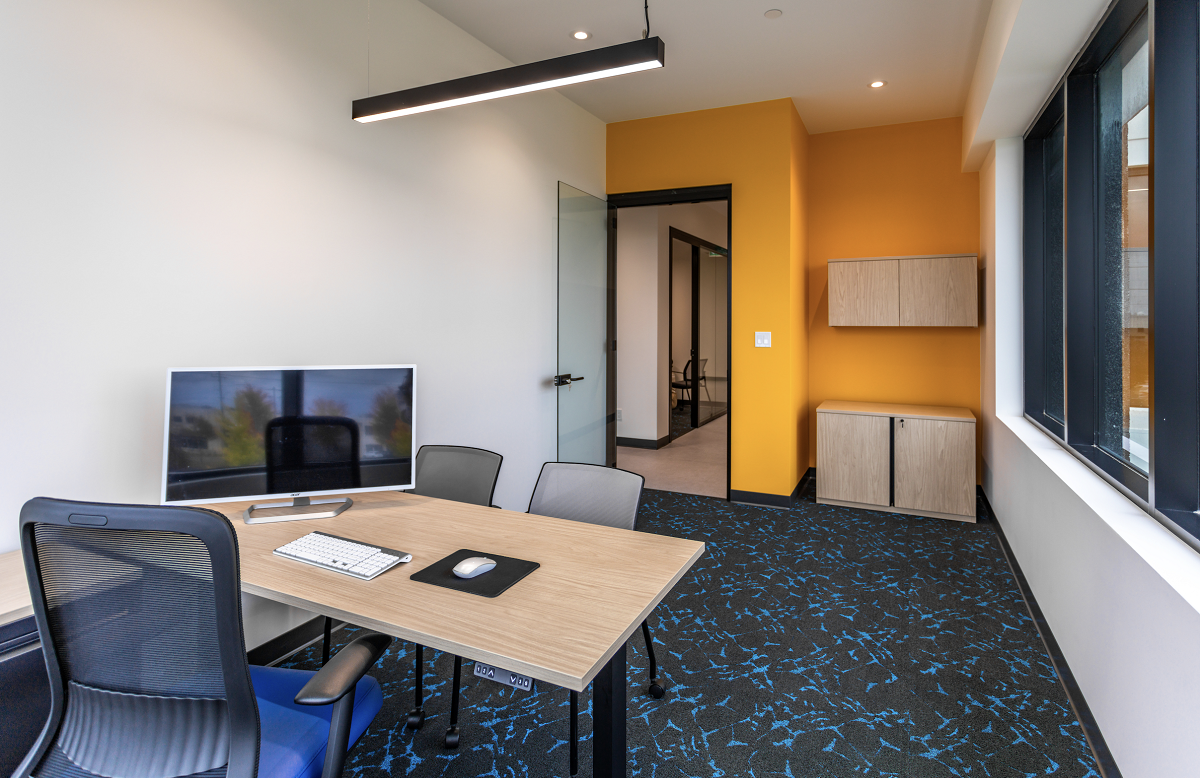
Office furniture design also plays a role. Adjustable desks, modular storage, and flexible seating allow teams to adapt workspaces to different tasks.
High-quality Canadian office furniture systems help support these layouts by providing durable and adaptable workstation solutions.
When offices allow enough space for both movement and concentration, productivity improves significantly.
Interior Design Services That Overlook Lighting Quality
Lighting strongly affects comfort and performance, yet it is often overlooked during office planning.
Poor lighting can cause eye strain, headaches, and fatigue. Excessively bright overhead fixtures or direct glare on screens are common issues in professional offices.
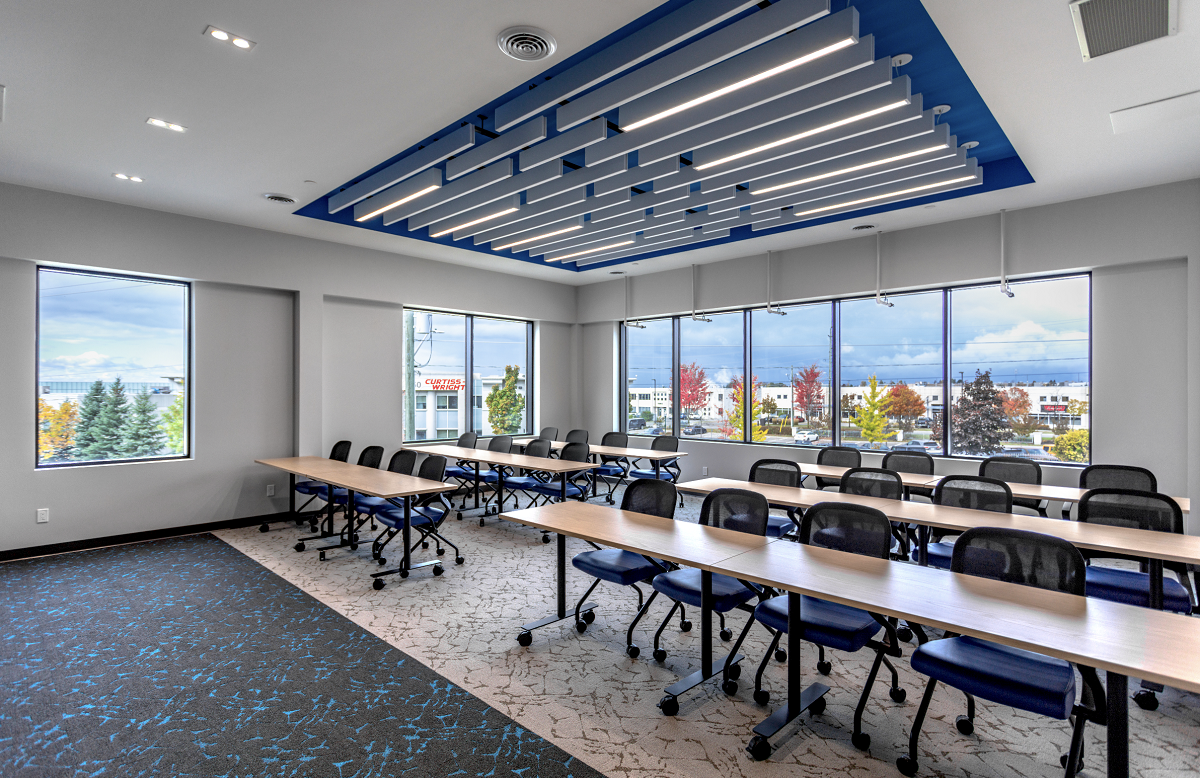
Commercial interior design should combine ambient lighting with task lighting to create balanced illumination. Interior design services also consider natural daylight and the orientation of workstations.
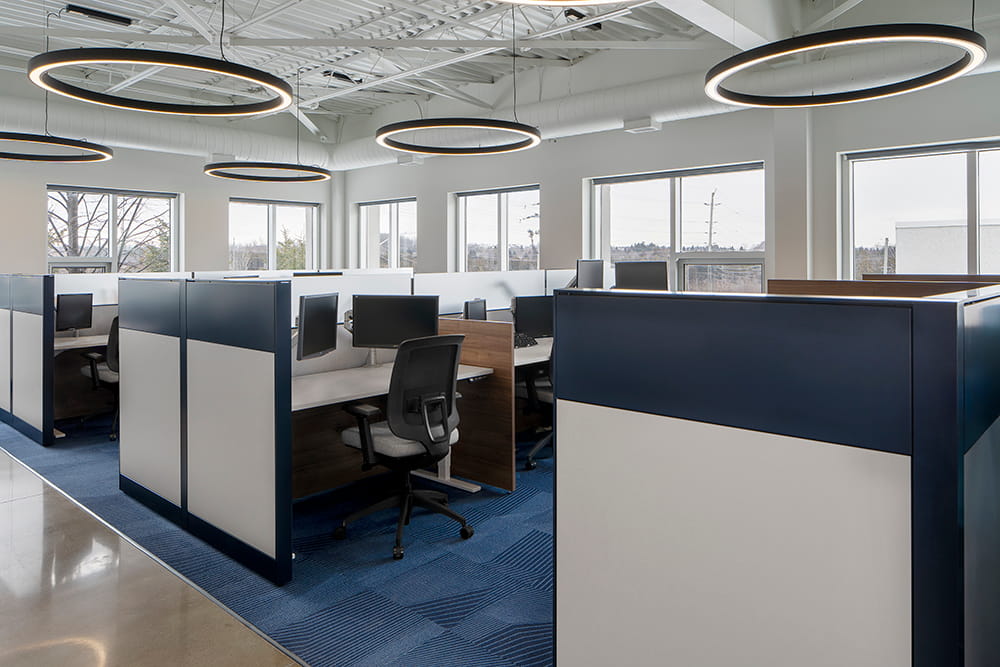
Office design layouts often place desks parallel to windows to reduce glare while maximizing natural light. Adjustable task lamps at workstations allow employees to control their own lighting levels.
Office furniture design may also integrate lighting features or cable management that keeps workstations organized.
Canadian office furniture manufacturers frequently offer workstation systems designed to accommodate modern lighting solutions while maintaining a clean appearance.
Proper lighting design helps professionals remain comfortable and productive throughout the workday.
Office Interior Design That Fails to Support Technology
Technology plays a central role in professional services firms. Yet many workplaces still struggle with outdated infrastructure and poorly planned technology access.
Office interior design should ensure that power outlets, data connections, and collaboration tools are easily accessible throughout the workspace.
Commercial interior design teams often plan meeting rooms equipped with video conferencing systems and integrated presentation technology.
Interior design services also coordinate cable management and power distribution so workstations remain organized and functional.
Office furniture design frequently includes built-in power access, monitor supports, and cable routing to simplify technology use.
Canadian office furniture manufacturers provide modular systems that make it easier to integrate modern technology without disrupting the workspace.
When technology is seamlessly integrated into the office design layout, teams can collaborate more effectively.
Corporate Interior Design That Ignores Comfort
Workplace comfort has a direct impact on productivity. Poor temperature control, uncomfortable seating, and inconsistent airflow often lead to employee complaints.
Corporate interior design should consider environmental comfort alongside visual design. Proper ventilation, zoning for temperature control, and ergonomic seating all contribute to a healthier workplace.
Interior design services evaluate heating, cooling, and airflow systems to ensure they support the office design layout.
Office furniture design also influences comfort. Ergonomic chairs, adjustable desks, and breathable materials help employees work comfortably throughout the day.
Canadian office furniture manufacturers are known for producing high-quality ergonomic solutions designed for long work sessions.
When comfort is built into commercial interior design, employees can focus on their work instead of environmental distractions.
Frequently Asked Questions (FAQ):
What is the most common office design mistake in professional services firms?
One of the most common mistakes is poor acoustic planning. Without sound control, open offices become distracting and reduce productivity.
Why is lighting important in office interior design?
Proper lighting reduces eye strain, improves focus, and creates a comfortable work environment for employees.
How does office furniture design influence productivity?
Ergonomic chairs, adjustable desks, and well-organized workstations allow employees to work comfortably for long periods.
Key Takeaways
- Office interior design should prioritize acoustic planning to reduce noise distractions
- Commercial interior design must provide adequate spacing between workstations
- Interior design services should ensure balanced lighting and reduce glare
- Office furniture design must support modern technology integration
- Corporate interior design should address comfort through ergonomic furniture and climate control
- Canadian office furniture solutions provide durability and flexibility for professional workplaces
Professional services firms rely on environments that support concentration, confidentiality, and collaboration. When office interior design overlooks acoustics, lighting, technology, or comfort, productivity suffers.
Commercial interior design helps firms avoid these mistakes by carefully planning office design layouts that reflect how professionals actually work.
Interior design services guide the process by evaluating workplace needs and selecting appropriate office furniture design solutions. With durable Canadian office furniture and thoughtful corporate interior design strategies, firms can create workplaces that support productivity and long-term growth.