In many of the city’s office towers, a quiet transformation is underway.
Seeking to retain talent amid return-to-office mandates, many companies are investing in renovations to their existing commercial workspaces, adding amenities, sprucing up tired-looking spaces and re-jigging floorplans, according to industry experts.
Stephanie Uprichard, CEO and principal designer with Studio Forma Interior Design, a GTA-based firm specializing in office and commercial spaces, said the company had its best ever year in 2025, spurred in part by demand for back-to-office renovations.
In an interview with TorontoToday, Uprichard said business shows no signs of slowing: “So far in January, we’re breaking last year’s [records].”
Supreet Barhay, a principal with WZMH Architects, said the firm is also seeing increased demand from companies in Toronto looking to refresh their spaces.
Last summer, TD Bank told employees it expected them back in the office four days per week beginning in the fall, and many other banks and companies soon followed.
This has led to a reduction in office vacancy rates across the downtown core and helped spur an increase in renovation projects.
Barhay told TorontoToday some clients are asking for support in “densifying” their existing offices — adding more workspaces for staff after the company downsized pre-pandemic.
While other clients, she said, are trying to improve the quality of their workspaces to retain staff who could be lured by companies that offer remote or hybrid options.
What Are the Renos Like?
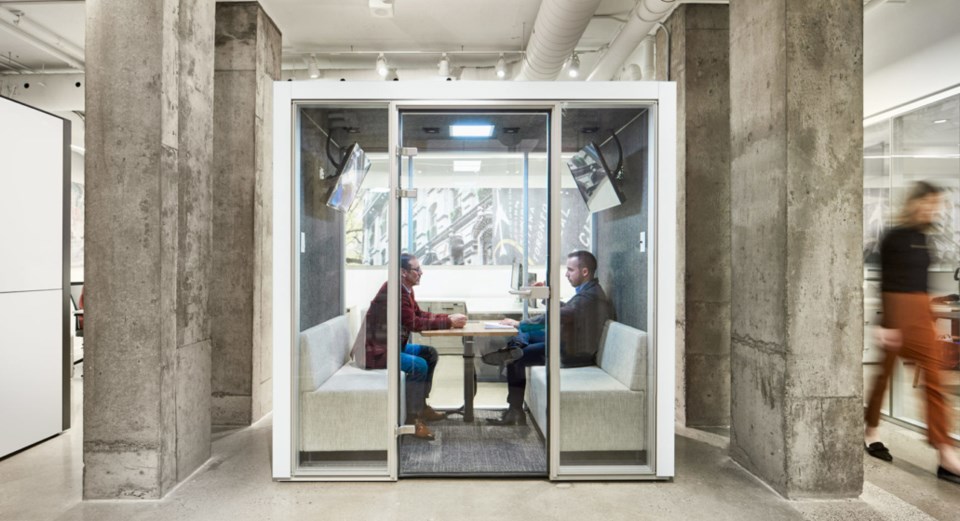
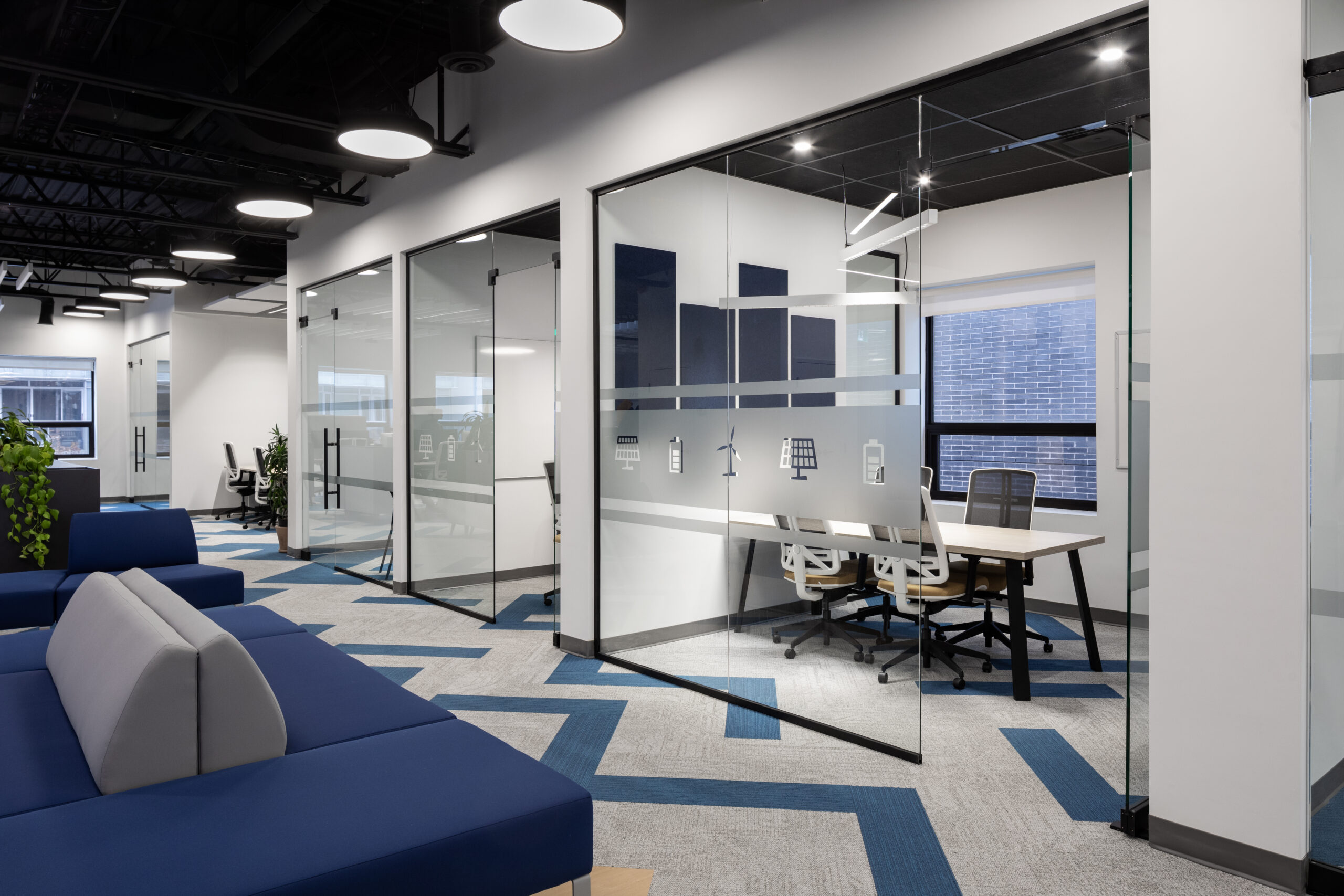
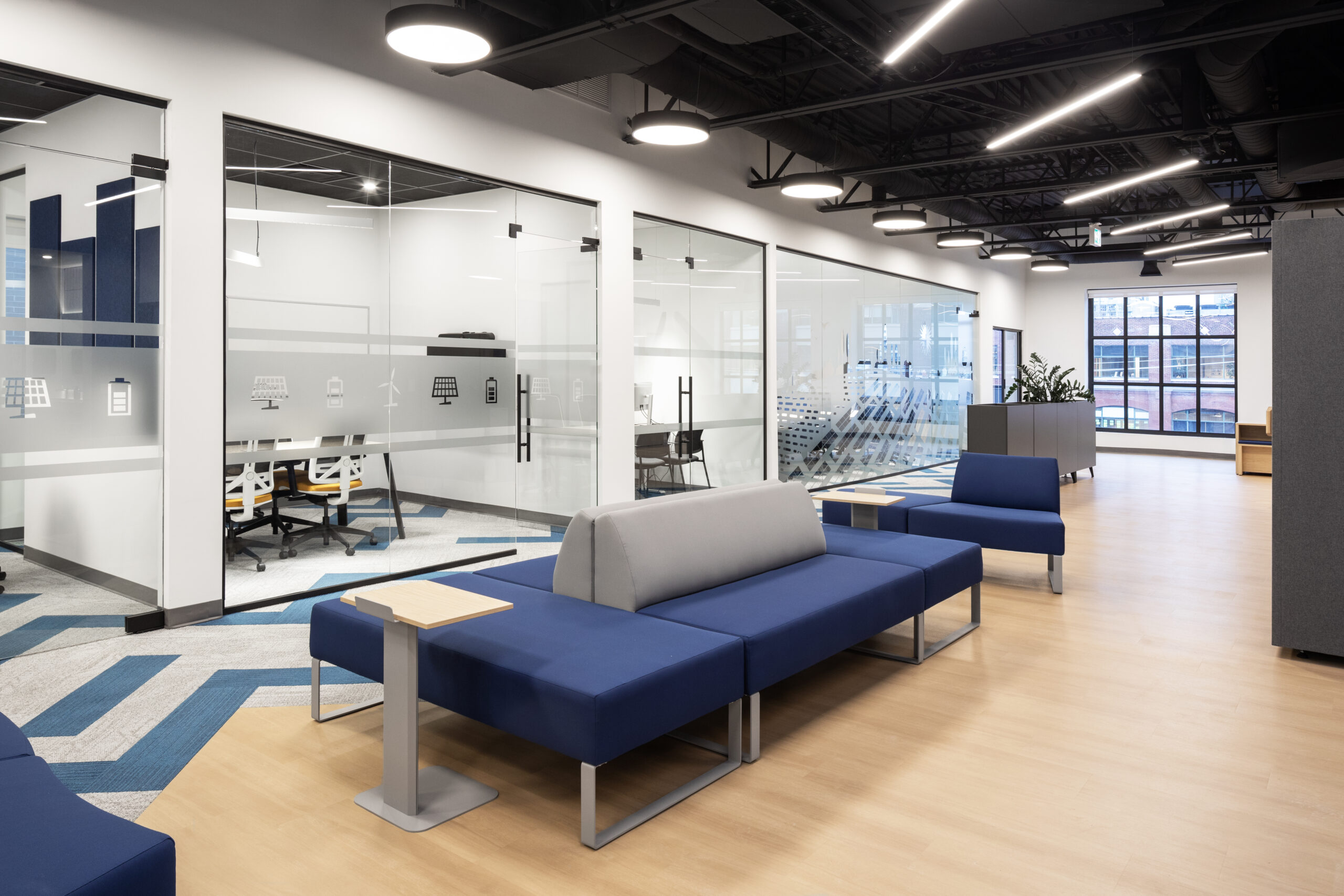
Four professionals with expertise in the city’s office renovation market told TorontoToday one of the top trends they’re seeing across commercial clients is an increased demand for meeting rooms.
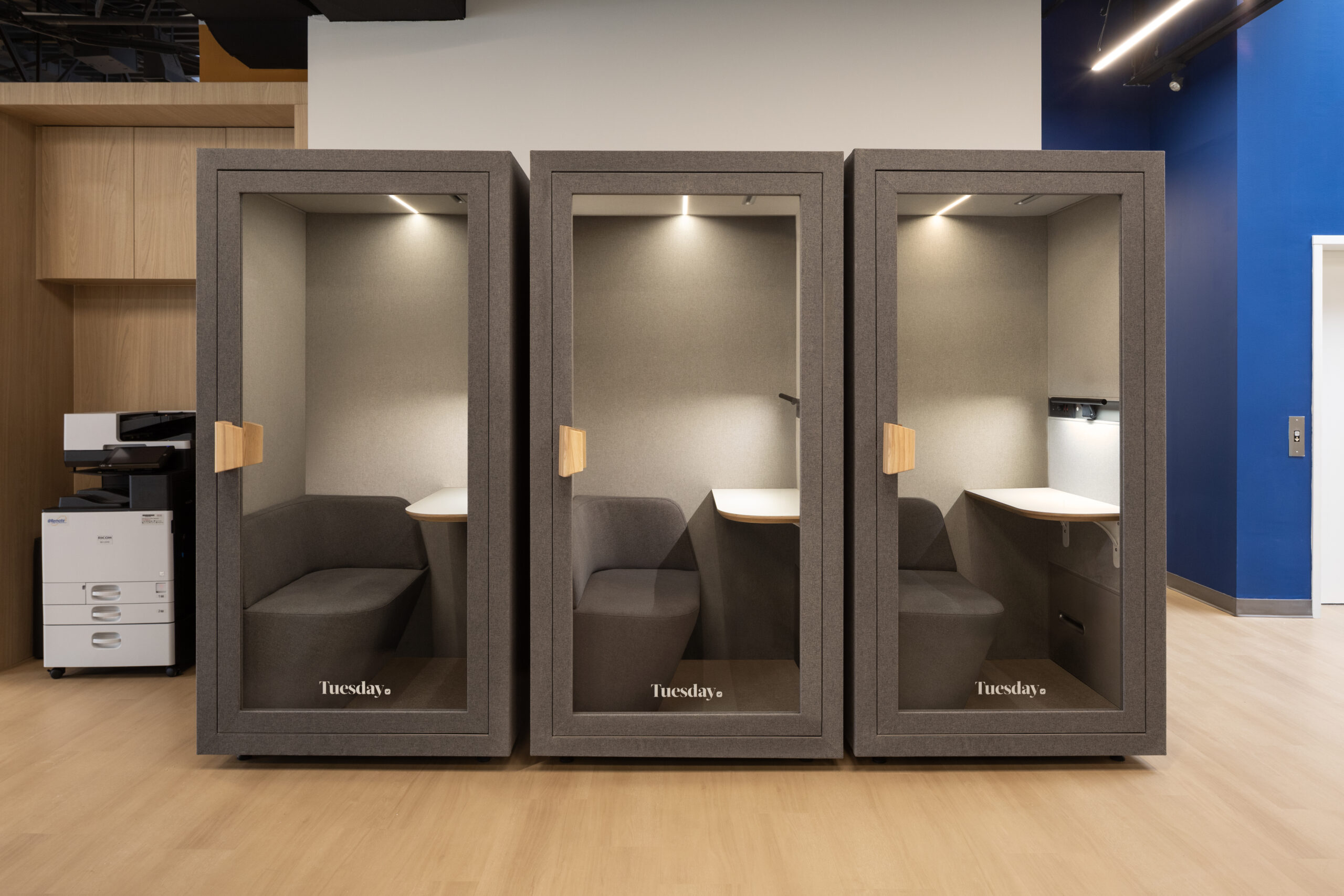
After many years of reducing the number of private offices at their worksites, Lora McMillan, a construction manager specializing in commercial renovations, said companies are now realizing they need spaces for sensitive discussions.
“We did that whole open office thing where everybody went nuts and did cubicles everywhere,” she said. “But now that you’re in these open offices, there’s a lot more need to have private conversations.”
McMillan said she’s also seeing companies spend more money on technology to ensure these rooms can accommodate now-ubiquitous hybrid meetings, where some workers are patched in by video or phone.
In the past, she noted that most meeting rooms would be equipped with a few microphones that often wouldn’t actually allow the people phoning in to clearly hear their colleagues who were there in person.
Now, she said many companies are choosing to equip their meeting rooms with camera technology that focuses on whoever is speaking, sending their voice clearly to their colleagues online.
Uprichard said the presence of this technology is now table stakes: “The ability to have Zoom meetings privately or with a group is just an assumption now.”
The Rise of the ‘Green Room’
Some companies are also making changes to accommodate workers who have gotten used to the creature comforts of home.
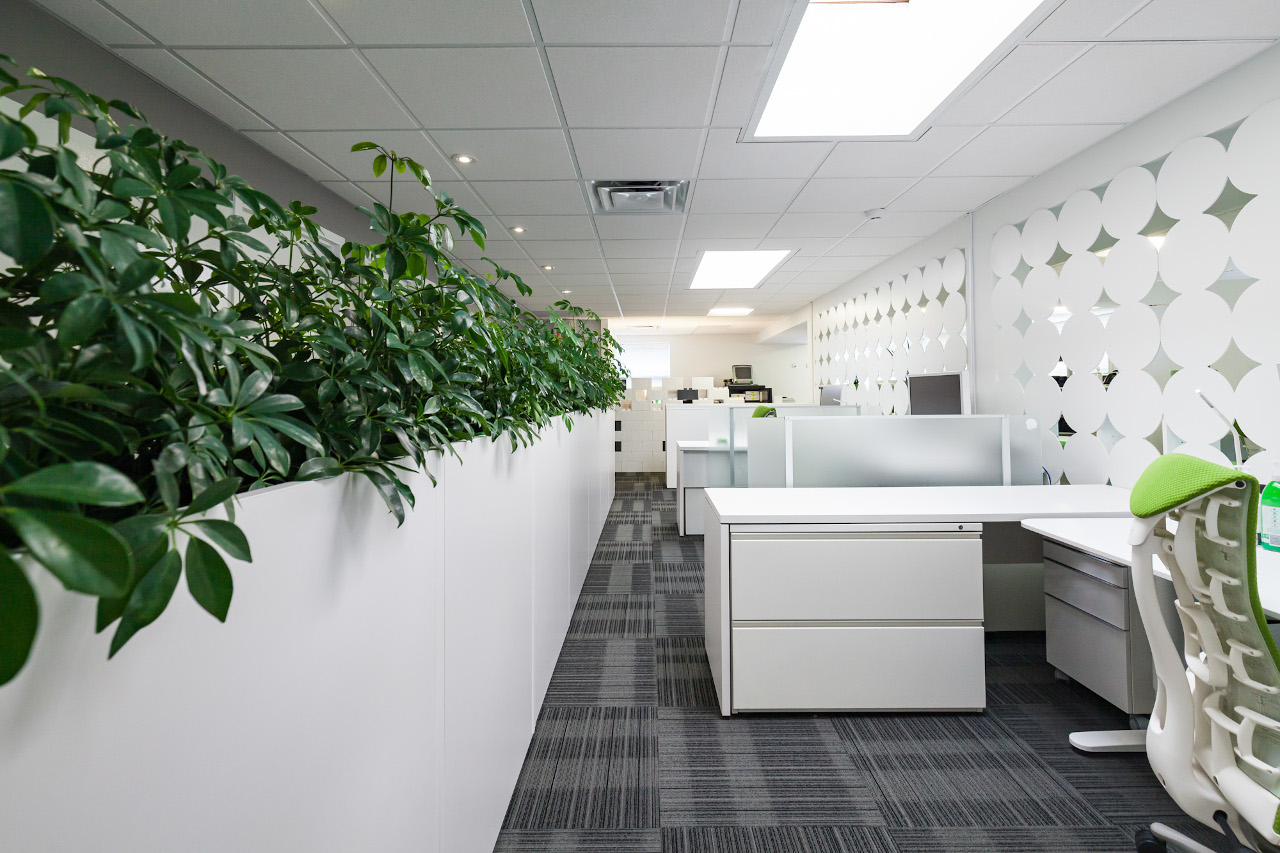
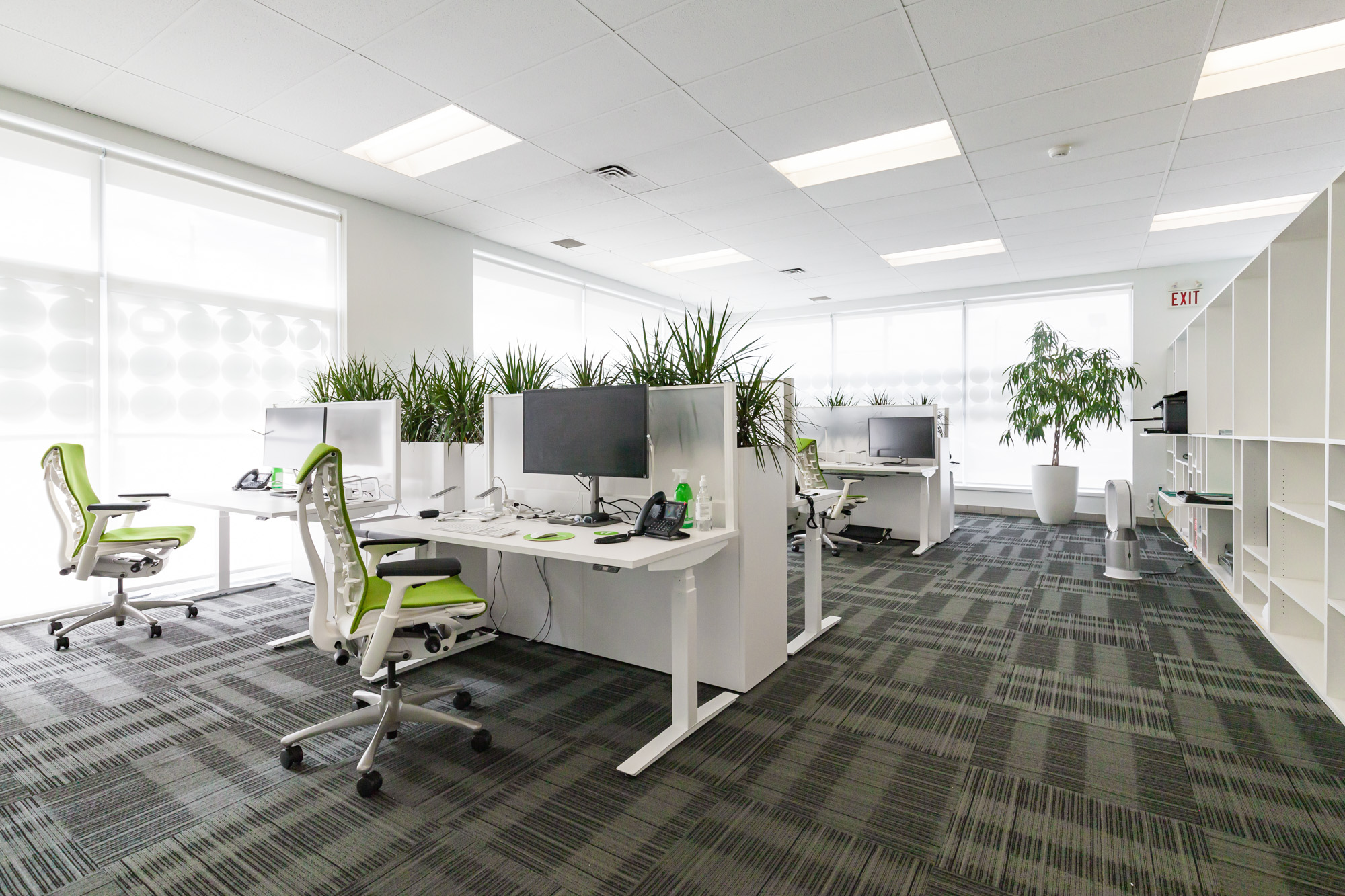
Catering to staff who purchased a fleet of plants for their home office during the pandemic, Uprichard said some GTA-based companies have requested their renovated offices include new “green rooms” — dedicated spaces filled with foliage, offering workers a chance for repose.
Tatiana Soldatova, a principal with interior design firm Syllable Design, said many of her firm’s recent office renovation work has also included softer lighting than would have commonly been found in pre-pandemic offices.
For meeting rooms, she said clients eschew overhead fluorescent lighting in favour of hanging pendant lights, which offer softer tones and a more flattering appearance for participants on video calls.
Uprichard said many recent designs have also included functional solutions that help accommodate the fact that many workers no longer work in the office five days per week and thus don’t have permanent desks.
For a company with a property on Wellington Street, Uprichard said her team proposed the installation of lockers.
While staff no longer typically need space to store their files, the interior designer said the solution made sense because “you still need a place to put your purse.”
More Investment in Shared Amenities
Barhay said while many office renovations are being completed by companies renting space, others are done by commercial office space landlords aiming to keep their tenants or attract new ones.
Barhay said she’s seeing those landlords invest more in shared amenities compared to before the pandemic, including upgraded food courts, shared co-working spaces and more lobby seating to accommodate informal meetings.
Barhay said she’s also seen landlord clients pay far more careful attention to the “tenant mix” they bring into their properties, in order to accommodate workers’ demand for conveniently located gyms, coffee shops, restaurants and other amenities.
But while some clients are spending big on revamped offices, experts said others are seeking to tightly constrain spending, owing to tariff-related uncertainty.
For these clients, Soldatova said designers are offering a “lipstick solution,” which entails improving the appearance and functionality of a space, without fundamentally changing the structure of the office.
“You don’t have to spend an arm and a leg to get your people to come back into the office,” she said.