It is evident that sitting for eight hours risks your health. Literally. Research consistently shows that sedentary work raises mortality risk by up to 40 percent compared to jobs with regular movement. Still, most office interior designers assume that employees will sit in one position from nine to five. The shift toward sit-stand workstations represents a fundamental change in how commercial interior design approaches employee health. When interior design services specify adjustable furniture that allows workers to alternate between sitting and standing throughout the day, they are not adding luxury. They are solving a core problem that conventional office furniture design ignores.
The adoption of sit-stand workstations is not just a trend. It reflects a scientific consensus that human bodies were not designed for static positions. Movement matters. Variety matters. The modern office that pretends otherwise is failing its people. Professional interior design services recognises this reality and builds it into office design layout and corporate interior design from the start. The question is no longer whether your office should include sit-stand workstations. The question is how to integrate them effectively into your overall office interior design strategy. Understanding the relevance and implementation of sit-stand workstations requires looking at how they work, why they matter, and how to make them part of a coherent design system.
Movement and Health in Office Interior Design
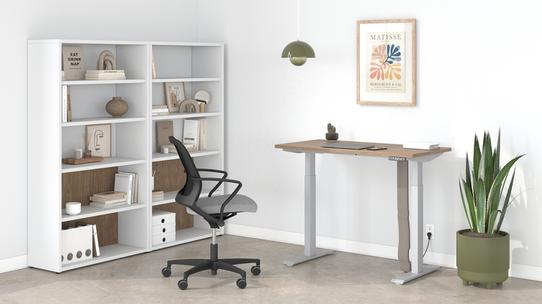
The evidence is overwhelming. Employees who have access to sit-stand workstations report less back pain, lower fatigue, and improved focus compared to colleagues stuck at traditional desks. Interior design services use this evidence to justify the investment in adjustable office furniture design. The return comes not just from health improvements but from reduced absenteeism, fewer workers compensation claims, and better engagement.
Commercial interior design that includes sit-stand workstations is making a statement about values. It says the company invests in employee wellbeing beyond the minimum legal requirement. Candidates notice this during interviews. Employees appreciate it daily. Professional interior design services know that office interior design choices communicate culture, and sit-stand workstations communicate that this company cares about health.
The physical benefits are measurable. Alternating between sitting and standing engages different muscle groups, improves circulation, and keeps the spine healthy. Office design layout that supports frequent position changes prevents the deconditioning that happens when employees sit motionless all day. Even modest movement, just standing for thirty minutes per hour, significantly reduces health risks. When interior design services specify sit-stand workstations, they are addressing a genuine occupational health crisis.
Corporate interior design that ignores this ignores science. Interior design services are increasingly recommending sit-stand workstations not as optional extras but as standard components of office furniture design. Canadian office furniture manufacturers now produce quality adjustable options that fit most budgets. The cost difference between fixed and adjustable desks has shrunk significantly, making the health argument even more compelling.
Productivity and Cognitive Function in Commercial Interior Design
Beyond health, sit-stand workstations improve work performance. Studies show that employees who can adjust position throughout the day maintain better focus, make fewer errors, and report higher job satisfaction. The mechanism is simple. Sitting for hours creates fatigue and reduced blood flow to the brain. Standing for a period restores alertness. The alternation keeps people sharp.
Interior design services incorporate this understanding into office interior design by specifying adjustable desks as part of a comprehensive productivity strategy. Office design layout that supports sit-stand workstations allows employees to move more frequently throughout the day. This movement, combined with position changes at their own desks, creates the variety that human brains need to maintain focus.
Professional commercial interior design also considers the psychological benefit of control. When employees can adjust their workstation to their current physical state, they feel a sense of agency. This is more powerful than it sounds. Workers who feel they have control over their environment report significantly better satisfaction and engagement. Office furniture design that provides this control becomes a tool for improving workplace culture.
The relevance in modern office interior design cannot be overstated. As work becomes increasingly cognitive and demanding, the tools that support mental performance become critical. Corporate interior design that includes sit-stand workstations is directly supporting the quality of thinking that drives business success.
Integration with Office Design Layout Strategy
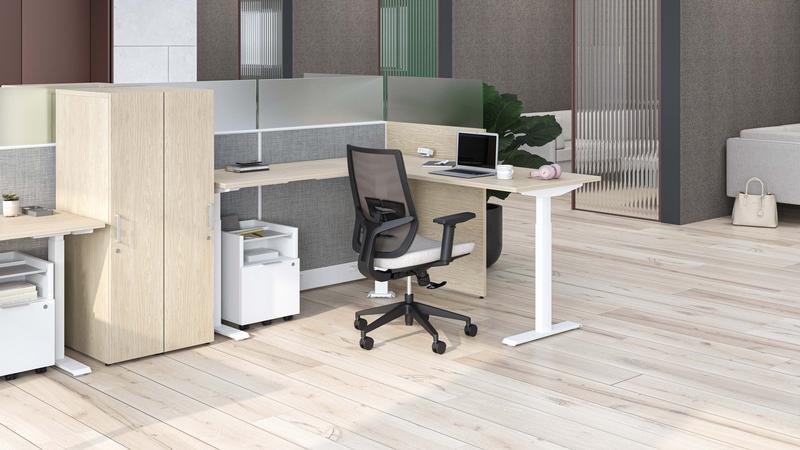
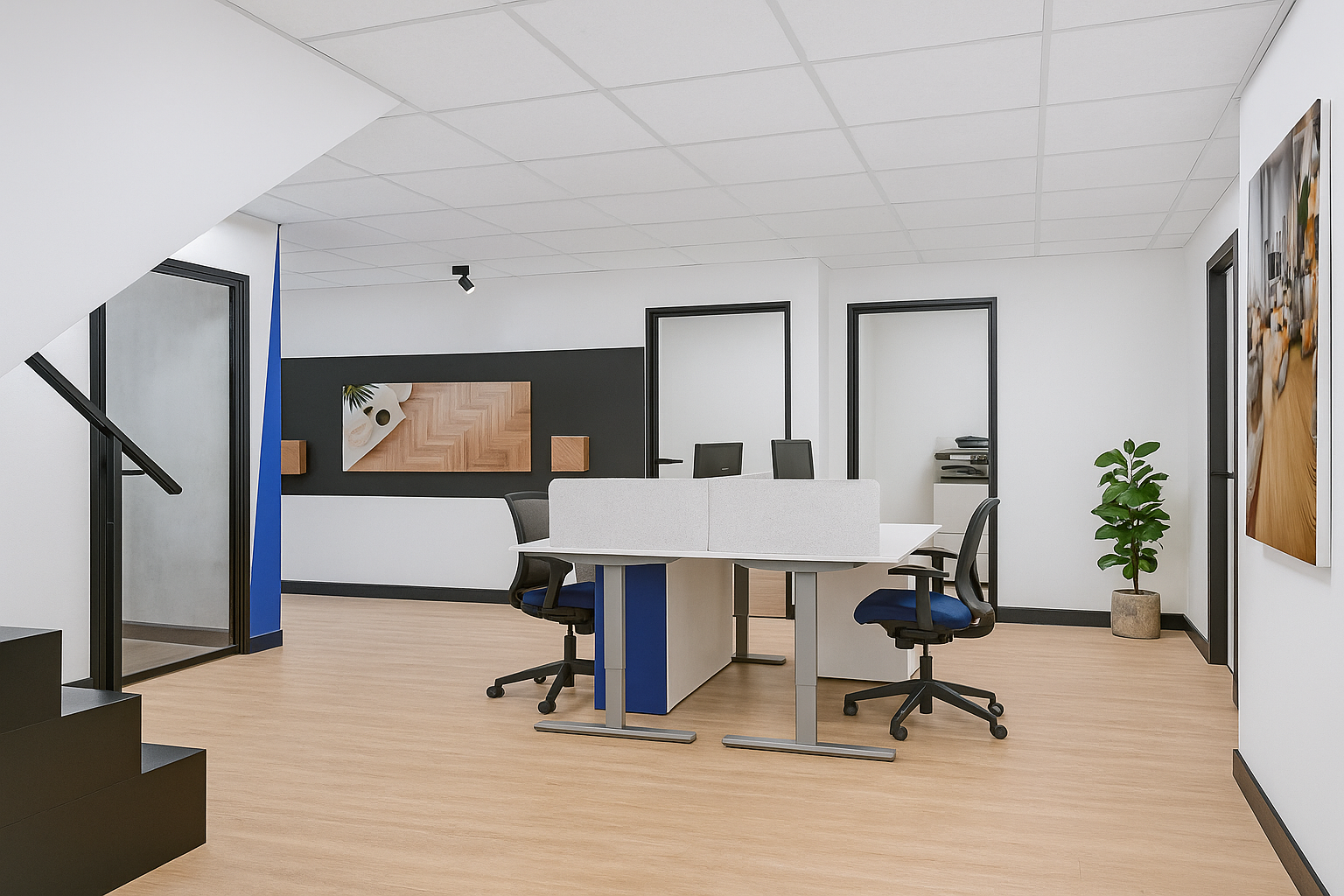
Sit-stand workstations require thoughtful integration into office design layout. They are taller than traditional desks when in standing position, which affects sightlines and visual proportion in the space. Interior design services plan for this by considering how the workstations will look when fully extended. Professional commercial interior design might use partially enclosed benching systems to contain the visual impact while still allowing position adjustment.
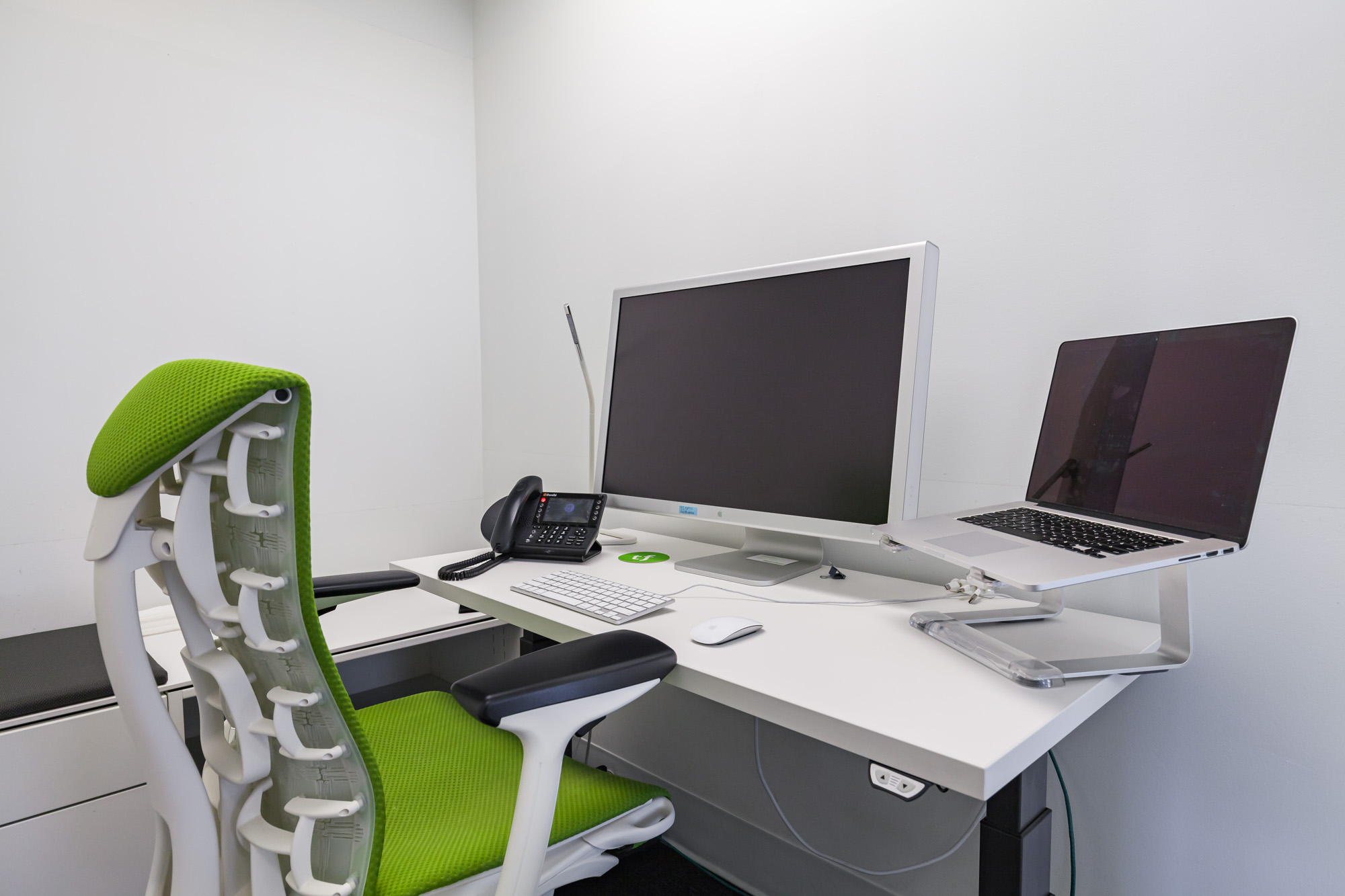
Office furniture design for sit-stand workstations also requires attention to cable management, monitor positioning, and ergonomic accessories. A workstation that raises too high creates cable visibility and clutter. Interior design services specify integrated cable management so that adjustable desks remain clean and organised at any height. Monitors need to be positioned so they work for both sitting and standing positions, typically using monitor arms that adjust independently from the desk surface.
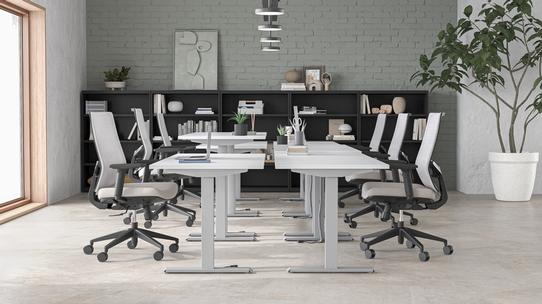
The office design layout strategy might include zones where sit-stand workstations predominate alongside some traditional fixed desks for employees who prefer static positions. Interior design services respect this diversity by offering choices. Not everyone works the same way. Commercial interior design that provides variety supports more people effectively than enforced uniformity.
Professional interior design services also consider the acoustic and social impact of adjustable desks. When many employees move simultaneously, it can create noise and activity. Strategic office design layout can minimise these impacts by staggering work schedules or positioning adjustable stations to reduce disruption to focus areas.
Canadian Office Furniture and Sit-Stand Solutions
Canadian office furniture manufacturers have developed excellent sit-stand systems that deserve recognition. Interior design services increasingly specifies locally made adjustable desks because they are reliable, well-designed, and support the Canadian economy. Professional commercial interior design that sources Canadian office furniture sends a message about values while ensuring good product quality.
Quality sit-stand workstations include robust mechanisms that operate smoothly hundreds of times per day. Cheap adjustable desks often develop problems within a few years. Corporate interior design that specifies quality Canadian office furniture avoids this trap. The investment pays dividends through years of reliable performance.
Office furniture design from Canadian makers often includes thoughtful details that mass-produced imports overlook. Better cable management. Quieter mechanisms. More stable desktop surfaces. These details matter when employees adjust position dozens of times per day. Interior design services know which Canadian manufacturers provide these qualities and recommend them confidently.
Supporting Canadian office furniture also reduces shipping distances and environmental impact. Professional interior design services that prioritize local sourcing aligns with sustainability goals while ensuring good product support and warranty service.
Addressing Concerns and Ensuring Adoption in Office Interior Design
Some employees initially resist sit-stand workstations, fearing they will be forced to stand too much or that the equipment will be unreliable. Interior design services address these concerns through clear communication about the research and through thoughtful implementation. The goal is not to stand all day. The goal is to alternate positions to maintain health and alertness.
Professional commercial interior design includes staff training on proper use of sit-stand workstations. How to adjust for sitting ergonomics. How to adjust for standing ergonomics. How often to move. What accessories improve comfort. This education increases adoption and prevents misuse that leads to discomfort.
Office interior design that includes sit-stand workstations should also include additional support. Anti-fatigue mats for standing periods. Monitor arms for flexible positioning. Keyboard trays for ergonomic support. Corporate interior design that pairs adjustable desks with supporting equipment dramatically improves the experience and reduces complaints.
Interior design services often recommend a phased implementation. Introduce sit-stand workstations to volunteers first. Let success stories build enthusiasm. Then expand to those less convinced. This gradual approach increases acceptance and allows the design team to refine implementation based on real-world feedback.
Frequently Asked Questions (FAQ):
Are sit-stand workstations suitable for all types of work?
They work well for most office tasks. Some highly detailed work might be easier sitting. Some brainstorming works better standing. Professional interior design services recommend offering variety so each employee can find what works best for their specific tasks. Office furniture design flexibility solves this by allowing position adjustment throughout the day.
How much do quality sit-stand workstations cost compared to traditional desks?
The price difference has narrowed significantly. Professional Canadian office furniture now offers adjustable options at modest premiums over fixed desks. Interior design services calculate the return on investment through reduced absenteeism and improved productivity. Most companies recover the extra cost within eighteen months.
Can sit-stand workstations work in open office layouts?
Yes. Interior design services design open offices with adjustable workstations successfully. Strategic office design layout positions them to minimize visual clutter and noise. Canadian office furniture with clean lines and integrated cable management prevents open offices with sit-stand workstations from feeling chaotic.
Key Takeaways
- Sit-stand workstations address a serious health issue inherent in traditional office furniture design
- Adjustable desks improve focus, reduce fatigue, and lower absenteeism measurably
- Office design layout must account for visual and acoustic impacts of adjustable workstations
- Canadian office furniture provides high quality sit-stand solutions worth prioritising
- Professional interior design services ensures proper integration and user training
- Corporate interior design that includes sit-stand workstations communicates commitment to employee health
- Office furniture design that offers movement and position variation improves cognitive function
- Commercial interior design that supports choice increases employee satisfaction and engagement
- Interior design services coordinates sit-stand implementation with ergonomic support and education
- Modern office interior design without sit-stand workstations is increasingly difficult to justify ethically
The Health Imperative
Sit-stand workstations have moved beyond optional nice-to-have into essential office furniture design. The science is clear. Human health depends on movement and position variation. Offices that ignore this ignore employee wellbeing. When interior design services design office interior design with this reality in mind, they create spaces that support human flourishing instead of accepting workplace dysfunction as inevitable.
The transition to sit-stand workstations requires thought and planning. Professional commercial interior design does not simply swap adjustable desks for fixed ones and call it done. Interior design services integrate adjustable workstations into a comprehensive office design layout that accounts for ergonomics, aesthetics, acoustics, and user behaviour. The result is corporate interior design that feels intentional rather than retrofitted.
If your current office interior design still relies primarily on static seating, you are working with outdated assumptions about how human bodies function. Modern office interior design recognises that movement matters. The question is not whether to include sit-stand workstations but how to implement them effectively. Talk with professional interior design services about how adjustable workstations could enhance your office interior design and support your team’s health.