Hybrid work was supposed to simplify the office.
For many law firms, it did the opposite.
The workplace became quieter in some ways and more complicated in others. A law office that once followed predictable rhythms now shifts constantly throughout the week. Some days feel nearly empty. Others feel louder and more crowded than before because everyone arrives for collaboration, client meetings, mentoring, and team coordination at the same time.
That unpredictability is reshaping law office design more aggressively than most firms expected.
Legal workplaces were never built around the same assumptions as creative studios or tech offices. Confidentiality still matters. Concentration still matters. Clients still expect environments that feel discreet, controlled, and professional. Hybrid work did not remove those expectations. It intensified them.
The problem is that many firms approached hybrid planning primarily through occupancy calculations and space reduction strategies while overlooking how legal work actually behaves acoustically and operationally inside the office.
An associate preparing litigation materials may now sit beside a colleague handling back to back video calls. A partner office may appear enclosed while conversations travel through open ceiling conditions. Meeting rooms designed for occasional presentations now function as full-time hybrid collaboration spaces. Reception areas that once felt calm suddenly sit beside active circulation patterns created by fluctuating office attendance.
The office may still look polished on paper. Operationally, it begins feeling strained.
This is where office interior design for law firms is changing most significantly. The future of legal workplace planning is no longer centered around whether offices should be open or closed. The more important question is whether the office can support multiple forms of legal work happening simultaneously without weakening confidentiality, concentration, or client trust.
Hybrid Work Did Not Reduce the Need for Privacy
One of the biggest misconceptions about hybrid work is that fewer people automatically create quieter offices.
In reality, hybrid legal workplaces often become acoustically less predictable. Employees who come into the office tend to use the space more actively for meetings, mentoring, collaboration, and client interaction. This changes how sound moves through the workplace throughout the day.
For law firms, that creates immediate operational pressure.
Confidential calls begin overlapping with collaborative discussions. Associates handling detailed legal work compete with the noise of hybrid meetings nearby. Informal conversations spill into circulation areas because the office was never designed to support this level of simultaneous activity.
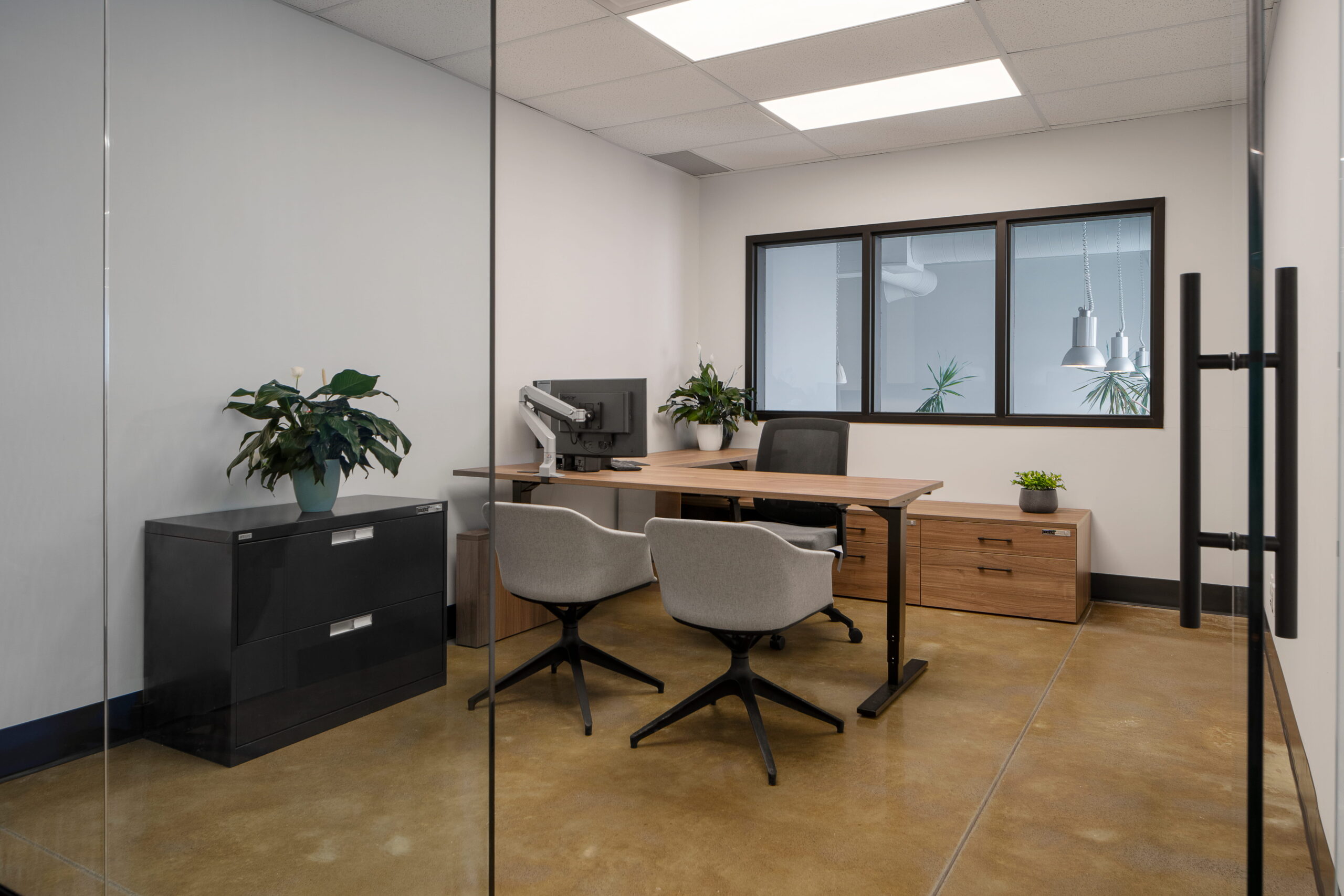
Commercial interior design for legal workplaces now requires much stronger zoning than before. Focus work areas, consultation rooms, collaborative zones, and client-facing spaces all need different levels of acoustic and visual separation.
The strongest hybrid law offices recognize that privacy is no longer limited to partner offices or boardrooms. It needs to exist throughout the entire workplace ecosystem.
Sound Is Now the Real Test of a Legal Workplace
Many modern law offices appear highly professional visually while performing very poorly acoustically.
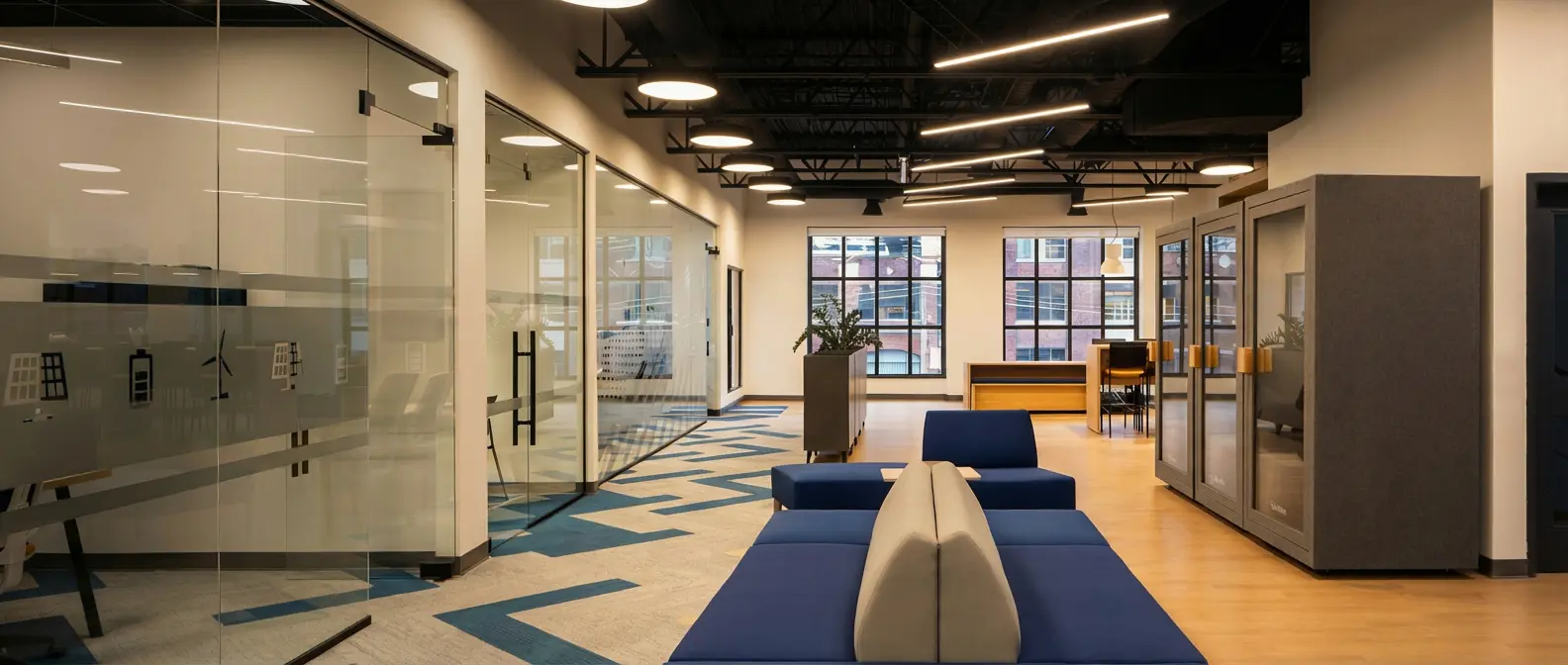
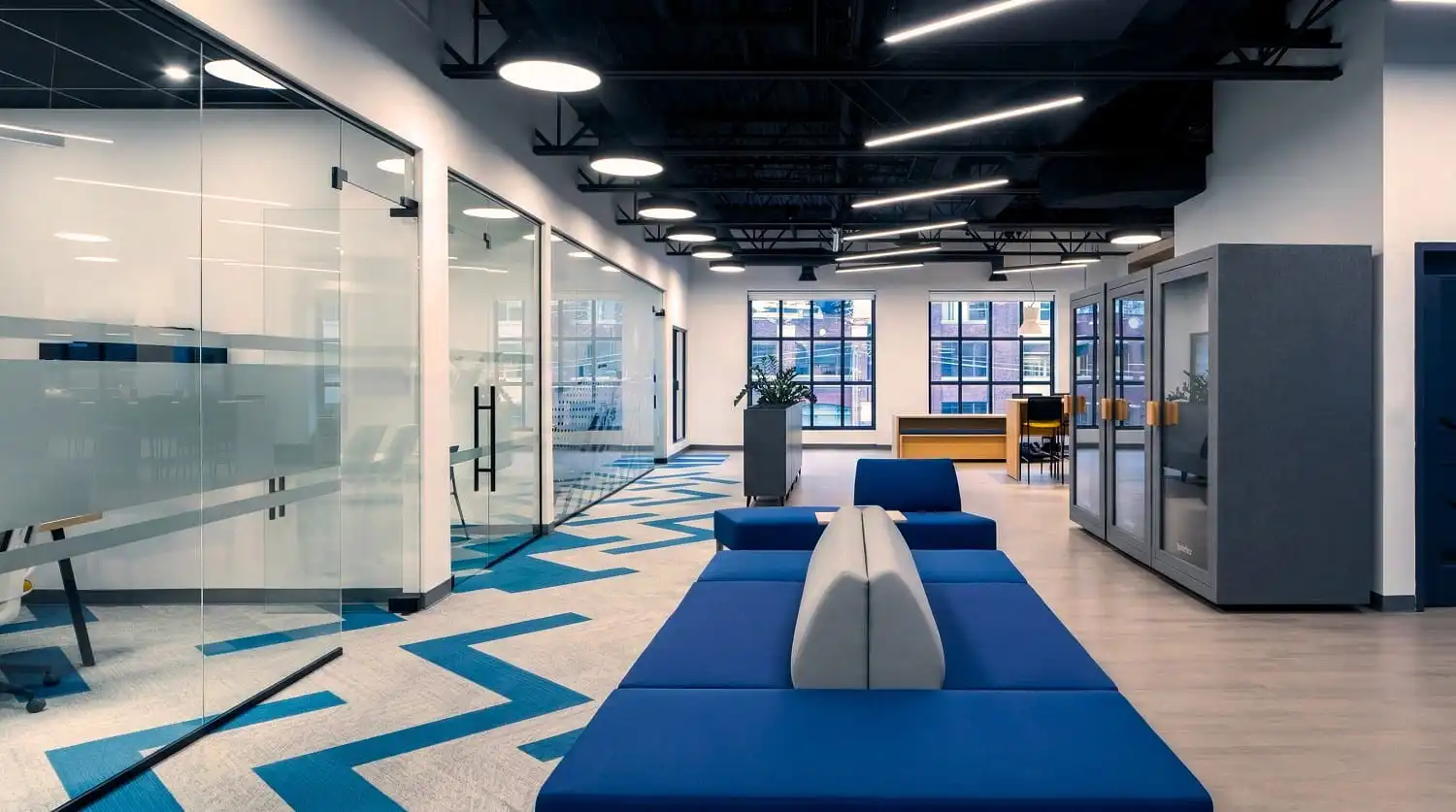
Glass walls, exposed ceilings, reflective surfaces, and open collaboration areas may photograph beautifully, but they often expose conversations far more easily than firms expect. Employees begin lowering their voices instinctively. Lawyers search constantly for quieter spaces to handle confidential calls. Clients hesitate before speaking openly because the environment feels too exposed.
This is where hybrid work exposed weaknesses that already existed beneath the surface.
Before flexible work schedules, offices often operated at more consistent occupancy levels and communication patterns. Now, fluctuating attendance creates changing noise conditions every day. The office may feel manageable one morning and highly disruptive the next.
In legal environments, those shifts affect much more than comfort. They affect concentration, confidentiality, and trust directly.
The firms handling this successfully are not simply adding acoustic panels after occupancy. They are rethinking how sound behaves across the entire office design layout from the beginning.
STC Walls Matter More Than Glass Walls
Law firms often focus heavily on visual privacy while underestimating acoustic privacy.
A room may appear enclosed while still allowing conversations to travel through ceilings, glazing systems, door gaps, or lightweight partitions surprisingly easily. Hybrid work has made these weaknesses far more noticeable because offices now support more simultaneous calls, meetings, and video conversations than before.
This is why STC wall planning has become increasingly important in legal workplace design.
STC, or Sound Transmission Class, measures how effectively wall systems reduce sound transfer between spaces. In modern law offices, stronger STC-rated partitions are becoming essential around consultation rooms, mediation spaces, executive offices, boardrooms, HR areas, and hybrid meeting environments where confidentiality is critical.
Office interior design now needs to evaluate where sensitive conversations happen operationally instead of assuming all enclosed rooms perform equally well acoustically.
The strongest legal workplaces do not simply look private. They remain private under real working conditions.
That distinction is becoming one of the defining differences between generic hybrid offices and legal workplaces designed specifically around confidentiality.
Phone Rooms Have Become Legal Infrastructure
A few years ago, many firms viewed phone rooms as secondary amenities associated mostly with open tech offices.
Today, they are quietly becoming some of the hardest-working spaces inside hybrid law firms.
Video calls, remote collaboration, virtual consultations, and distributed legal teams have dramatically increased the number of short confidential conversations happening throughout the day. Without acoustically protected phone rooms, these discussions spill into open work areas or consume larger meeting rooms inefficiently.
The operational impact becomes noticeable quickly.
Meeting rooms remain fully booked because employees need private spaces for single-person calls. Associates struggle to find quiet environments for focused conversations. Noise spreads more unpredictably across workstation areas because confidential discussions no longer have designated spaces.
Well-designed phone rooms solve more than individual privacy concerns. They reduce pressure across the entire workplace.
The best legal phone rooms support acoustic privacy, ventilation, comfortable lighting, integrated power access, and seamless video functionality while remaining easily accessible from workstation zones. When integrated properly into office space planning, they help hybrid offices function more calmly overall.
Meeting Rooms Need to Work Harder Than Before
Many law firm meeting rooms were designed for a workplace that no longer exists.
Traditional boardrooms originally built for in-person presentations now operate as continuous hybrid collaboration environments supporting negotiations, client strategy sessions, mediation discussions, and remote participation simultaneously.
That operational shift is placing new pressure on meeting room performance.
Technology that once felt optional is now central to how legal conversations happen. Poor camera placement, inconsistent audio, awkward lighting, and visible cable management interrupt meetings constantly. In legal environments, those interruptions affect professionalism immediately.
The strongest hybrid meeting rooms feel operationally invisible. Technology supports the conversation quietly instead of competing with it.
Office furniture design plays a larger role here than many firms initially expect. Table proportions affect camera sightlines and participant engagement. Seating comfort becomes critical during long hybrid meetings. Lighting needs to perform equally well for both in-person and remote participants. Acoustic control must remain consistent even during high-pressure discussions.
Commercial interior design for legal workplaces increasingly depends on integrating acoustics, furniture, technology, and lighting into one coordinated meeting experience rather than treating them as separate layers.
Associates Need Quiet Space Too
One of the biggest mistakes in legal workplace planning is assuming acoustic privacy only matters for partners.
Associates often spend longer periods handling concentrated legal work than anyone else in the office. Contract review, litigation preparation, research, drafting, and internal coordination all require sustained focus that becomes difficult in acoustically exposed environments.
Hybrid work has increased this pressure significantly.
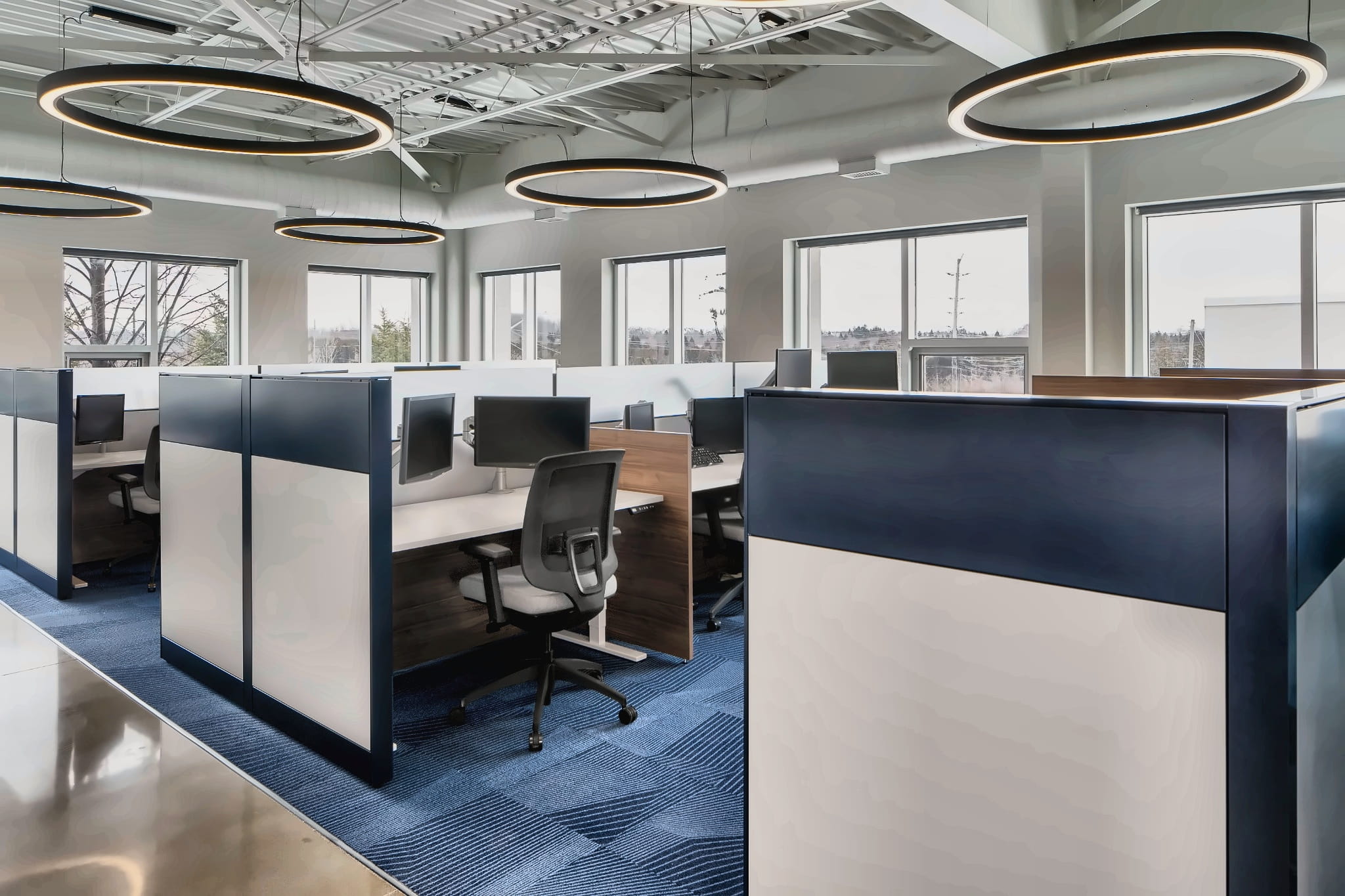
Many younger legal professionals now expect workplaces that support both collaboration and concentration rather than forcing them to choose between the two constantly. Traditional rows of exposed workstations often struggle to support this balance effectively.
Corporate interior design for modern law firms is therefore becoming more layered. Quiet focus zones, semi-private workstation clusters, acoustically protected collaboration areas, and accessible meeting spaces now work together to support different forms of legal work throughout the day.
The future of legal workplace planning is not about eliminating structure. It is about creating more intelligent forms of it.
The Future Is Layered, Not Fully Open
Some firms initially assumed hybrid work would lead to radically open offices with dramatically smaller footprints.
In legal environments, the opposite is often happening.
Hybrid work is increasing the need for layered acoustic environments because employees now perform more varied forms of work inside the office than before. A single workplace may need to support confidential negotiations, hybrid meetings, focused drafting, mentorship discussions, client consultations, and collaborative legal review all at the same time.
A fully open office struggles under that complexity very quickly.
The strongest legal workplaces are therefore becoming more nuanced rather than more extreme. Private offices remain important where confidentiality requires them. Hybrid meeting rooms support distributed collaboration naturally. Phone rooms relieve pressure across workstation areas. Focus zones protect concentration without isolating teams completely. Reception areas feel calmer because circulation and acoustics are controlled more carefully throughout the office.
This layered approach is likely where the future of law office design is heading.
Not toward workplaces that feel louder or more casual, but toward environments that support flexibility while still protecting the professionalism and confidentiality legal work depends on.
Frequently Asked Questions (FAQ):
Why is hybrid work more complicated for law firms than other industries?
Legal work depends heavily on confidentiality, focused concentration, and sensitive communication. While many industries can operate effectively in highly open hybrid environments, law firms still require spaces where confidential conversations and detailed legal work can happen comfortably without constant acoustic exposure.
Hybrid work also changes how employees use the office. Lawyers and associates often come in specifically for collaboration, mentoring, meetings, or client interaction, which increases activity and sound levels unpredictably throughout the week. This creates operational pressure on meeting rooms, phone rooms, and acoustic privacy that many traditional legal offices were never designed to support.
The challenge is not hybrid work itself. The challenge is designing workplaces that support flexibility while still protecting the professional and confidential nature of legal work.
What are STC walls and why do they matter in law offices?
STC stands for Sound Transmission Class, which measures how effectively a wall assembly reduces sound transfer between spaces. Higher STC ratings generally mean stronger acoustic separation.
In legal environments, STC planning is extremely important because confidential conversations happen throughout the day in boardrooms, partner offices, consultation rooms, mediation spaces, and executive areas. If walls are not designed properly, conversations can travel surprisingly easily through partitions, ceilings, glazing systems, or adjacent circulation paths.
Many firms focus heavily on visual privacy while underestimating acoustic privacy. STC-rated wall planning helps ensure that sensitive legal discussions remain protected operationally rather than simply appearing private visually.
Why are phone rooms becoming essential in hybrid law offices?
Hybrid work has significantly increased the number of video calls and short confidential discussions happening throughout the office every day. Employees frequently need quick access to acoustically protected spaces for client calls, virtual meetings, or internal legal coordination.
Without phone rooms, these conversations often spill into open workstation areas or occupy larger meeting rooms inefficiently. This creates noise, scheduling pressure, and confidentiality concerns throughout the office.
Well-designed phone rooms reduce operational friction significantly because they allow employees to move quickly into private environments without disrupting surrounding work areas. In legal workplaces, phone rooms are increasingly becoming part of the core office infrastructure rather than optional amenities.
Key Takeaways
- Hybrid work has increased acoustic and confidentiality pressure inside law offices
- Office interior design now requires stronger zoning between focus work and collaboration
- STC wall planning is becoming critical for confidential legal environments
- Phone rooms are now essential infrastructure in hybrid legal workplaces
- Meeting rooms must support technology, acoustics, and hybrid collaboration seamlessly
- Office furniture design influences acoustic comfort, posture, and meeting performance
- Commercial interior design for law firms should prioritize layered privacy strategies
- The future of law office design is becoming more flexible and acoustically intentional rather than fully open
Hybrid work is not reducing the importance of the law office. It is forcing firms to become far more intentional about what the office is actually designed to support.
When office interior design, office space planning, acoustic strategy, and commercial interior design align around confidentiality, concentration, and hybrid workflow, the workplace stops feeling like a compromise between flexibility and professionalism. It becomes infrastructure that actively supports both.
If your law firm is evaluating how hybrid work should shape its next workplace strategy, Studio Forma can help create legal environments built around confidentiality, flexibility, and long-term operational performance.