Most offices don’t fail in big, obvious ways. They fail quietly, in the first minute.
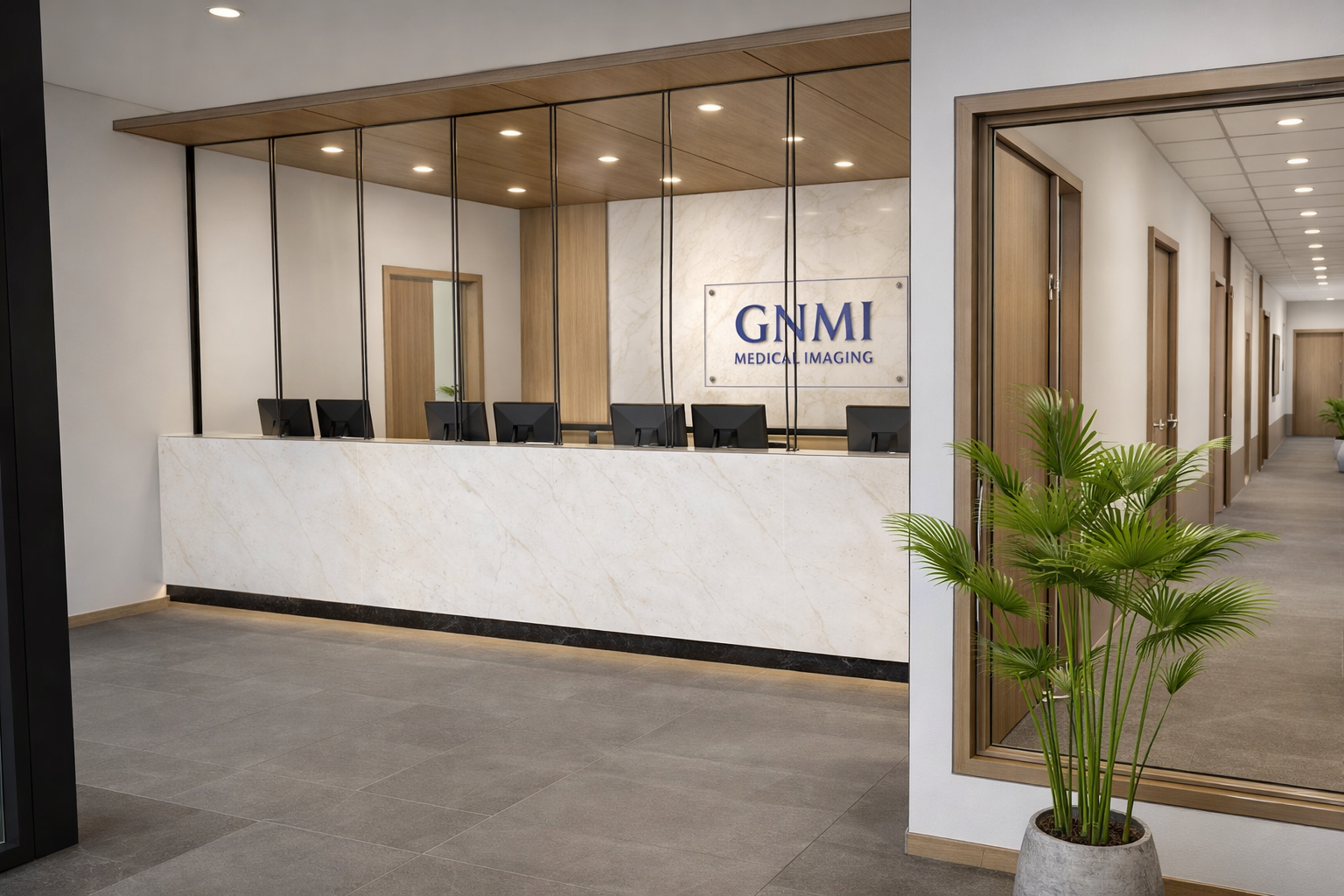
A client walks in and pauses. Not dramatically, just enough to glance around. They’re figuring out where to go, who to speak to, what the office interior design says about you. No one notices it, but that moment matters.
Because before a meeting starts, before a proposal is discussed, your office branding has already done the talking. It has told them how organized you are. How your team works. How much attention you pay to detail.
For project managers, this shows up as friction. Things feel slower than they should. Movement isn’t smooth. Spaces don’t quite support how people actually work. For marketing leaders, it’s more direct. The brand promise feels strong on paper, but weaker in person.
Well-designed workplaces are proven to improve productivity. But just as important, they remove doubt. They make people feel settled, confident, ready to engage.
That first 60 seconds follows a pattern. And once you start paying attention to it, you begin to see exactly where your space is helping or quietly holding you back.
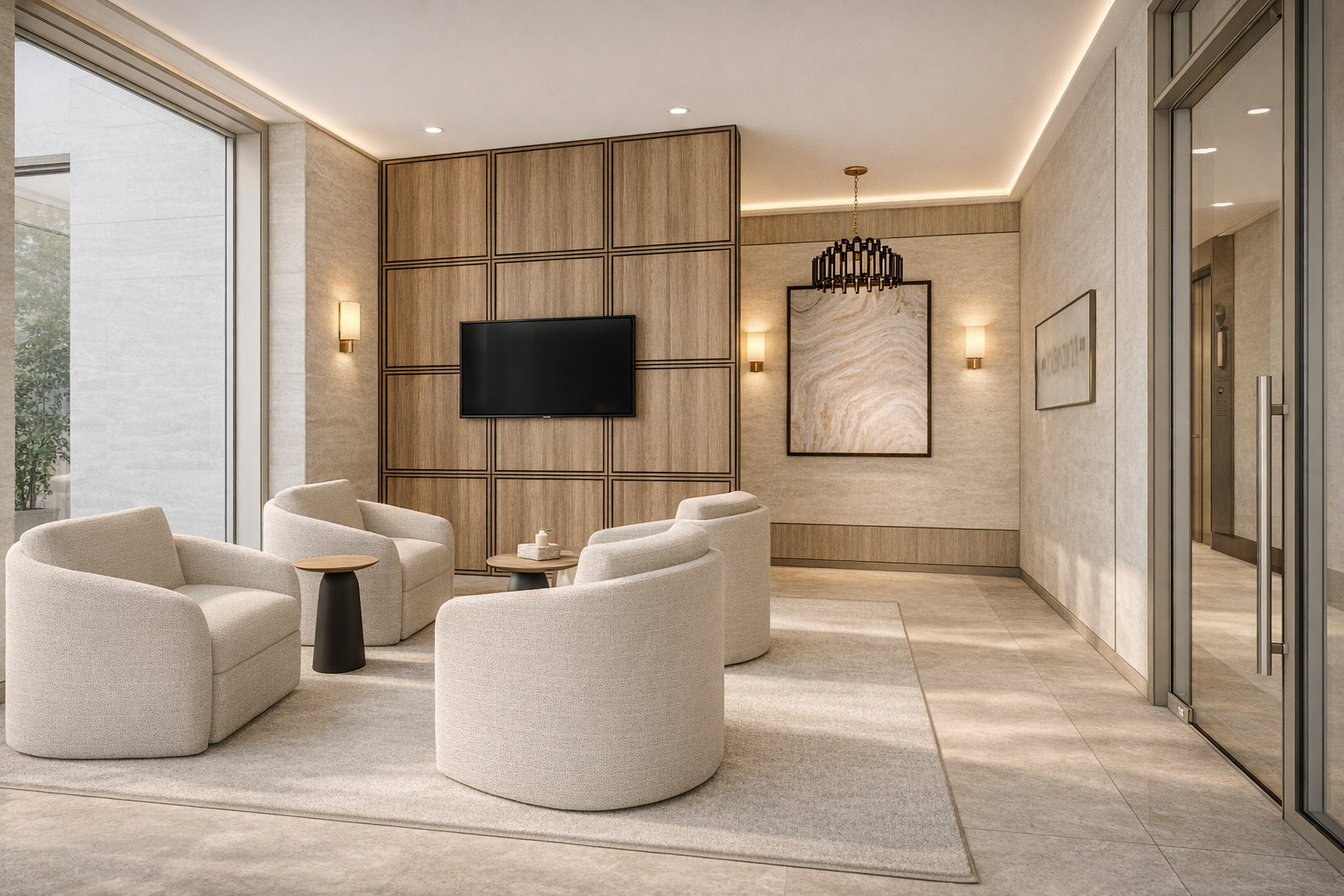
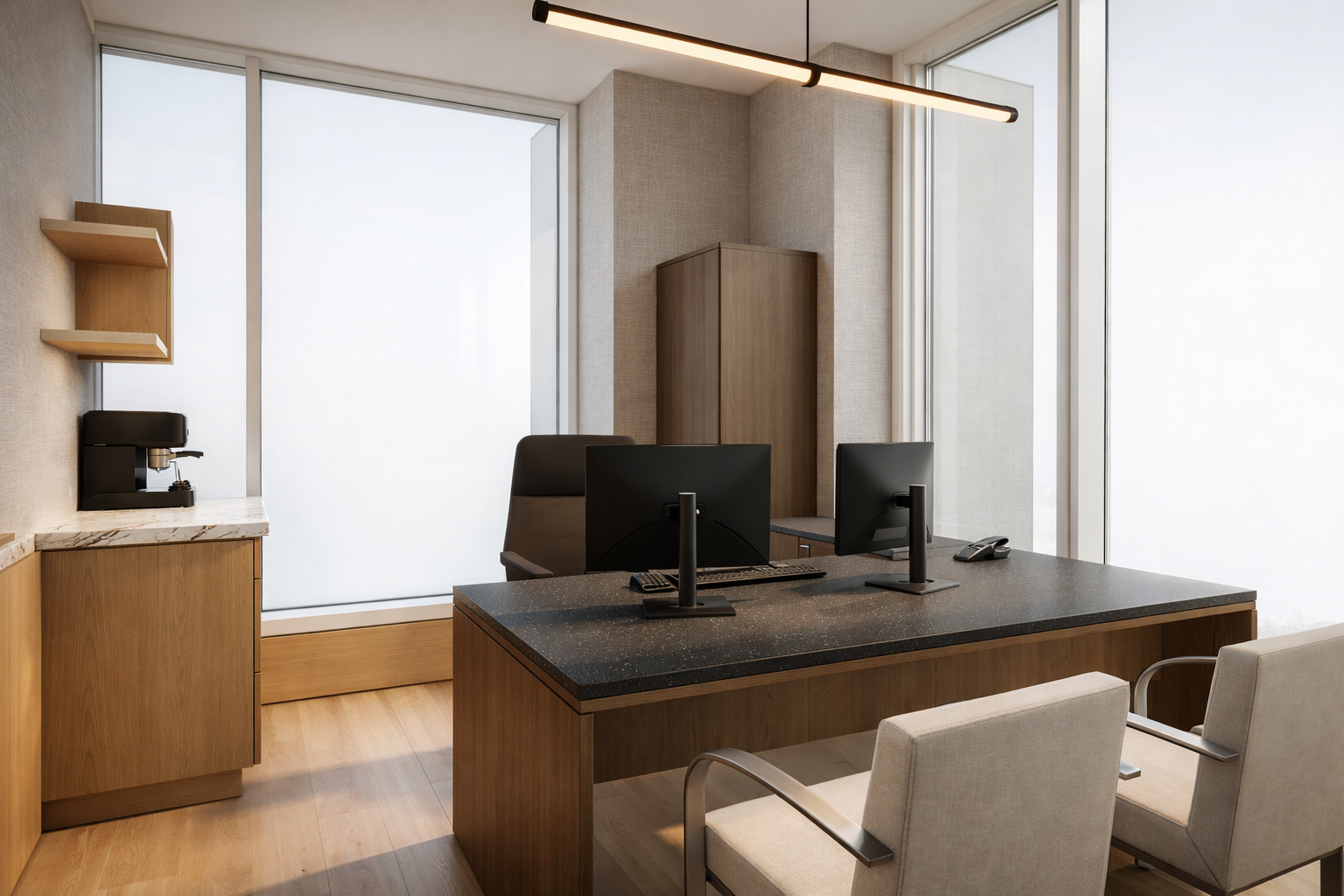
When Office Interior Design Leaves People Guessing
The first thing people look for is direction.
Not signage. Not branding. Just a simple sense of where they are and where they should go next.
When that’s unclear, even slightly, it creates hesitation. You see it in small ways. Someone slows down near the entrance. They glance toward a desk but aren’t sure if it’s reception. They wait a second longer than they should.
This is rarely a problem of effort. It’s usually a problem of layout.
A reception desk might be well designed, but placed just off-axis. Circulation paths might exist, but they compete with furniture or visual clutter. The result is a space that technically works, but doesn’t feel resolved.
Strong office interior design removes that hesitation. It creates a sense of order that people can read instantly. You walk in and know where to go without thinking about it.
That clarity sends a message. It tells clients that the business is structured, that systems are in place, that things are handled.
Interior design services often start here for a reason. Fixing the entry experience is one of the fastest ways to shift how a space is perceived.
How Commercial Interior Design Shapes Movement
Once a client starts moving, the next layer reveals itself.
This is where commercial interior design quietly does its job. Not through bold gestures, but through flow.
People notice when movement feels awkward. They feel it when they have to step around furniture, squeeze through tight passages, or double back to find a meeting room. It creates a subtle tension that carries into the interaction.
On the other hand, when the office design layout is well planned, movement feels natural. You move from reception to meeting space without thinking about it. Transitions feel smooth. The space supports the interaction instead of interrupting it.
This is where office space planning becomes critical. It is not just about fitting desks into a floor plan. It is about organizing how people move, meet, and work throughout the day.
Interior design firms Toronto often see offices that are not lacking space, but lacking clarity in how that space is used. A few adjustments to layout can completely change how the environment performs.
When movement works, everything else feels easier.
What Interior Design Services Reveal in the Details
Once clients sit down, their attention shifts.
They start noticing things they won’t comment on, but will remember. The feel of the chair. The stability of the table. The texture of surfaces.
These details matter more than most teams expect. They shape how people interpret quality.
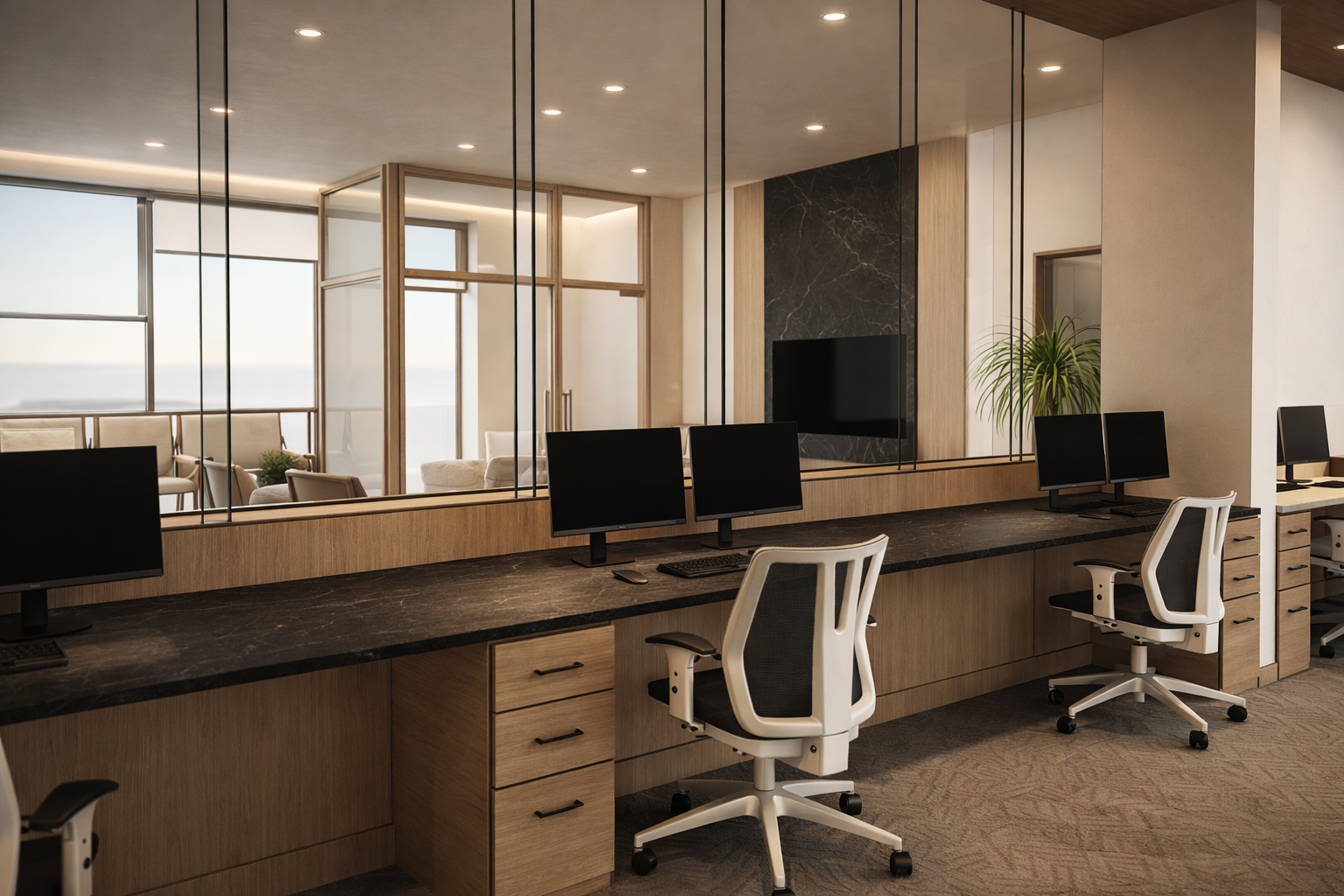
Office furniture design plays a quiet but powerful role here. A well-built chair doesn’t just provide comfort. It communicates care. A solid table suggests permanence. Even small elements like how drawers close or how materials feel under hand can influence perception.
Corporate interior design ties these pieces together so they feel consistent. When finishes, materials, and furniture align, the space reads as intentional. When they don’t, it feels pieced together.
Interior design services often focus heavily on this layer. Not because it is decorative, but because it is experiential. It is where people physically connect with the space.
And that connection either reinforces trust or slowly weakens it.
Where Office Interior Design Gets Lighting Right
Lighting is one of the fastest ways to change how a space feels, yet it is often treated as an afterthought.
People may not walk in and comment on lighting, but they feel it immediately.
If it is too harsh, the space feels uncomfortable. If it is too dim, it feels neglected. If it is uneven, it creates distraction.
Good office interior design uses lighting to create balance. It supports the task at hand while keeping the overall atmosphere calm.
Commercial interior design looks at how natural and artificial light work together. Daylight softens a space and improves mood. Artificial lighting fills in the gaps, but should never dominate in a way that feels clinical.
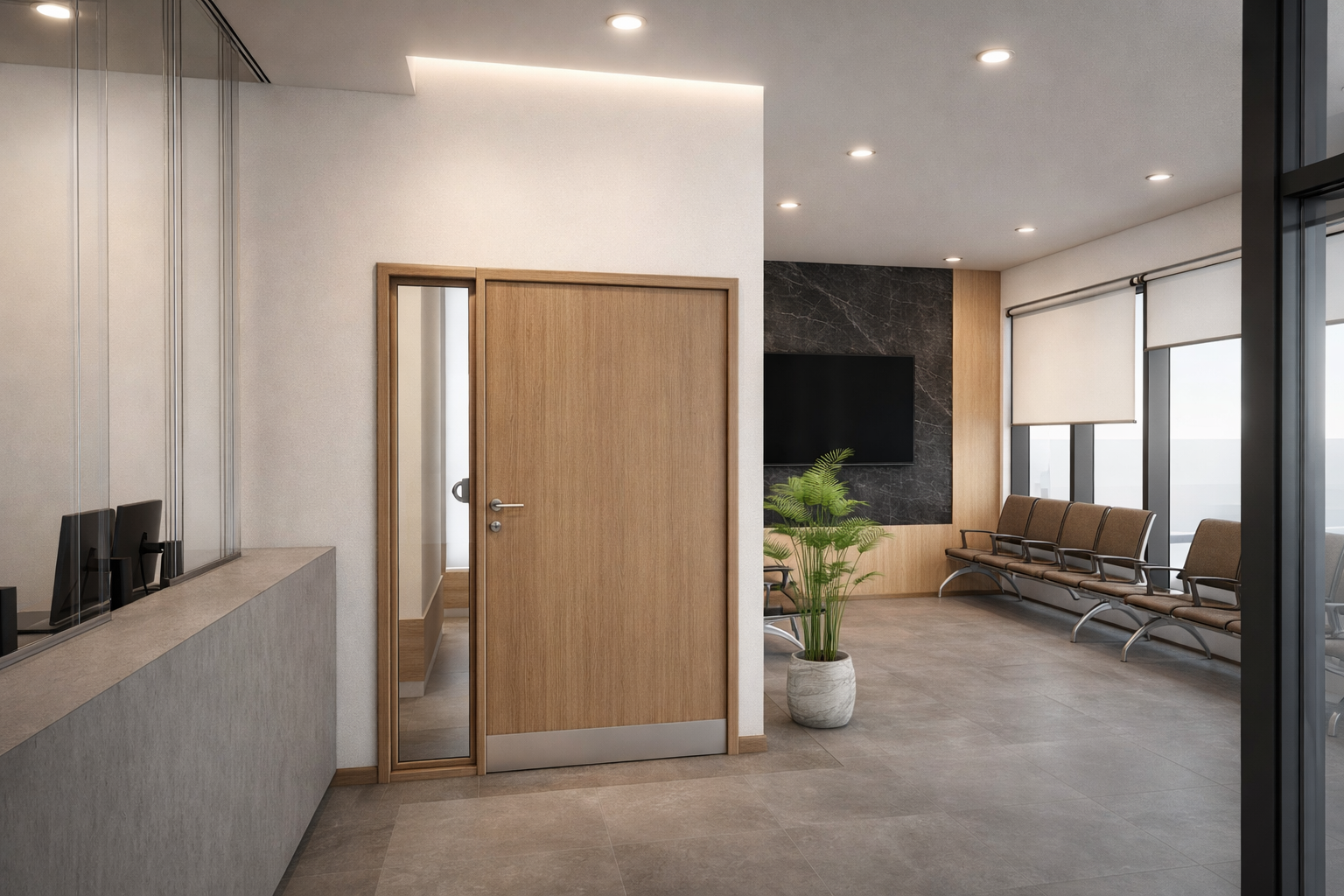
Office space planning plays a role here as well. Different zones need different lighting approaches. A waiting area should feel relaxed. A meeting room should feel focused.
Interior design firms Toronto often revisit lighting as part of broader upgrades because it delivers immediate impact without major disruption.
When the lighting is right, people settle in faster. Conversations feel easier.
How Commercial Interior Design Reflects Your Brand Without Saying It
By the end of that first minute, a clear impression has formed.
Not because of what was said, but because of what was felt.
This is where commercial interior design does its most important work. It aligns the physical space with the identity of the business.
But this is not about adding logos or statements on walls. It is about consistency.
A firm built on precision should feel structured. A firm built on collaboration should feel open. A firm focused on trust should feel calm and composed.
Office design layout supports this by shaping how people interact. Office space planning ensures that every area contributes to that experience.
Corporate interior design brings it all together. It connects layout, materials, lighting, and flow into something that feels coherent.
Interior design services often focus on this alignment quietly. When it works, clients feel it without needing to think about it.
And that is the goal. Not to impress loudly, but to reinforce confidence in a way that feels natural.
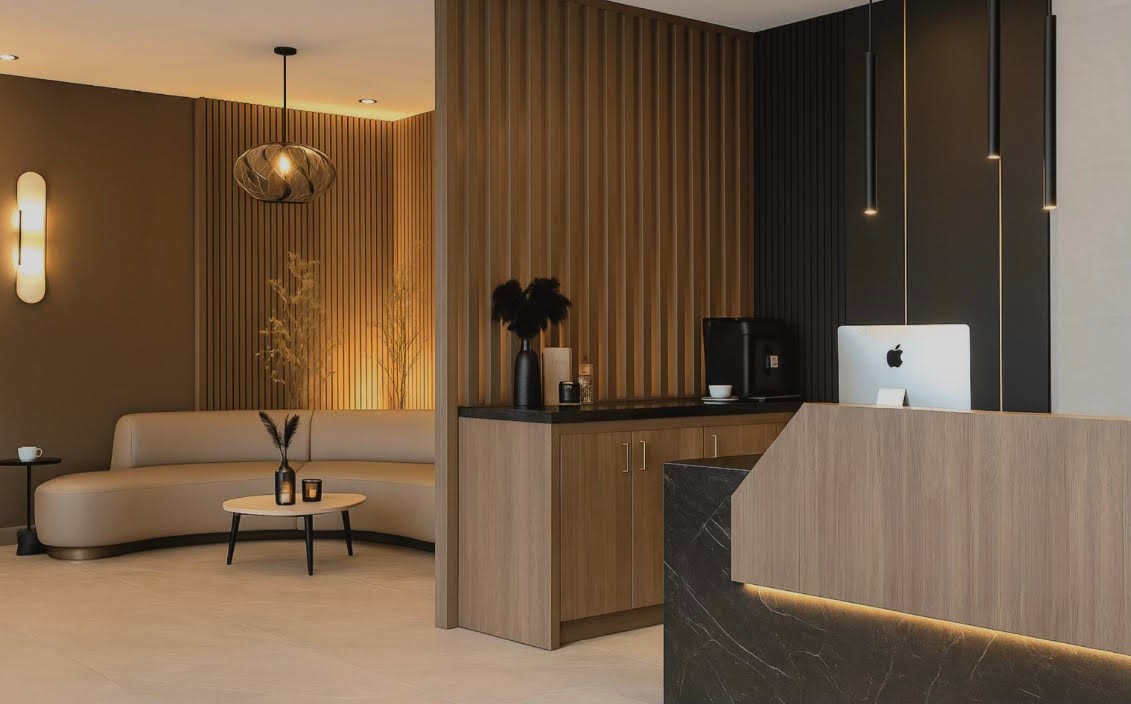
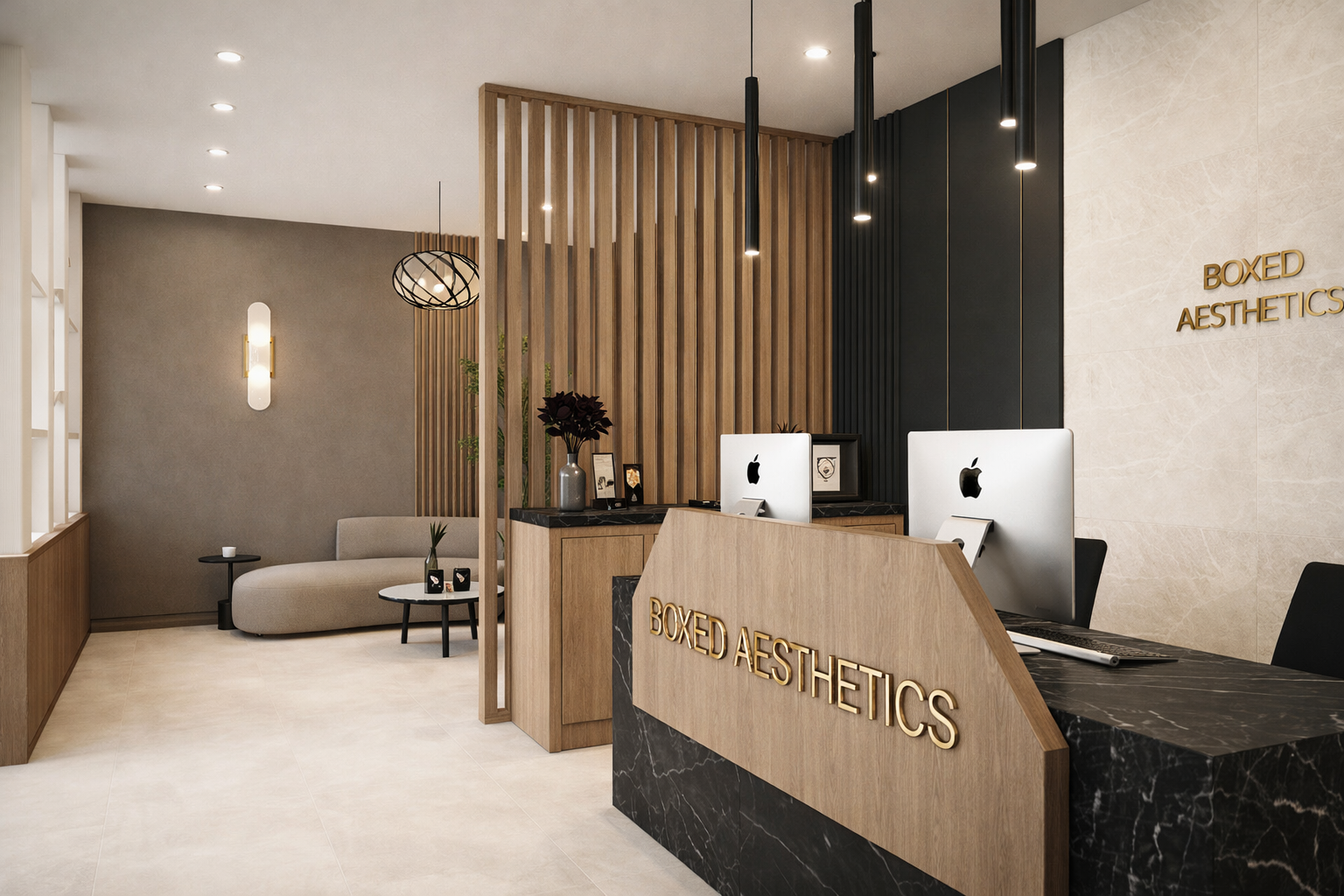
Frequently Asked Questions (FAQ):
Why do first impressions in an office matter so much?
They shape how clients feel before any discussion begins. Even small signals, like how easy it is to navigate the space or how comfortable the environment feels, influence trust and confidence right away.
How can layout affect client experience?
Layout controls movement. When people can move easily from one point to another, it reduces stress and creates a smoother experience. Poor layout introduces hesitation and distraction.
What do clients notice most in a waiting or reception area?
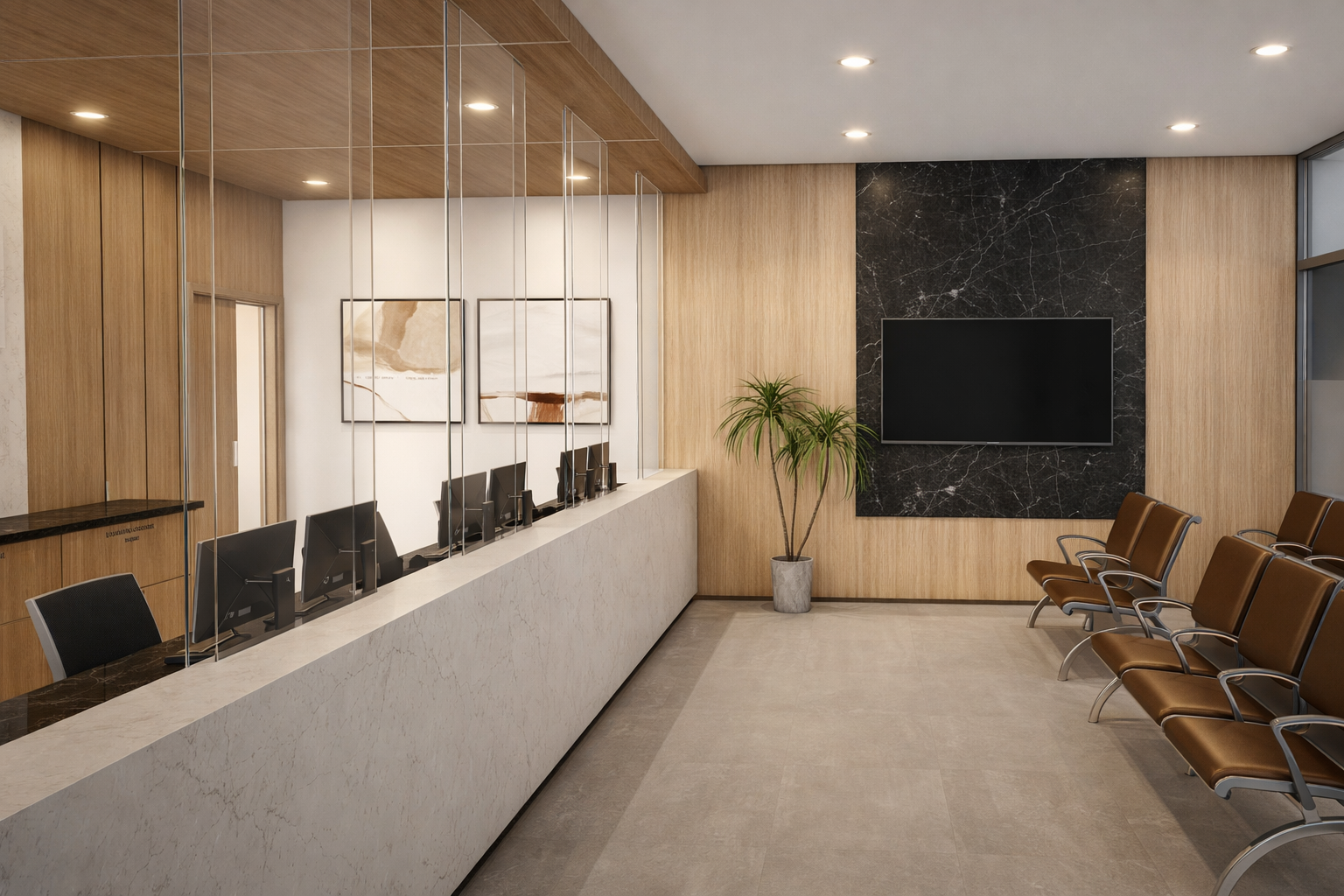
They notice clarity, comfort, and organization. Seating, lighting, and how the space is arranged all contribute to whether the environment feels professional or disjointed.
Key Takeaways
- Clients form strong impressions within the first minute of entering your office
- Layout clarity reduces hesitation and builds immediate confidence
- Smooth movement through a space reflects strong planning and organization
- Materials and furniture influence how quality and care are perceived
- Lighting shapes comfort, mood, and overall experience
- A well-designed office reinforces brand without needing to say it directly
- Small design adjustments can create meaningful improvements in perception
The first 60 seconds inside your office are not just an introduction. They are a signal.
They show how your business operates, how your team works, and how much thought goes into the details. When everything aligns, clients feel it right away. The space supports the conversation instead of competing with it.
When it doesn’t, the impact is quieter but just as real. A slight hesitation. A small distraction. A sense that something is not fully resolved.
Aligning office interior design with how your business actually functions is not about aesthetics. It is about performance.
If your office is not creating the right impression in those first moments, it may be time to look at how the space is actually performing, and reach out to interior design services that can quietly do more for you.