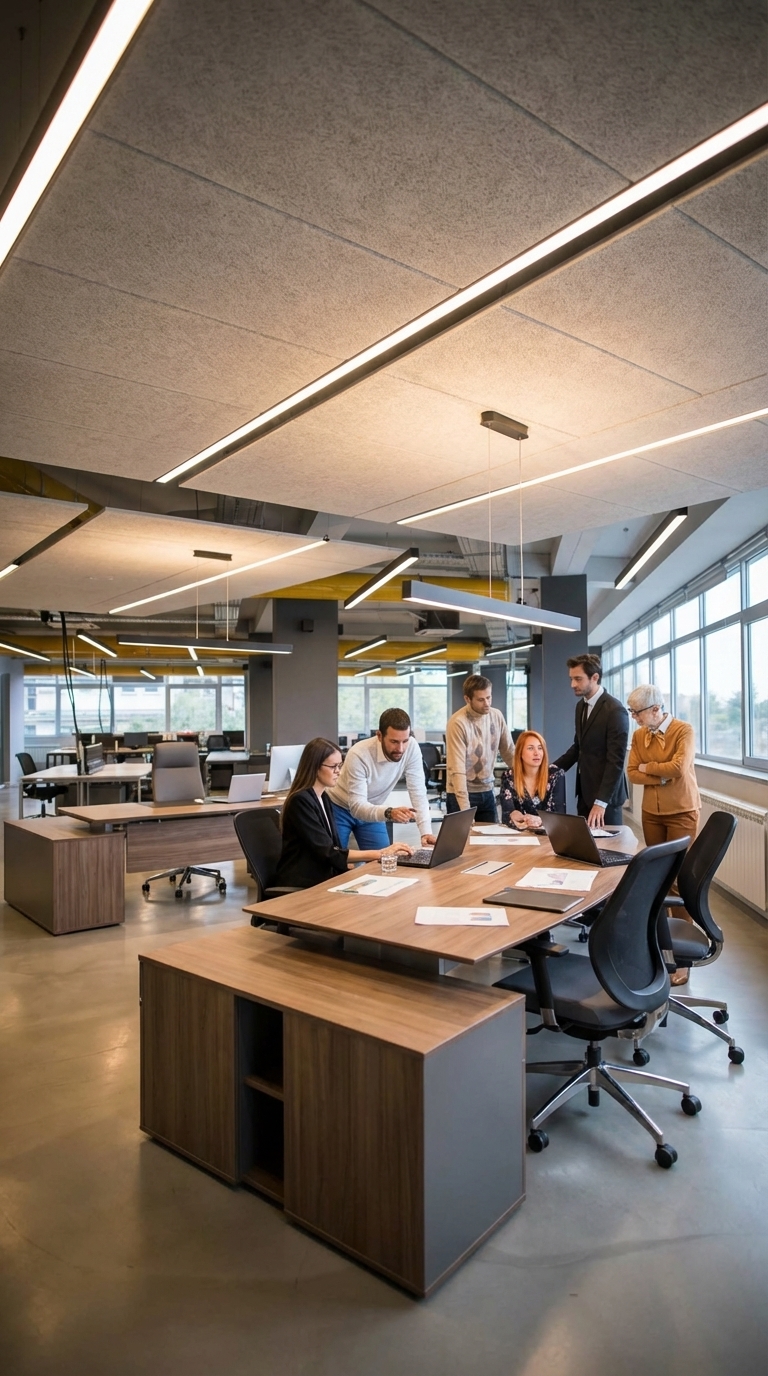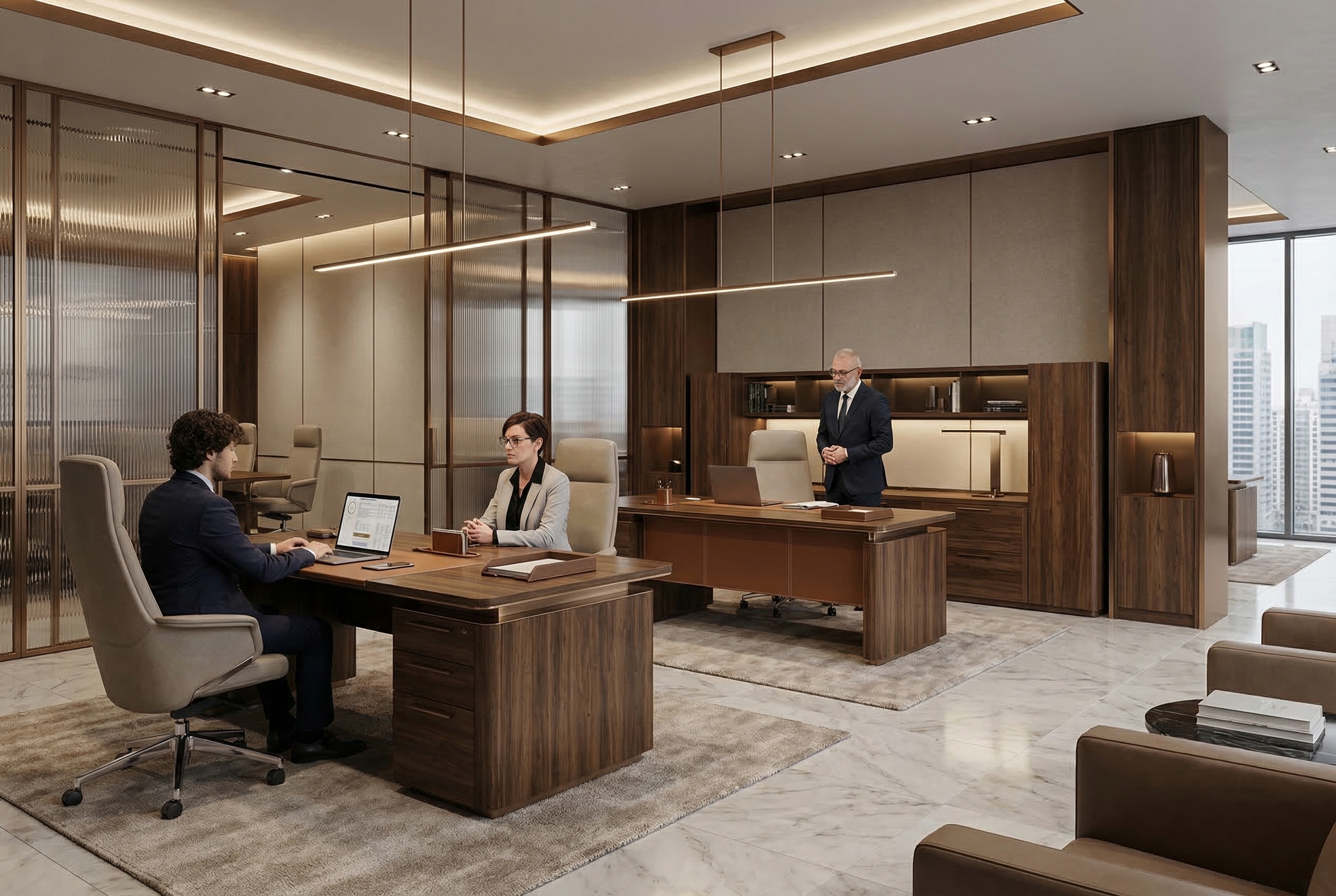

Legal work has always relied on discretion.
Not just in what is said, but in how it is handled, where it is discussed, and who might overhear it.
That expectation doesn’t stop at legal advice. It extends into the workplace itself.
Clients notice how a firm operates the moment they walk in. They pick up on whether conversations feel contained, whether meetings feel private, and whether the environment reflects a sense of control and professionalism.
For law firms, office design is not just about efficiency. It plays a direct role in trust.
And trust, once compromised, is difficult to rebuild.
Privacy Is Not a Feature. It’s the Foundation
In many workplaces, privacy is treated as a layer. Something added through meeting rooms or quiet areas.
In legal environments, it works differently.
Confidentiality needs to be embedded into the layout itself.
That starts with how spaces are separated. Offices should not feel exposed to circulation paths. Conversations should not carry into shared zones. Even informal discussions between colleagues need a level of acoustic control.
This is where office interior design becomes more technical than visual.
The placement of walls, the type of partitions used, and the relationship between open and enclosed spaces all influence how secure the environment feels.
Without that foundation, even well-designed spaces can create risk.
Acoustics Are Where Most Offices Fall Short
Sound is one of the most underestimated factors in workplace design.
In a law firm, it becomes one of the most critical.
Conversations do not need to be loud to travel. A phone call in a partner’s office, a discussion in a meeting room, or a quick exchange in a hallway can all be overheard if acoustics are not handled properly.
Commercial interior design that supports legal work takes this seriously from the start.
This includes:
- separating high-sensitivity areas from active zones
- using materials that absorb rather than reflect sound
- ensuring meeting rooms are properly sealed and isolated
When acoustics are addressed early, privacy feels natural. When they are not, employees begin adjusting their behaviour, which slows work and creates unnecessary caution.
Reception Sets the Tone Before Any Conversation Begins
The first few moments in a law office matter.
Clients form an impression before they meet anyone.
A reception area should feel controlled, calm, and intentional. Not overly designed, but clearly structured.
This is where corporate interior design plays a subtle but important role.
Sightlines should be managed so that clients are not exposed to internal activity. Waiting areas should feel separate from work zones. Movement through the space should feel guided, not uncertain.
Professionalism is not just visual. It is spatial.
A well-designed reception reinforces confidence before any legal discussion takes place.
Partner Offices Still Serve a Purpose
There has been a shift toward more open environments in many industries.
Law firms have followed some of that movement, but not entirely.
Partner offices continue to play an important role.
They provide:
- a consistent environment for confidential discussions
- a controlled setting for client meetings
- a space where focus can be maintained without interruption
The question is not whether to remove them. It is how they are integrated into the overall office design layout.
When placed thoughtfully, they support both privacy and accessibility. When isolated too heavily, they can create disconnection within teams.
Balance matters.
Meeting Rooms Need to Support More Than Meetings
In legal environments, meeting rooms carry more weight than in most workplaces.
They are where sensitive discussions happen, where decisions are made, and where client relationships are built.
Office space planning should reflect that importance.
Rooms need to be:
- acoustically secure
- appropriately sized for different types of meetings
- equipped for both in-person and remote interaction
A common issue is relying too heavily on one type of room. Large boardrooms may sit underused, while smaller, more private rooms are constantly in demand.
A better approach is to provide a range of spaces that match how meetings actually occur.
This improves both efficiency and client experience.
Layout Should Support Discretion Without Limiting Workflow
Law firms require a level of discretion that can conflict with efficiency if not handled carefully.
An office design layout should allow teams to move through the space without unnecessary exposure.
Circulation paths should not cut through sensitive areas. Workstations should not be positioned where screens or documents are easily visible.
At the same time, the layout should not create barriers that slow collaboration.
This is where zoning becomes important.
Separating public, semi-private, and private areas allows the office to function smoothly while maintaining the level of control required in legal work.
Furniture and Material Choices Reinforce Professionalism
Details matter in legal environments.
Office furniture design and material selection contribute to how the space is perceived.
Durability, consistency, and quality all signal stability.
Canadian office furniture systems often provide the level of finish and adaptability required in these environments, allowing firms to maintain a polished look while supporting daily use.
The goal is not to create a space that feels overly formal. It is to create one that feels considered and reliable.
That perception carries through to how clients view the firm itself.
Interior Design Services Translate Legal Needs Into Space
Designing for law firms requires more than applying general workplace strategies.
Interior design services need to account for how legal work is structured.
This includes:
- confidentiality requirements
- client interaction patterns
- internal workflows
- long-term space use
Interior design firms Toronto that work with legal clients often approach this with a different level of precision.
They focus on reducing risk, improving clarity, and ensuring that the environment supports both employees and clients without compromise.
Frequently Asked Questions (FAQ):
Why is privacy more critical in law office design than in other workplaces?
Legal work often involves sensitive information that cannot be exposed. The workplace needs to support confidentiality at all times, not just during formal meetings.
How can acoustics improve a law firm’s office?
Proper acoustic planning prevents conversations from being overheard. This protects both client information and internal discussions, reducing risk and improving comfort.
Are open offices suitable for law firms?
They can be used in limited areas, but most legal environments require a higher level of enclosure to support confidentiality and focus.
Key Takeaways
- Privacy should be built into the layout, not added as an afterthought
- Acoustic control is critical to maintaining confidentiality
- Reception areas shape client perception before any interaction
- Partner offices still play a key role in legal environments
- Meeting rooms should reflect real usage patterns and sensitivity levels
- Layouts must balance discretion with efficient workflow
- Furniture and finishes contribute to trust and professionalism
- Law firms operate in environments where trust is everything.
- That trust is built through expertise, but reinforced through experience.
When office interior design, commercial interior design, and office space planning are aligned with the realities of legal work, the workplace becomes part of that trust.
Not something clients notice directly, but something they feel. Book a consultation with Studio Forma for spaces that align with what you work for.