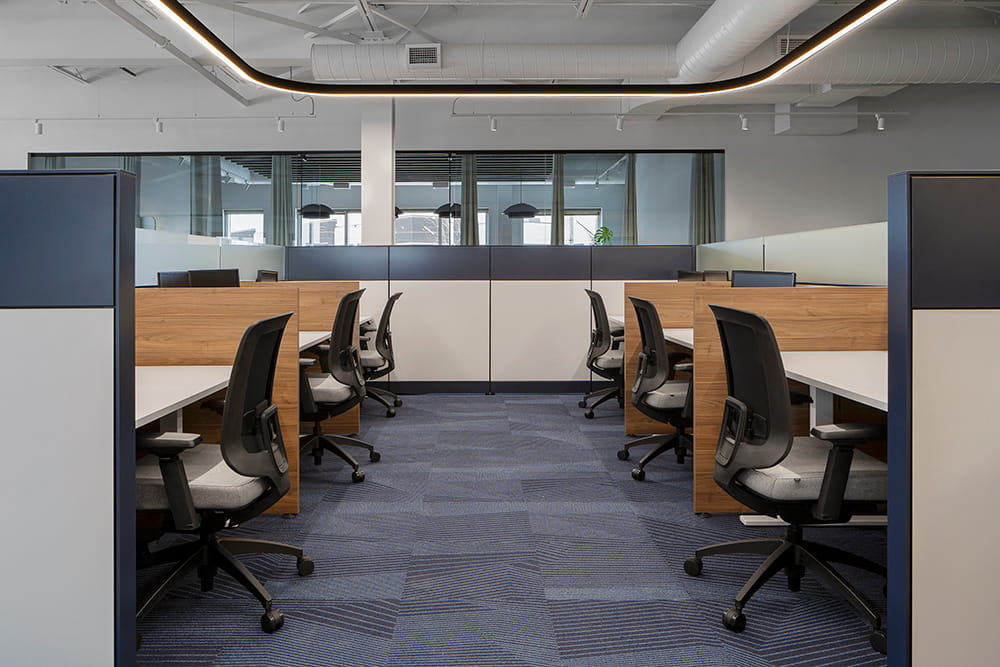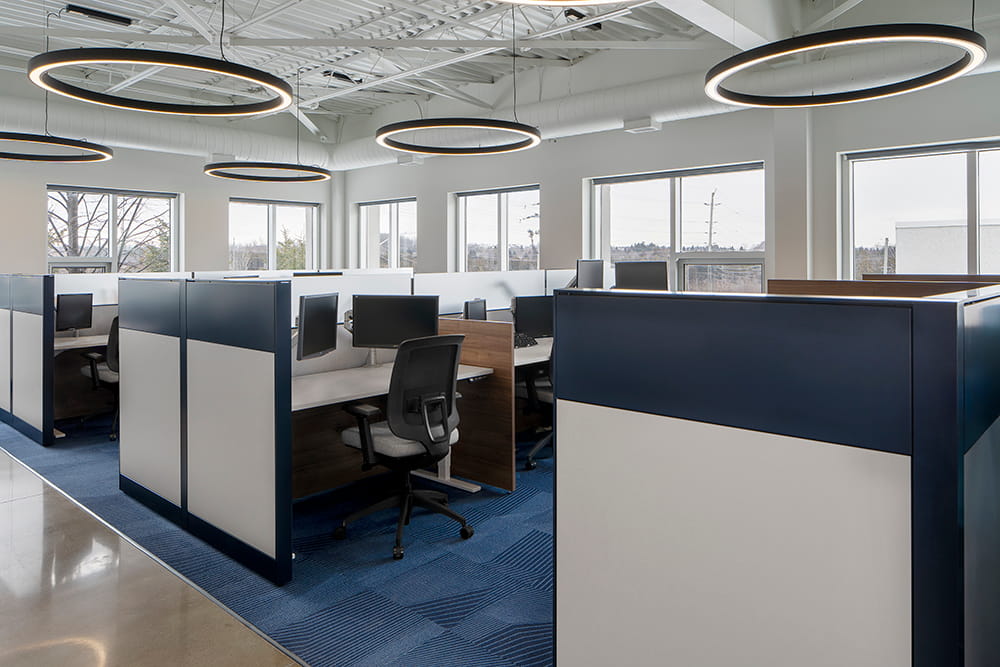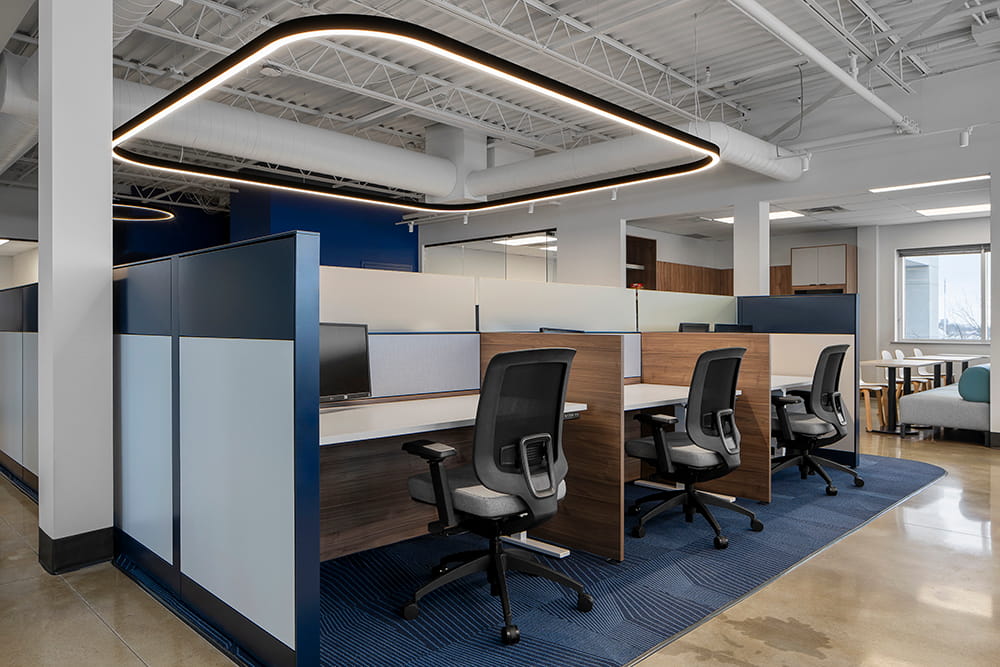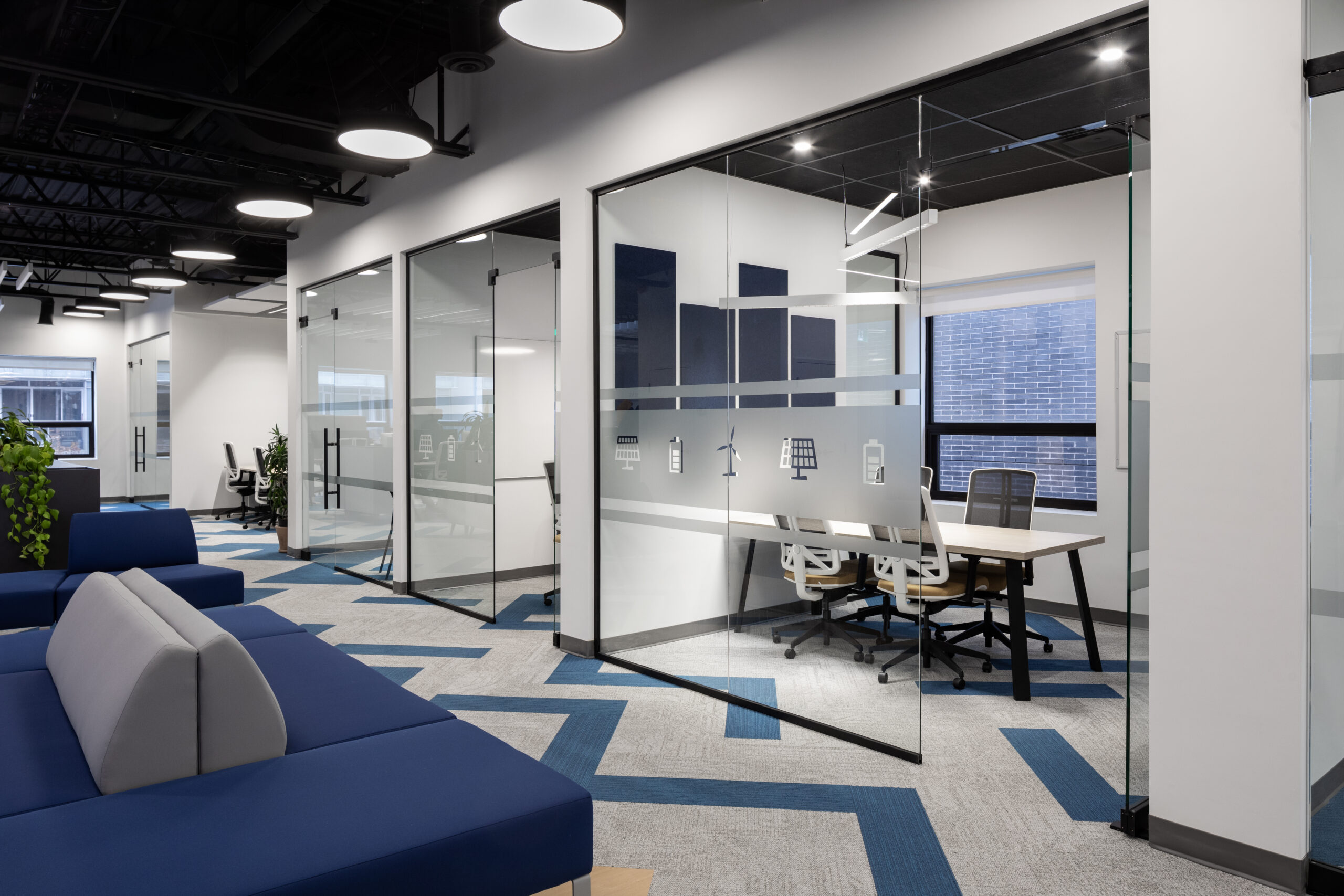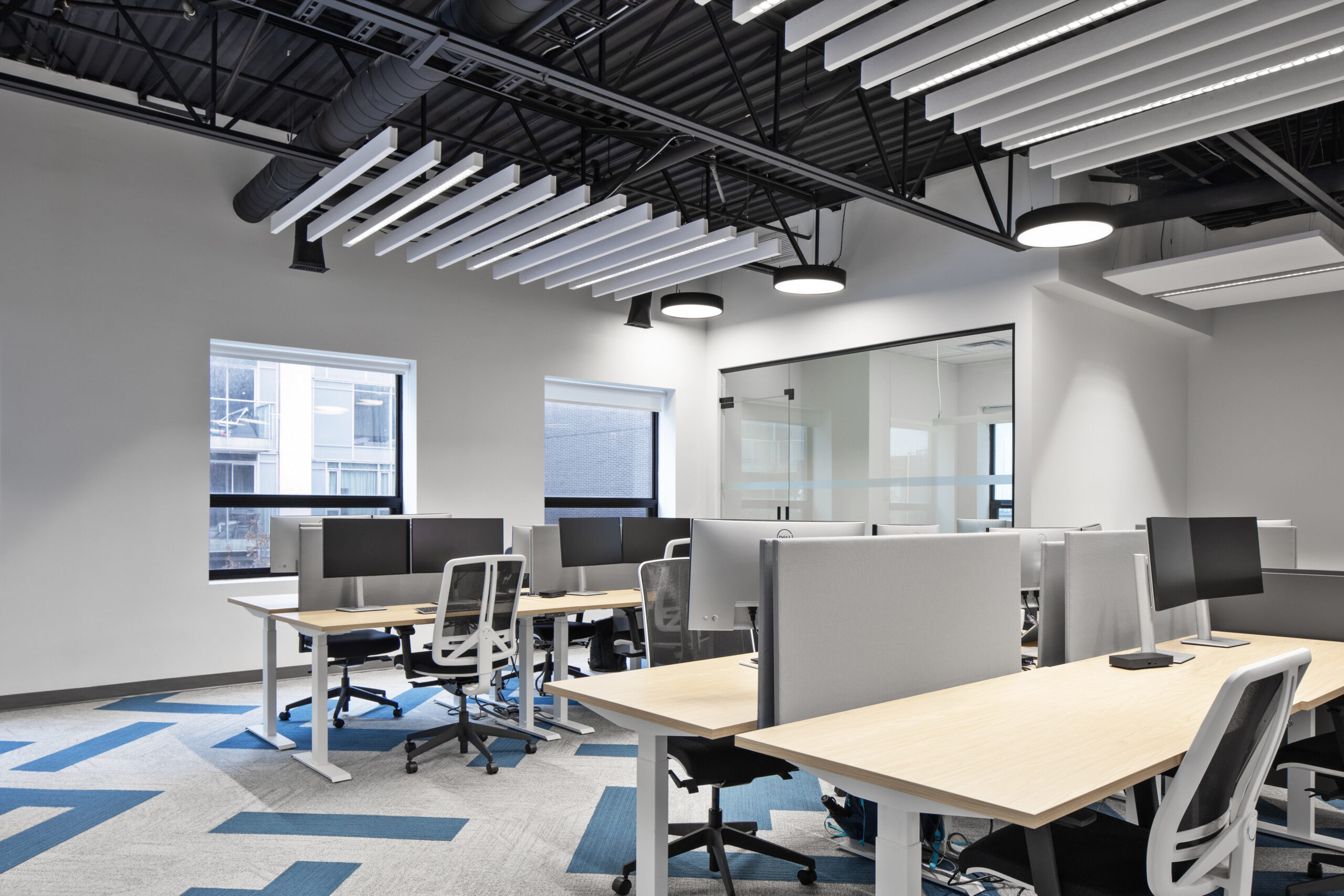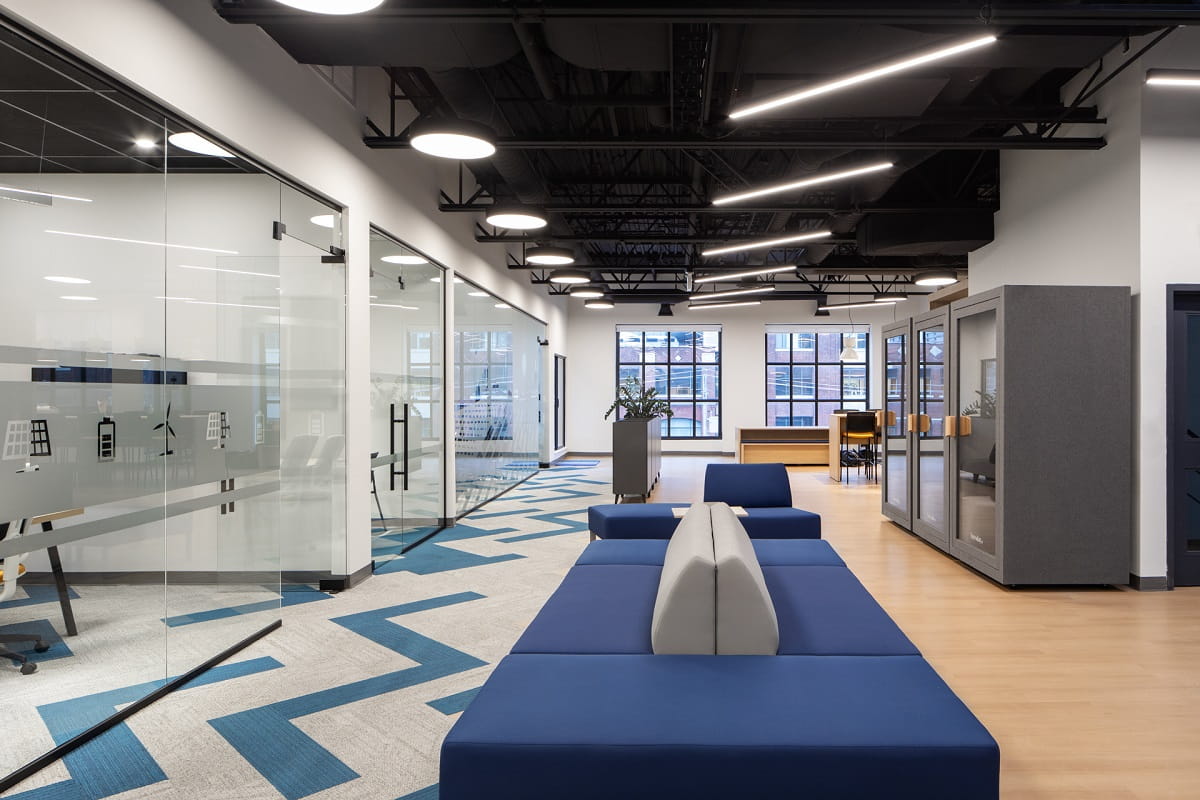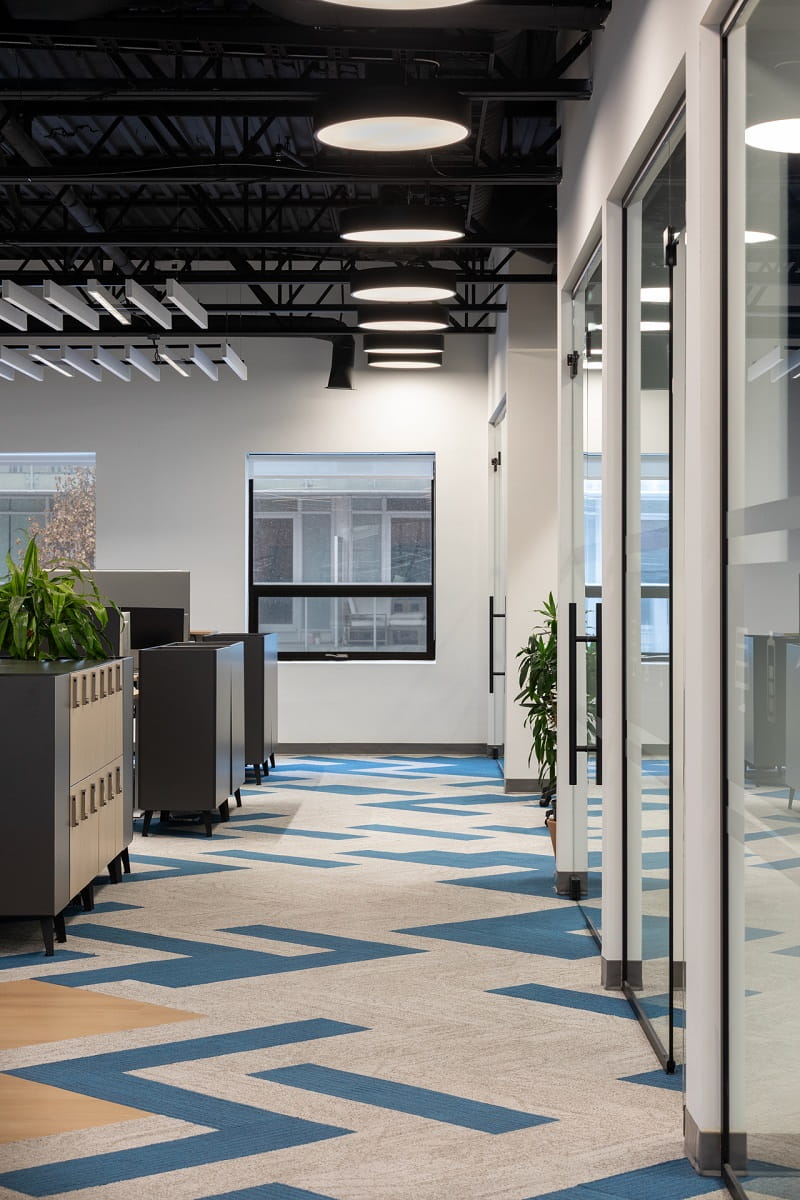
If your office interior design expansion adds space but steals seconds, it is not an upgrade.
In Canada, smoke inhalation causes 68 percent of unintentional residential fire deaths. In heavy smoke, walking speed can drop to about 0.2 metres per second. Smoke slows people, so escape routes must be simple and direct.
An office interior design expansion can also change everything that makes a route work. A new office design layout can shorten travel distance, widen flow points, and make exits easier to spot. Done well, it works under stress. Small choices today can prevent panic tomorrow when alarms sound.
Below are five practical moves Studio Forma uses within interior design services to keep growth safe. First, we start with how people actually move through space.
Flow Maps for Office Interior Design
Before you place one new desk, trace the path from every work point to safety. In office interior design, we map the real route, not the straight line. We mark the farthest desk, enclosed rooms, and any zone where visitors may hesitate.
A strong office design layout creates a clear circulation hierarchy. Small paths feed main aisles. Main aisles feed exits. That makes commercial interior design safer in large floor plates. In manufacturing based offices, we also map forklift lanes, shipping doors, and storage pinch points. A route that crosses industrial traffic needs extra clarity.
This is also where corporate interior design should protect people who do not know the building. We use clear sight lines and simple turns. We also plan where office furniture design can guide movement, so seating does not spill into the path. A tested office design layout shows a backup path if a corridor is blocked. In corporate interior design projects, we make the route feel familiar.
Distance Rules in Commercial Interior Design
Once the map is real, check the rules that control time. In commercial interior design, time is shaped by travel distance, exit count, and exit width. Canadian codes vary by province, yet the logic is consistent. Business areas often need shorter travel distance to an exit. High hazard industrial zones can be tighter still.
One model code sets travel distance to one exit at 40 metres for business areas, and 25 metres for high hazard industries. It also sets exit spacing using a share of the floor plate diagonal. Those limits matter in office interior design expansions because a deeper plan can silently break them.
Exit width is a flow problem. When you add staff, the route must carry more bodies at once. Design standards link exit width to occupant load, including doorways, corridors, and stairs. That is why office design layout and office furniture design cannot be separated from life safety math.
For manufacturing offices, we also plan for PPE, hearing protection, and heavier doors. If the door hardware is hard to use, flow slows. Interior design services coordinates with code and engineering partners early, so the fix is designed in, not patched later. In commercial interior design, that early check keeps the expansion calm.
Signs and Light with Interior Design Services
A route must speak even when power fails. In interior design services planning, we treat wayfinding as life safety, not decor. Exit signs must be visible from the approach and kept lit while the building is occupied. In long corridors and open office areas, direction signs and arrows can remove hesitation at junctions.
Emergency lighting is another layer that protects time. Canadian workplace rules require emergency lighting in exits, corridors, open routes, and gathering areas. These systems should switch on automatically and provide at least 10 lux on average. That supports safe travel when smoke and stress reduce vision.
In corporate interior design, cues should repeat. A consistent sign style. A repeated finish that marks the route edge. A clear sight line to the next decision point. In manufacturing related layouts, we add redundancy because noise can drown alarms. In corporate interior design, we also plan for visitors who freeze, so cues must be easy.
Office furniture design also supports signs and light. Tall storage placed near a sign can block it. A feature wall can hide an exit marker. A good office design layout keeps signs in the open. We coordinate sign locations so glare does not hide them.
Clear Aisles Through Office Interior Design
Escape routes fail most often because daily life blocks them. An office interior design expansion can invite clutter if storage is not planned. We design for where things land, not just day one.
Office furniture design sets the width and cleanliness of aisles. We keep door swing zones free. We avoid dead ends created by storage towers. We prevent meeting room doors from opening into a tight pinch point. In commercial interior design, these inches decide whether people can pass each other when a room empties.
Canadian office furniture is part of this strategy when it is chosen with discipline. Compact footprints protect aisle width. Modular pieces reduce the urge to park extra cabinets in corridors. Cable control built into Canadian office furniture can also remove trip hazards fast. In large teams, Canadian office furniture with clear storage zones reduces corridor clutter. Office furniture design should keep copy zones and coats out of the route. Canadian office furniture with built in storage keeps routes clear. When we refine the office design layout, we set drop zones for deliveries.
For large manufacturing offices, we respect the boundary between pedestrian and equipment paths. The office design layout should keep escape travel out of loading routes where possible, or mark crossings clearly when it is not. In corporate interior design spaces inside plants, we keep waiting zones away from exit doors.
Drill Ready with Interior Design Services
A route on paper is not the same as a route people can use under pressure. Interior design services adds value when it links space planning to training and upkeep. That bridges plan and safety.
Federal workplace rules in Canada require an emergency evacuation plan when more than 50 employees work in a building. The plan must cover employees who need special assistance and stay current as the building changes. That fits office interior design expansions where the footprint can shift.
A Canadian study compared 93 drills with 23 real evacuations, and found differences. Drills are still valuable, but the space must make the safe choice simple. That is why corporate interior design should support posted maps and clear assembly points. In corporate interior design, we also plan who checks washrooms and quiet rooms.
Maintenance finishes the loop. Exit signs are checked. Emergency lights are tested. Doors are kept usable. Canadian office furniture is added only if it keeps widths intact. Office furniture design rules are reinforced during moves and reorgs. Interior design services can build those rules into the space, so safety does not rely on memory. In commercial interior design upgrades, we design storage so the route stays clear.
Frequently Asked Questions (FAQ):
What changes first when a workplace expands?
The office design layout usually changes first, and that changes travel distance, door access, and crowd flow.
How do we keep escape routes clear after move in?
Write simple rules into office furniture design, add storage, and review routes during every corporate interior design reset.
Do manufacturing offices need a different approach?
They need the same goals, plus separation between people and equipment in commercial interior design planning and office interior design zoning.
Key Takeaways
- A clear office design layout should show a simple path to an exit
- Commercial interior design must check travel distance, exit spacing, and flow width early
- Interior design services should treat signs and emergency lighting as core systems
- Office furniture design must protect aisle width, door swings, and sight lines
- Corporate interior design works best when routes are trained, drilled, and updated
Growth should feel exciting, not risky. A disciplined office design layout keeps movement clear even in a large manufacturing environment. Thoughtful office furniture design reduces clutter and trips. Well chosen Canadian office furniture holds up to daily wear without swelling into the path. Good corporate interior design keeps safety visible. Canadian office furniture supports this at the right scale. Commercial interior design should not trade aisle clearance for style. Canadian office furniture should be planned early. Office furniture design should protect exits first. If you are expanding, Studio Forma aligns interior design services with office interior design and commercial interior design goals, so your team moves safely.