Creating an open office layout is not just about removing walls. It’s about making sure the space can support both collaboration and focused work without forcing teams to adjust constantly.
Some offices benefit from open layouts through faster communication and flexibility. Others experience noise, lack of privacy, and reduced productivity.
The difference comes down to how well the design supports real workflow. This guide focuses on what actually works, where office interior design fails, and how to make better decisions based on your team and space.
What is an Open Plan Office?
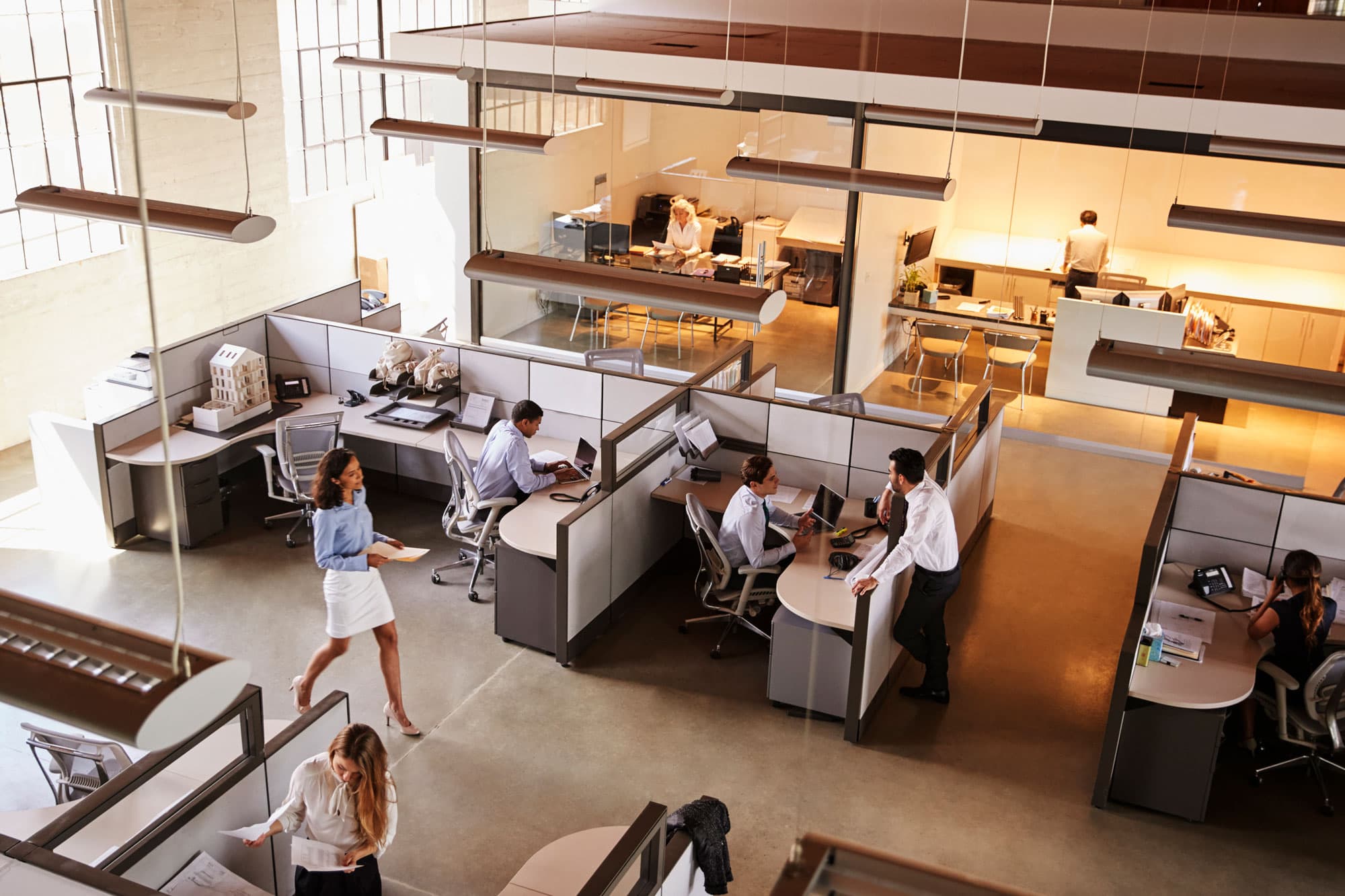
An open plan office removes physical barriers like cubicles and enclosed rooms to create a shared workspace.
This setup improves visibility and makes interaction easier. It can also reduce construction costs and allow more flexible layouts.
However, open plans work best in environments where collaboration is constant. In roles that require concentration or confidentiality, the same layout can create distractions and slow output.
The goal is not to choose open vs closed. It is to determine how much openness your teams can actually support without losing efficiency.
Key Elements of Successful Open Office Design
Open offices perform well when they are structured, not just open. The following elements determine whether the space works or creates friction.
Space Optimization
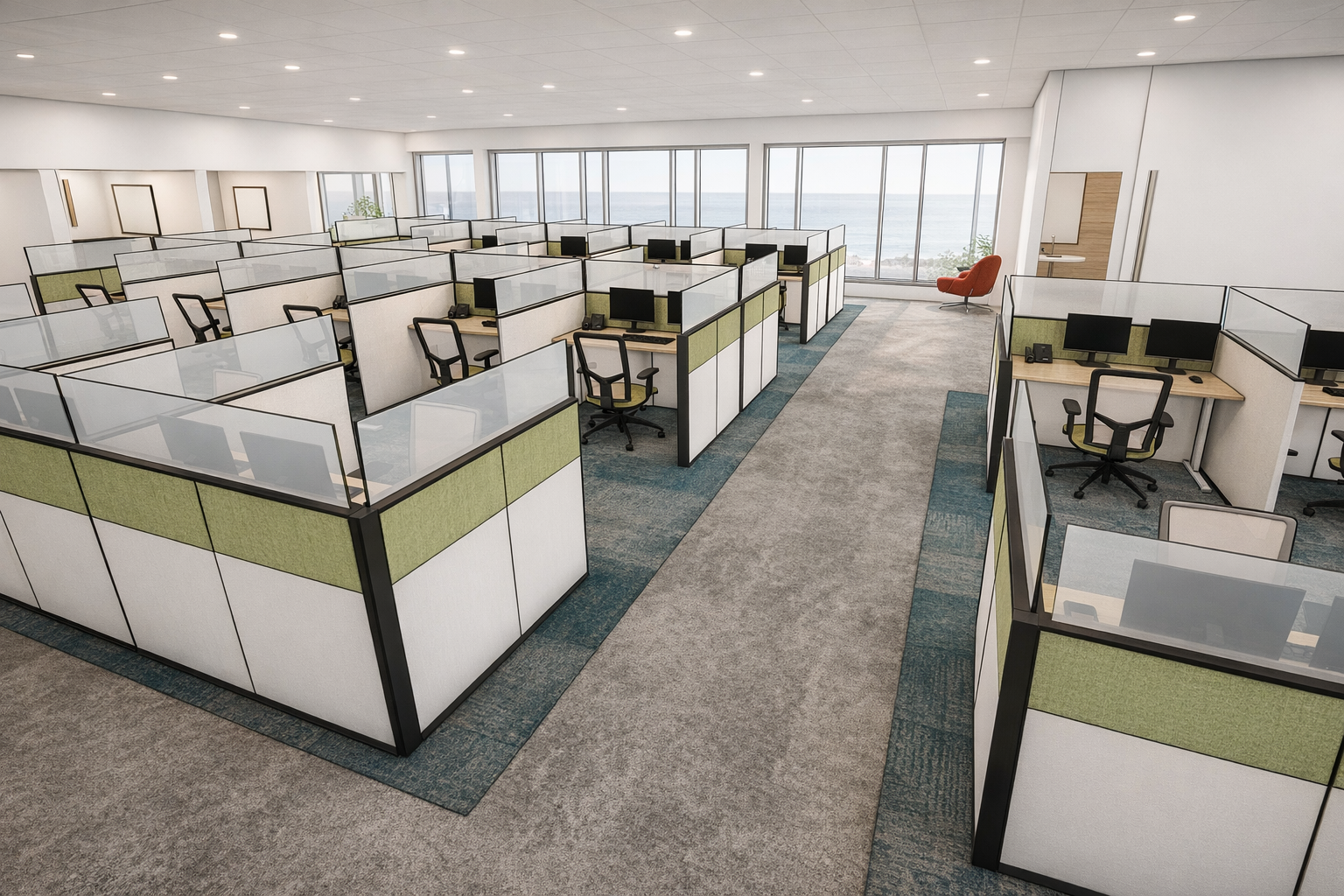
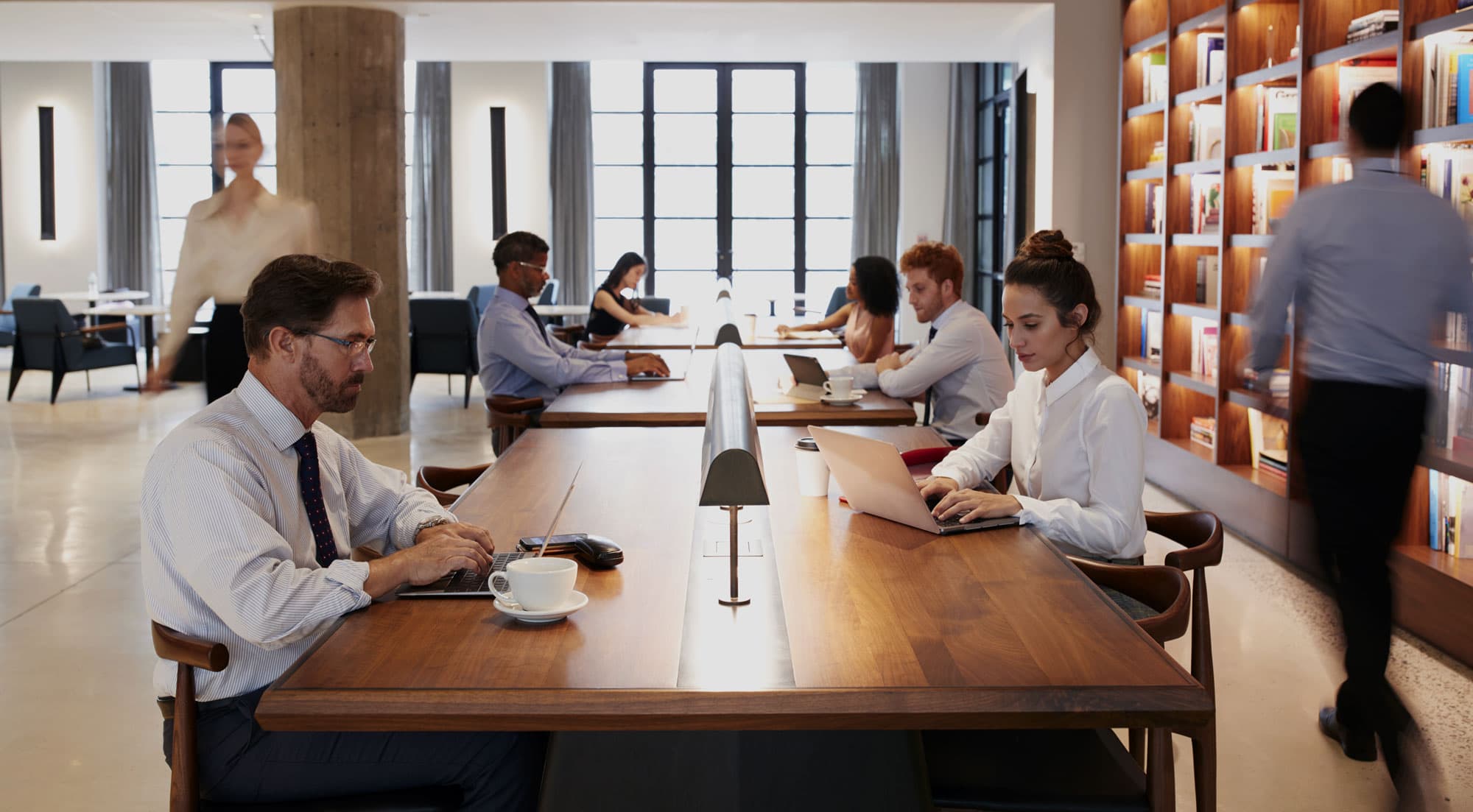
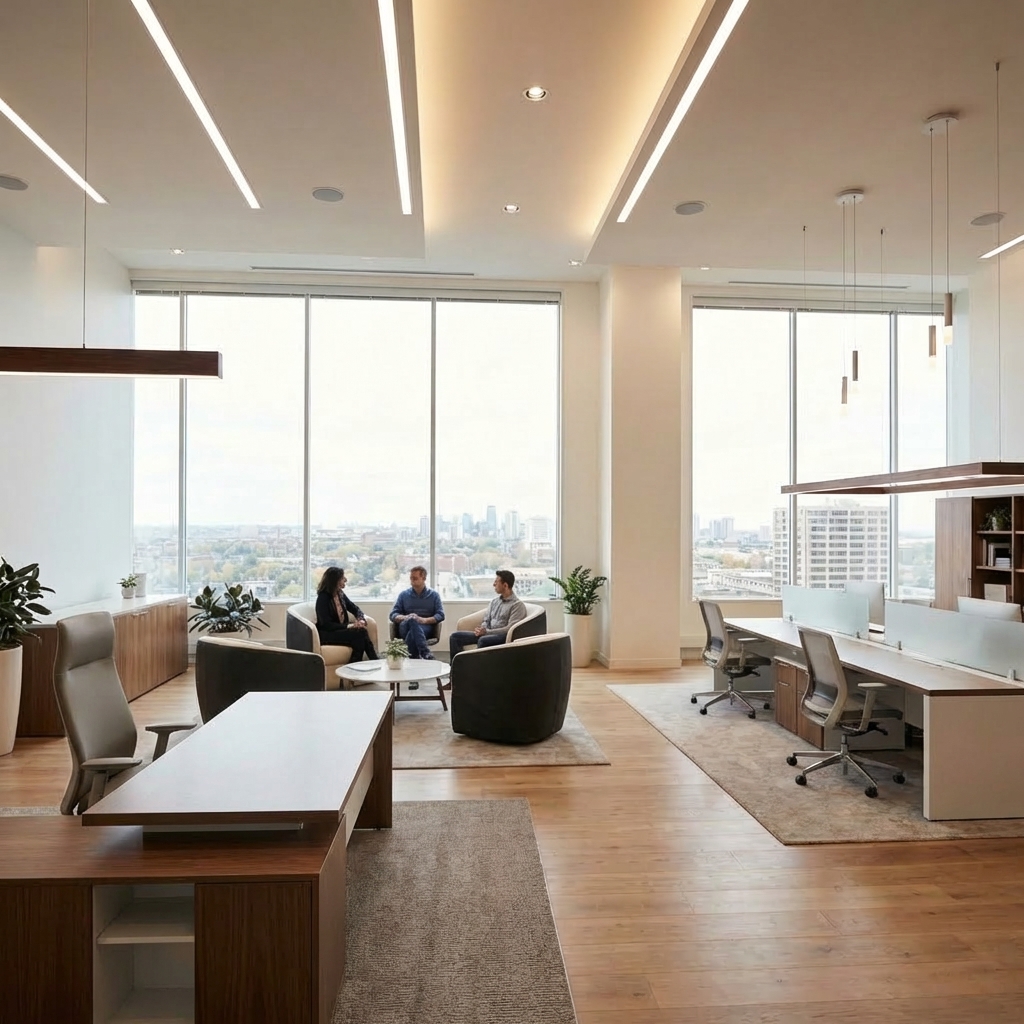
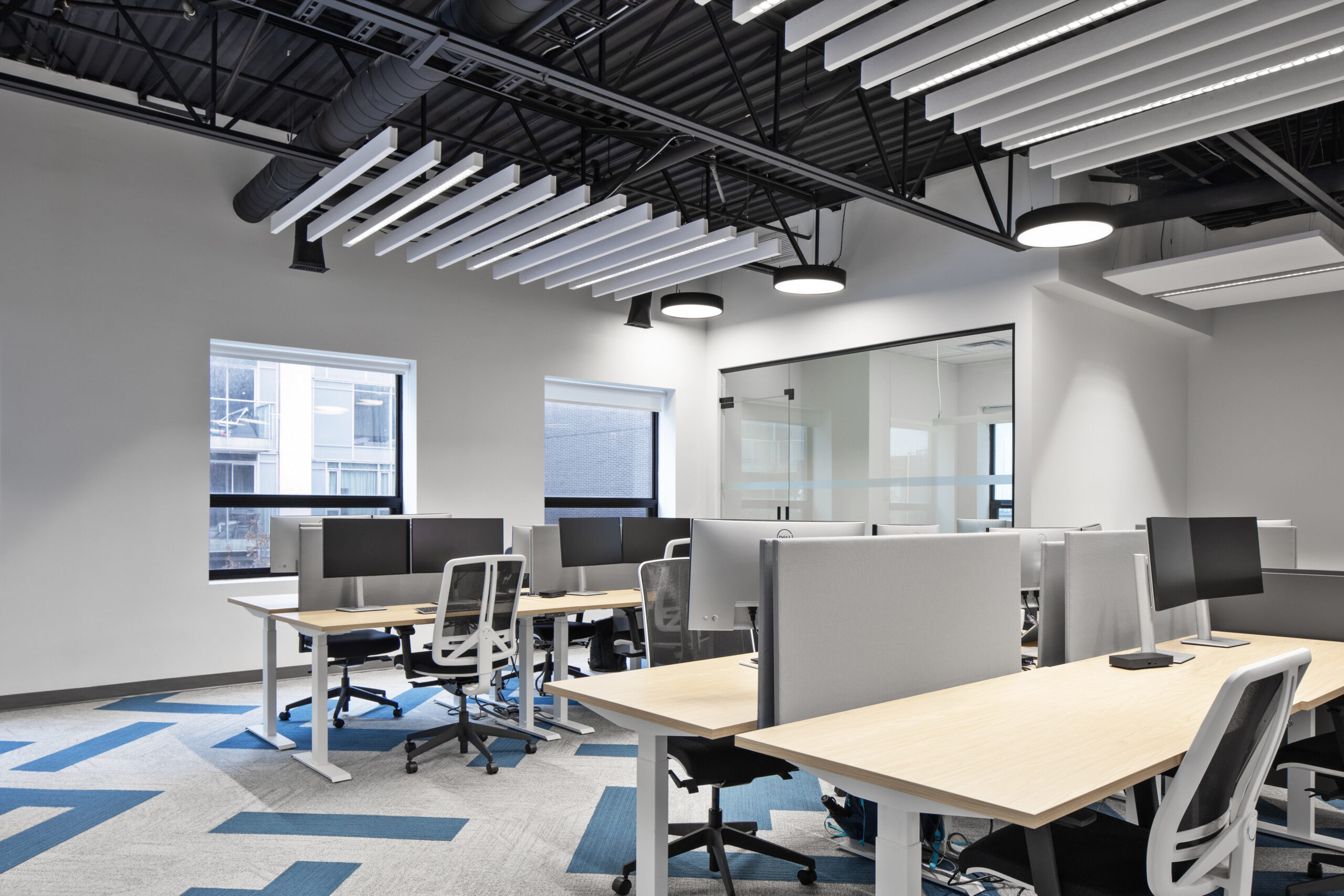
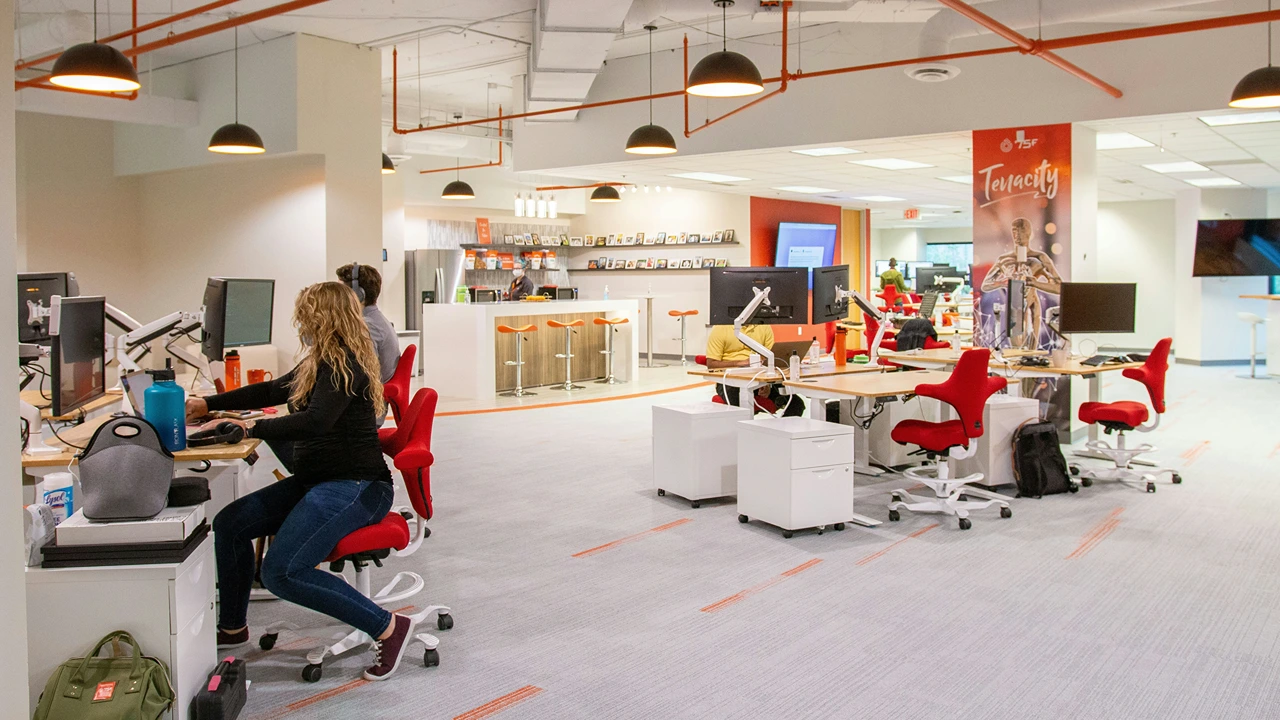
Desk layouts should support both collaboration and movement. Clusters work well for teams that interact frequently, while rows may be more effective for focused roles.
Activity-based zones are critical. Without them, all work happens in the same environment, which leads to constant interruptions.
Open layouts without zoning often feel efficient at first but become harder to manage as headcount increases.
Furniture Selection
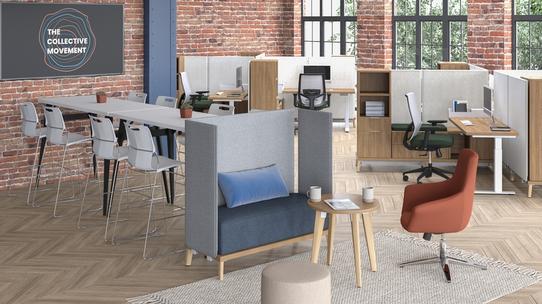
Furniture defines how flexible the space really is. Ergonomic setups improve comfort, but flexibility is just as important. Modular systems allow teams to expand or reconfigure without major disruption.
Unassigned seating can work in hybrid environments, but it requires strong infrastructure. Without enough storage and support, it often creates friction instead of flexibility.
Lighting Considerations
Natural light improves comfort and reduces fatigue. Open layouts allow better distribution, which is one of their strongest advantages. However, lighting still needs to be controlled. Task lighting is necessary for focused work, especially in areas without direct access to windows. Balanced lighting prevents eye strain and maintains consistency across the space
Acoustic Management
Noise is the most common issue in open offices.
Conversations, calls, and general movement build throughout the day and affect concentration. Acoustic panels, partitions, and zoning help control sound without closing off the space completely. If acoustics are not addressed early, teams will compensate by changing how they work, which reduces productivity over time.
Create Collaborative Spaces
Open layouts support collaboration, but only when spaces are designed for different types of interaction.
Team Meeting Spaces
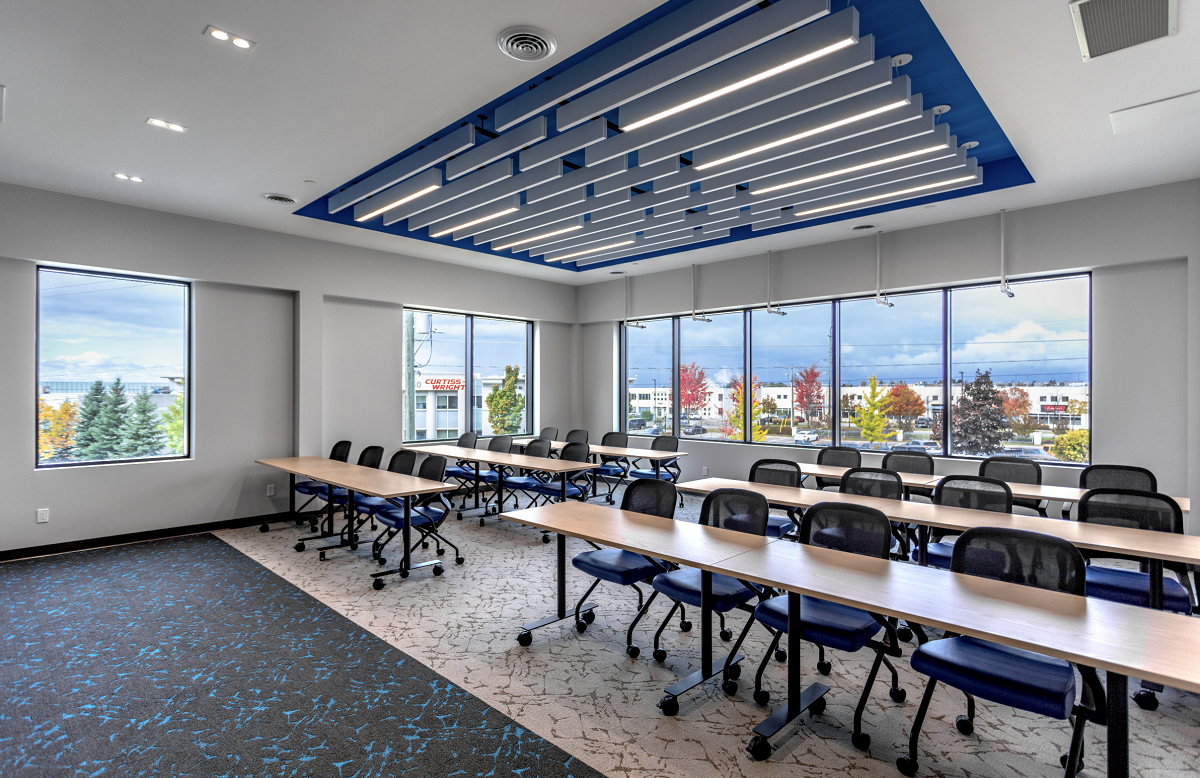
A mix of meeting environments is more effective than relying on one type. Large conference rooms support formal discussions, while smaller rooms and informal areas allow quick conversations without disrupting others. Without this mix, teams either overuse large rooms or struggle to find appropriate space for smaller meetings.
Effective Meeting Areas
Hybrid work requires meeting spaces that support both in-person and remote participants. Technology, seating layout, and acoustics all need to be aligned. Spaces that are not designed for hybrid use often lead to inefficient meetings and poor communication.
Brainstorming Zones
Creative work benefits from flexible environments. Whiteboards, movable furniture, and informal seating support idea generation. However, these zones should not replace focused work areas. Without separation, noise and distraction increase across the office.
Balance Privacy and Openness in Your Open Office Layout
Open offices fail when privacy is ignored.
Private Space Integration
Focused work requires quiet areas. Bookable rooms, phone booths, and designated quiet zones allow employees to work without interruption. Without these options, employees are forced to leave the space or work less efficiently.
Creative Privacy Solutions
Temporary privacy can be achieved without permanent walls. Mobile partitions and acoustic zones allow teams to adjust the space based on their needs. These solutions are useful in dynamic environments where work patterns change frequently.
Confidentiality Measures
Some tasks require higher levels of privacy. Private offices, enclosed meeting rooms, and controlled layouts help protect sensitive conversations and data. Open layouts without these measures can affect both internal operations and client confidence.
Incorporate Technology in Open Office Design
Technology supports flexibility, but only when integrated properly.
Tech-Enhanced Functionality
Booking systems, shared tools, and digital navigation help employees use the space more efficiently. Without these systems, open layouts can become difficult to manage as teams grow.
Connectivity Solutions
Reliable connectivity is essential. Poor network performance disrupts workflow and limits how flexible the space can be. Secure and consistent access should be available throughout the office.
AV Implementation
Meeting spaces require strong audiovisual support. Video conferencing tools, shared displays, and collaboration platforms allow teams to work effectively across locations. Without proper AV setup, hybrid work becomes inefficient.
Promote Employee Well-being in Open Offices
Well-being is often affected more in open environments than in enclosed ones.
Biophilic Elements
Natural elements improve comfort and reduce stress. Plants, natural materials, and green spaces create a more balanced environment. These features also improve air quality and make the space more inviting.
Ergonomic Solutions
Adjustable desks and chairs support long-term health. Standing options and proper spacing reduce physical strain and improve comfort. Overcrowded layouts often lead to discomfort and reduced productivity.
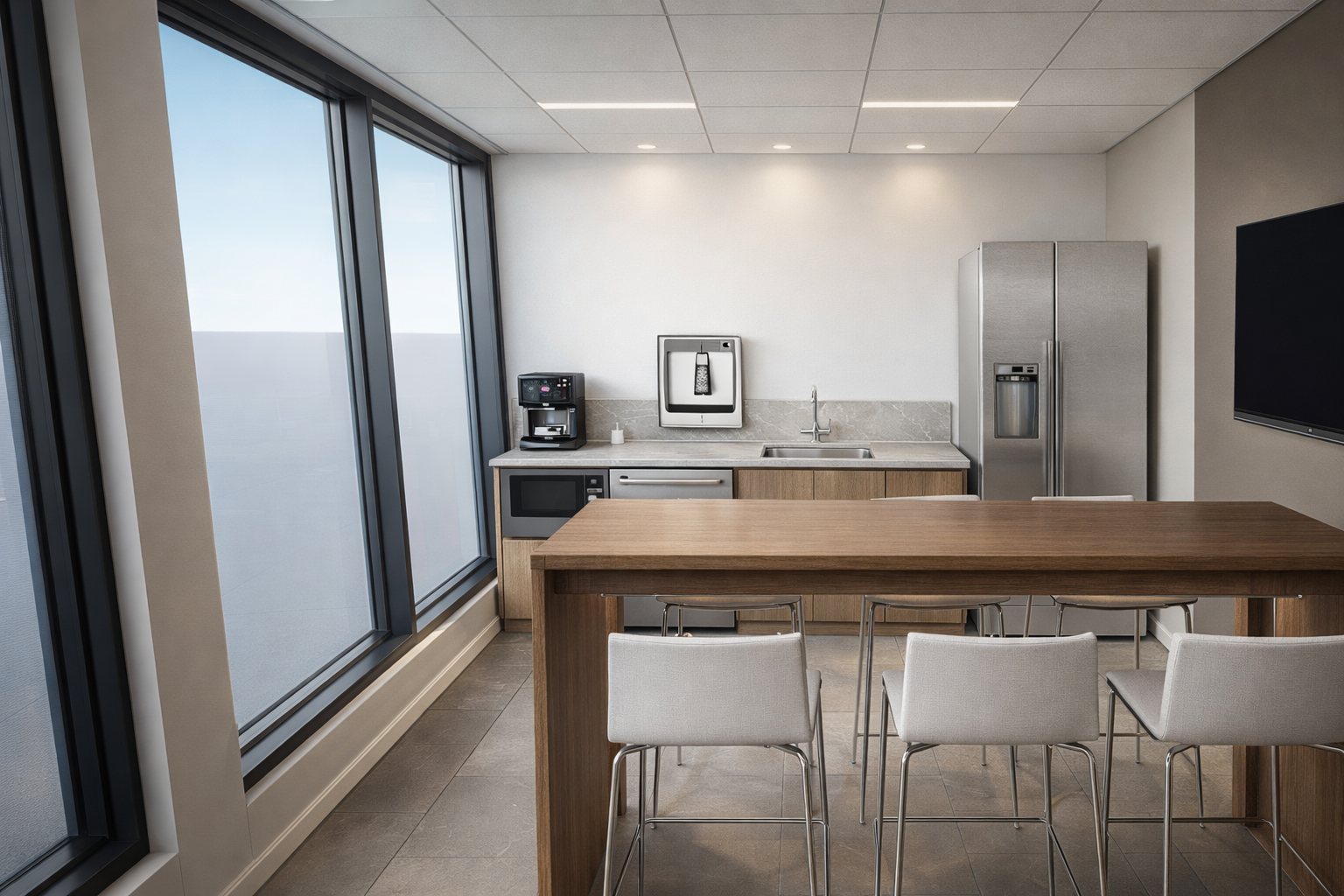
Relaxation Areas
Breakout spaces help employees reset. Wellness rooms and quiet areas reduce burnout and improve focus throughout the day. Without these spaces, open offices can feel constant and overwhelming.
Frequently Asked Questions (FAQ):
What is the biggest mistake companies make with open office design?
The most common mistake is applying a fully open layout across the entire office without considering how different teams work. Open environments can support collaboration, but without zoning, they often increase noise and reduce focus. A balanced layout with both open and private areas performs better over time.
How do you know if an open office layout is not working?
Issues usually show up in behaviour. Teams avoid certain areas, meeting rooms are constantly overbooked, or employees rely on headphones to stay focused. These are signs that the office design layout is not aligned with how work is actually happening.
Are open offices still relevant for modern workplaces?
Yes, but only when applied selectively. Open layouts still support collaboration and flexibility, especially in hybrid environments. However, they need to be combined with quiet zones, meeting spaces, and proper acoustic control to remain effective.
Key Takeaways
- Open office layouts work best for teams that rely on frequent, real-time collaboration, but can reduce productivity for roles that require sustained focus
- Zoning is more important than openness; clearly defined areas for collaboration, focus, and meetings prevent disruption and improve workflow
- Acoustic planning should be addressed early, as noise issues are one of the most common reasons open offices fail over time
- Meeting spaces need the right mix of sizes and functions, not just more rooms, to match how teams actually work
- Storage should be planned from the beginning to avoid clutter that impacts both efficiency and overall perception of the space
- Flexible, modular furniture allows the office to adapt as teams grow, reducing the need for frequent redesign or reconfiguration
- Client-facing areas require separation and structure to maintain professionalism and privacy within an open layout
- Open office design is most effective when combined with private and semi-private spaces, rather than applied as a one-size-fits-all solution
Open office design is effective when it is structured around how people actually work.
It supports collaboration, but it also needs to protect focus, privacy, and comfort.
The strongest layouts are not fully open or fully closed. They combine both, allowing teams to move between different types of work without friction.
When open offices are applied without structure, they create inefficiencies that grow over time. When planned properly with the help of an office interior designer, they remain flexible, scalable, and aligned with business needs.